
Oil Surges as Hormuz Tensions Flare, Markets Brace for US Inflation Data
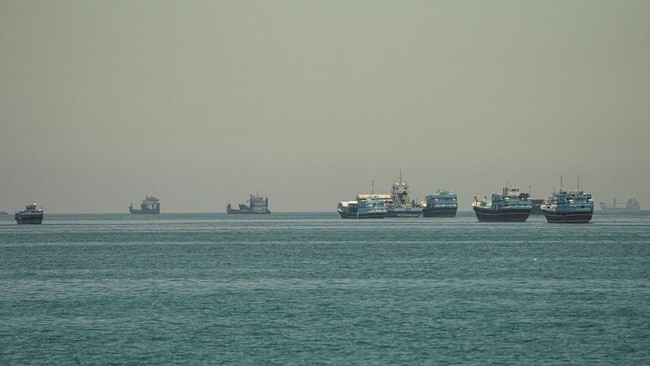
Global oil prices strengthened again in trading on Wednesday (12/8/2026) after geopolitical tensions in the Middle East escalated further. The threat of continued disruption to shipping lanes around the Strait of Hormuz has led market participants to keep adding risk premiums, while attention also turns to the release of United States (US) inflation data that will determine the direction of Federal Reserve (The Fed) interest rate policy.
According to Refinitiv data as of 09:25 WIB, Brent crude stood at US$89.48 per barrel, up 0.64% from the previous close. Meanwhile, West Texas Intermediate (WTI) crude was trading at US$83.81 per barrel, strengthening 0.73%.
This gain extends oil’s rally over recent days. Since the close on 5 August, Brent has surged around 12.6%, while WTI has strengthened more than 11%. The increase brings Brent back towards the US$90 per barrel level, its highest in nearly two weeks.
The oil rally has been driven by mounting concerns over global supply security. New attacks on vessels around the Red Sea and the Gulf of Oman have occurred again. The Yemeni government reported four crew members killed in an attack allegedly carried out by Houthi forces on a cargo ship in the Bab el-Mandeb Strait. On the other hand, the US military said it struck a container ship heading towards an Iranian port after the vessel ignored warnings.
These tensions have emerged alongside an increasingly deadlocked negotiation process between Washington and Tehran. Iran has insisted the Strait of Hormuz will remain closed until the United States meets Tehran’s conditions, including the release of frozen Iranian assets and an end to conflict in the region.
The statement signals that one of the world’s most strategic energy chokepoints remains far from normal conditions. Before the conflict erupted in late February, around one-fifth of global oil and liquefied natural gas (LNG) trade flows passed through the Strait of Hormuz.
The deteriorating security situation has led the market to once again factor in supply risk for global oil. In Tuesday’s trading, Brent closed up 1.4% at US$88.91 per barrel, while WTI strengthened 1.3% to US$83.20. Both contracts had already surged around 5% at the start of the week.
Beyond geopolitical factors, investors are also bracing for the release of US July consumer inflation (CPI) data. A Reuters consensus forecast expects monthly inflation to rise 0.1% after falling 0.4% in June, while annual inflation is expected to slow to 3.4% from 3.5%.
The data will be an important reference for the market in assessing the likelihood of a Fed rate hike at next month’s meeting. Money markets currently still price the probability of a rate increase at around 50%.
Although the CPI data does not yet capture the surge in energy prices over recent days, the inflation result could still shift market expectations on the direction of US monetary policy. If inflation comes in lower than expected, pressure on the US dollar and bond yields could ease. Conversely, higher inflation could strengthen expectations of monetary tightening and limit gains in commodity prices, including oil.
For now, the main focus of market participants remains on the Middle East. As long as uncertainty over the reopening of the Strait of Hormuz persists and incidents against commercial vessels continue, risk premiums are expected to remain embedded in global oil prices.
Source: jawawa.id (https://jawawa.id/newsitem/oil-surges-as-hormuz-tensions-flare-markets-brace-for-us-inflation-data-1786510265)
Originally published by CNBC Indonesia (https://www.cnbcindonesia.com/market/20260812093258-17-758488/minyak-terbang-lagi-hormuz-memanas-pasar-siaga-data-inflasi-as), translated from Indonesian