
Oil Rig Explosion Spills Millions of Barrels After Safety Procedures Were Ignored
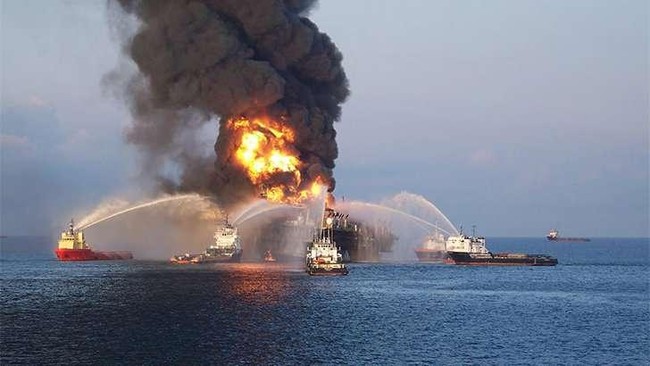
Jakarta, CNBC Indonesia — Work that failed to comply with standard operating procedures turned an oil rig into what one worker described as “hell”. The incident occurred in the Gulf of Mexico, United States, when the Deepwater Horizon drilling rig exploded on 20 April 2010. The tragedy killed 11 workers and led to an estimated 4.9 million barrels of oil spilling into the sea.
That night, drilling was under way at the Macondo well in the Gulf of Mexico. The operation used the Deepwater Horizon, an offshore drilling rig owned by Transocean and leased by BP.
According to Britannica, the well was about 1,500 metres below sea level, with drilling passing through thousands of metres of rock. Work at Macondo had begun in February 2010 and was nearing completion before the well was temporarily closed.
Although the work was close to its final stage, the well was not yet entirely safe. Pressure tests carried out several hours before the accident produced abnormal results, indicating that the well might still have problems and be at risk of leaking.
The situation should have prompted further checks before operations continued. However, work went ahead amid pressure to complete the project quickly and efficiently.
The risk became reality when high-pressure gas from inside the well breached the cement barrier intended to protect it. The gas then travelled up the pipe to the drilling rig and spread across the work area.
The gas ignited, causing a massive explosion. The main safety device, designed to shut the well in an emergency, failed to function.
The fire and explosion created terrifying conditions on the rig. In testimony to The Guardian, one worker, Stephen Davis, described what happened.
“The whole rig shook. It felt like walking straight into hell,” he said.
Davis described black smoke filling the rig immediately after the explosion. The force of the blast threw workers about five metres.
Rescue operations could not begin immediately. Workers had to hold on for hours as the fire around the rig hampered evacuation. After the incident, 11 workers were confirmed dead and 17 others injured.
As rescue efforts continued, damage to the well created a far wider problem. Oil continued gushing into the sea, polluting the waters of the Gulf of Mexico. The leak, initially estimated at about 1,000 barrels a day, later rose to more than 60,000 barrels a day.
The flow was not stopped until July 2010, almost three months after the explosion. The well was permanently sealed in September 2010. In total, about 4.9 million barrels of oil spilled into the sea, making the incident one of the biggest environmental disasters in history.
The pollution threatened not only marine ecosystems but also disrupted the economic activities of coastal communities reliant on marine resources.
Initially, the company described the incident as a technical failure. But the findings of an investigation established by the US president a year after the tragedy pointed to broader causes. The disaster was found to have stemmed not only from technical failures but also from a series of decisions made during the drilling operation.
Decisions related to saving time and money also came under scrutiny in the investigation.
“The companies involved made decisions to cut costs and save time, which ultimately contributed to the disaster,” the investigation report said, as quoted by BBC International on Tuesday (27 October 2026).
The consequences for BP continued after the disaster. The company faced fines and compensation obligations totalling more than US$60 billion. The scale of the penalties made the Deepwater Horizon case one of the largest in the history of the energy and environmental industries.
Source: jawawa.id (https://jawawa.id/newsitem/oil-rig-explosion-spills-millions-of-barrels-after-safety-procedures-were-ignored-1793091087)
Originally published by CNBC Indonesia (https://www.cnbcindonesia.com/entrepreneur/20261027122156-25-779812/kilang-minyak-meledak-tumpahkan-jutaan-barel-efek-kerja-tak-patuh-sop), translated from Indonesian