
Oil-Rich Nation Suddenly Tightens Its Belt, Halting Ambitious Projects
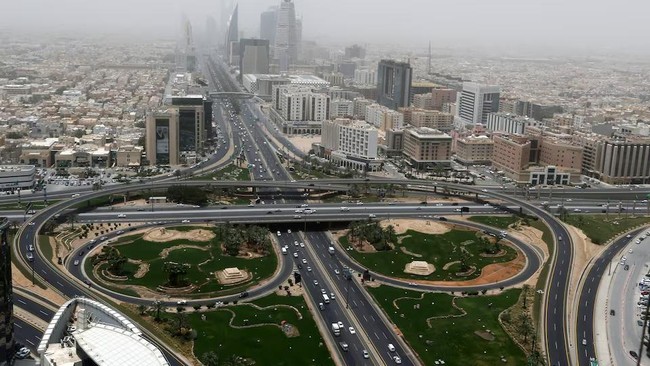
Jakarta, CNBC Indonesia – Global uncertainty and geopolitical pressures have forced even an oil-rich country such as Saudi Arabia to rethink its approach and tighten its belt. The kingdom has officially changed course on public spending, seeking greater efficiency amid a sharp economic contraction and escalating regional conflict.
Saudi Economy Minister Faisal Alibrahim said the country’s economic diversification strategy was moving away from “spending and delivering at any cost” towards “spending and delivering at the right cost”.
“The phase we are in now is one in which every riyal is deployed with greater precision,” Alibrahim told CNBC International, as quoted on Sunday (29 November 2026).
According to Alibrahim, the Saudi government is moving towards a policy-first approach and seeking to create a business environment more aligned with international rules. One measure is the introduction of a 15% effective minimum tax rate on the profits of multinational companies, aimed at attracting foreign investment amid challenging fiscal conditions.
Ambitious projects and non-essential spending cut
The austerity drive signals a major shift. Since launching its Vision 2030 blueprint in 2016 to reduce dependence on oil, Saudi Arabia has been known for pouring huge sums of capital spending through its sovereign wealth fund, the Public Investment Fund (PIF).
But economic pressures have forced the kingdom to reassess the cost-effectiveness and commercial prospects of several flagship megaprojects. Saudi Arabia has begun scaling back or ending funding for a number of high-profile projects, including:
Reviewing plans for the new economic zone NEOM and the futuristic city known as “The Line”.
Withdrawing funding from the prestigious LIV Golf tournament.
Halting construction of a giant skyscraper in the capital, Riyadh.
Postponing the 2029 Asian Winter Games, which had been scheduled to take place in Trojena, part of NEOM.
Akanksha Samdani, chief economist at Oxford Economics, said Vision 2030 was entering a more realistic phase focused on returns.
“The government is managing fiscal pressures and redirecting budget spending towards essential services and strategic priorities, while the PIF is becoming more selective in its capital allocation and seeking greater private-sector participation,” Samdani said.
Economy contracts amid Houthi attacks
Saudi Arabia’s need to rein in spending is linked to poor economic performance following an escalation in attacks by Yemen’s Iran-backed Houthi militants. The attacks have repeatedly struck critical sites, including the PIF tower, Riyadh Airport and Saudi Arabia’s largest oil refinery.
The deteriorating security situation also forced the kingdom to cancel its prestigious global investor conference, “Davos in the Desert”, scheduled for November.
“The human toll of this crisis is real, as are the economic costs,” Alibrahim said.
Government data show that Saudi Arabia’s real gross domestic product (GDP) contracted by 3.8% in the third quarter of this year. Oil-sector activity fell by 20.4% year on year, while net foreign direct investment (FDI) inflows declined by 19.5% year on year in the second quarter.
Although Saudi Arabia’s Finance Ministry is optimistic that the economy will shrink by just 2.1% this year before surging by 10.9% next year, Oxford Economics has a bleaker forecast. It expects the Saudi economy to contract by 3.4% this year and shrink by a further 4% in 2027 if attacks on energy infrastructure continue.
Neil Quilliam, managing director of consultancy Azure Strategy, added that repeated attacks had exposed vulnerabilities in Saudi Arabia’s air defences and undermined the assumption that the kingdom was insulated from regional turmoil.
“The economic impact is not only about physical damage; it also tests the confidence of investors and tourists in Saudi Arabia as a destination for tourism, entertainment and sport, which are pillars of Vision 2030,” he said.
Source: jawawa.id (https://jawawa.id/newsitem/oil-rich-nation-suddenly-tightens-its-belt-halting-ambitious-projects-1795913420)
Originally published by CNBC Indonesia (https://www.cnbcindonesia.com/news/20261129000120-4-789394/negara-kaya-raya-mendadak-efisiensi-proyek-ambisius-langsung-disetop), translated from Indonesian