
Oil-Rich Nation Strangled by US-Iran Conflict, Losing Rp 1,068 Trillion
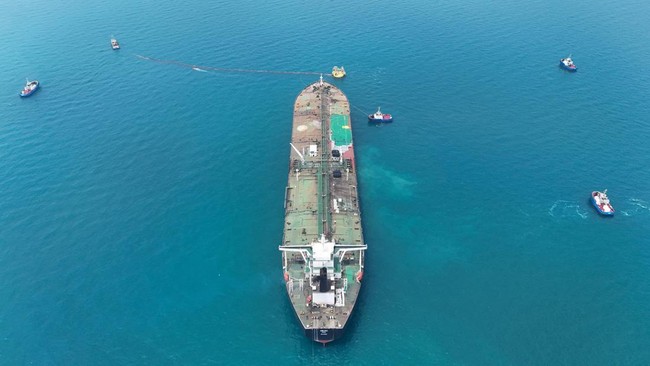
Iraq’s economy is currently on the brink of collapse due to being caught in the vortex of war between the United States, Israel, and Iran. The cessation of free trade flows through the Strait of Hormuz since late February has strangled the nation, which is heavily dependent on imported goods.
Quoting Al Jazeera on Saturday (26/09/2026), Iraqi Prime Minister Ali al-Zaidi described the country as facing extraordinary economic challenges. He revealed that Iraq has lost approximately US$ 60 billion (Rp 1,068 trillion) in oil revenue because it was unable to export about 90% of its oil through Gulf routes, which have become the centre of intense negotiations between Washington and Tehran.
This situation represents a devastating blow, considering that oil revenue accounts for more than 90% of Iraq’s federal budget. Disruptions to the Hormuz shipping routes have also broken supply chains, increasing transportation time and costs, and drastically reducing import volumes. Alaa-Eddin Sulaibi, a supermarket owner in Baghdad, estimated that the proportion of imported goods sold in his shop has dropped from 90% to 70%, while prices have surged between 25% and 30%.
“We have no choice but to sell local products, even though the quality is not the same as imported products,” he said.
The crisis has also hit the exchange rate of the Iraqi dinar against the US dollar in the parallel market, which touched 1,600 dinars per US dollar last week, well above the official rate of 1,300 dinars and the pre-war rate of 1,540 dinars. Simultaneously, the Iraqi government is facing a tightening supply of US dollars.
In April, the administration of US President Donald Trump suspended the physical shipment of cash from Iraq’s oil revenue accounts in the US due to pressure regarding the activities of Iran-backed militias. Although shipments partially resumed in July, the US has openly accused several private Iraqi banks of involvement in large-scale dollar smuggling operations to Iran.
Responding to the dollar shortage, the Central Bank of Iraq (CBI) firmly denied the claims, blaming speculative expectations by certain parties for the surge in the parallel market exchange rate. However, Iraqi Prime Minister Mudher Mohammed Salih’s financial adviser revealed a different reality. He noted that the CBI’s foreign exchange reserves had plummeted from approximately US$ 106 billion (Rp 1,886.8 trillion) before the war to just US$ 80 billion (Rp 1,424 trillion) by the end of August.
Ziad al-Hashimi, an international economics researcher at Anglia Ruskin University, assessed that this series of upheavals has exposed long-standing structural weaknesses in the Iraqi economy, particularly its dependence on oil and foreign goods.
“This crisis has revealed deep imbalances in Iraq’s economic structure, most notably the lack of safeguards capable of protecting the economy during periods of turmoil,” he explained.
“All the Iraqi government can do are short-term measures that may only limit future impacts, such as using loans, which is not a true solution,” concluded Hashimi.
Source: jawawa.id (https://jawawa.id/newsitem/oil-rich-nation-strangled-by-us-iran-conflict-losing-rp-1-068-trillion-1790438042)
Originally published by CNBC Indonesia (https://www.cnbcindonesia.com/news/20260926173521-4-771161/negara-kaya-minyak-ini-tercekik-perang-as-iran-tekor-rp-1068-t), translated from Indonesian