
Oil-Rich Nation on Brink of Energy Crisis, Blackouts Lasting Up to 36 Hours
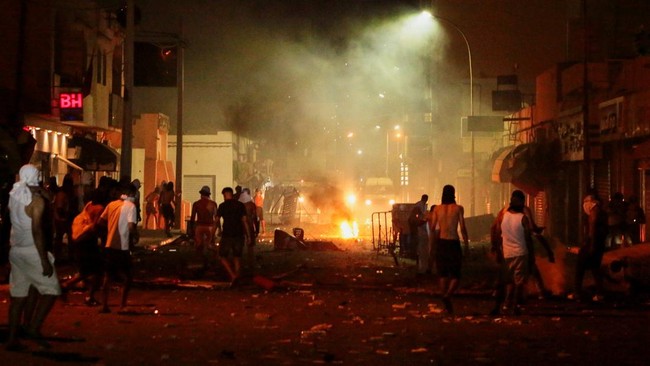
Power outages have been a harsh reality for Libyan citizens for years. However, this summer’s heatwave has created an existential threat for businesses amidst an acute electricity and fuel crisis gripping the country.
According to Arab News, rising temperatures and global energy disruptions have combined with a series of domestic issues, ranging from ageing infrastructure to rampant fuel smuggling. Ironically, this dire situation is occurring in Libya, a nation known as a major oil producer that is currently attempting to boost its gas exports to Europe.
Naseem Al-Akkari, a restaurant chain owner in the capital, Tripoli, claims to have suffered losses estimated at US$40,000 in recent months due to the crisis. “Generators must run continuously to prevent goods from spoiling. You have no choice but to buy diesel from the black market to keep operating,” he said, noting that he has experienced more than ten blackouts during his interview.
In Qasr Bin Ghashir, a district south of Tripoli, power outages can last up to 36 hours. This has forced Al-Akkari to spend approximately 10,000 dinars (nearly US$1,600) per day just to power generators. Similar hardships are faced by Sufian Boushaala, a manager of a family bakery in Benghazi, in the eastern region, who reported that blackouts have forced his business to lay off staff and occasionally close for entire days.
Furthermore, water supplies from the Great Man-Made River project—a network of pipelines transporting groundwater from the Sahara—have been completely severed following a total blackout announced by the state-owned General Electricity Company of Libya (GECOL). GECOL did not respond to requests for comment regarding the crisis.
The fuel crisis is equally severe. Petrol queues in the eastern and western regions—which have been under rival administrations since the 2014 civil war—can now stretch up to two kilometres. Black market diesel prices have skyrocketed to 11 Libyan dinars per litre (approximately US$1.70), a massive disparity compared to the official subsidised price of just 0.15 dinars.
UN Special Envoy for Libya, Hanna Tetteh, described the blackout crisis in an August briefing as a “striking paradox” for a country that spends US$1 billion per month on fuel imports.
Jalel Harchaoui, a contributor to the UK-based think tank Royal United Services Institute, explained that the heatwave is a direct trigger for the crisis, as it drives a surge in air conditioning use that overburdens the electrical grid. This is exacerbated by a lack of natural gas production, forcing some power plants to switch to liquid fuels, the supply of which has been depleted by widespread smuggling.
Despite possessing the largest proven crude oil reserves in North Africa, Libya is heavily dependent on imported refined products sold at subsidised prices. According to analysts and UN experts, much of this fuel is diverted illegally for sale abroad for profit.
The US-based watchdog group, The Sentry, estimated late last year that fuel smuggling costs Libyan citizens around US$6.7 billion per year, with more than half of imported fuel being siphoned off by criminal networks.
In addition to corruption, infrastructure issues are worsening the situation. Ahmad Al-Mesllati, a spokesperson for Brega Petroleum Marketing, noted that nine storage tanks in Tripoli, destroyed during the 2014 war, have yet to be repaired. Although Libya’s five main refineries theoretically have the capacity to process around 380,000 barrels per day, reports from the Libyan Audit Bureau and National Anti-Corruption Authority in June found that actual production is far lower.
The situation worsened following a drone attack last month on the oil complex in Zawiya, home to the nation’s primary refinery. Al-Meslliti added that disruptions to shipping routes through the Strait of Hormuz have also delayed several fuel deliveries by up to 12 days.
Tim Eaton, a researcher at the UK think tank Chatham House, highlighted that these blackouts are a perfect illustration of the country’s acute problems. He emphasised that the nation actually imports more fuel than is required to generate electricity, but the supply vanishes due to politically sanctioned corruption and institutional dysfunction.
“The Libyan people bear the cost and receive little in return,” Eaton concluded.
To mitigate the crisis, Brega Petroleum Marketing has established mobile refuelling stations with a maximum limit of 300 litres per vehicle. However, petrol queues continue to stretch for hours, causing significant frustration among citizens.
“We are living through a joke, an excessive joke,” complained Khaled Al-Turki, while queuing for fuel in central Tripoli. “Does it make sense that an oil-producing nation cannot find a solution to petrol and diesel shortages? What kind of country is this?”
Source: jawawa.id (https://jawawa.id/newsitem/oil-rich-nation-on-brink-of-energy-crisis-blackouts-lasting-up-to-36-hours-1790005927)
Originally published by CNBC Indonesia (https://www.cnbcindonesia.com/news/20260921133741-4-769578/negara-kaya-minyak-di-ambang-krisis-energi-mati-lampu-sampai-36-jam), translated from Indonesian