
Oil-Rich Nation 'Furious' at Corruption, Seizes Assets Worth Rp 17.7 Trillion
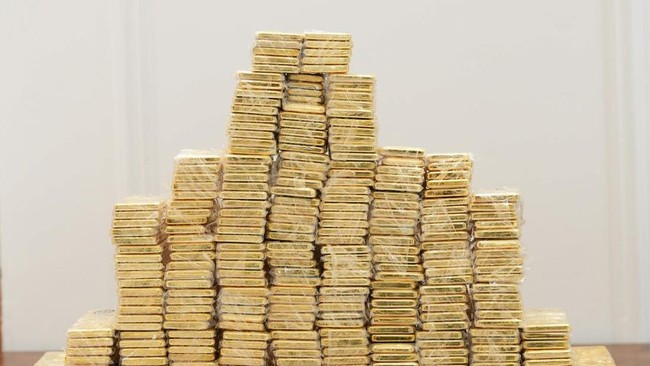
The Iraqi government has successfully recovered more than US$1 billion (Rp 17.7 trillion) in public funds, financial assets, and real estate as part of a massive campaign to eradicate administrative and financial corruption in the country.
Quoting The Arab Weekly on Wednesday (2/9/2026), Iraqi government spokesperson Haider al-Aboudi revealed that the value of funds, assets, and property recovered through the campaign has exceeded 1.359 trillion Iraqi dinars, equivalent to more than US$1 billion.
The campaign, dubbed ‘Sawlat al-Fajr’ (Dawn Attack), is aggressively pursuing parties suspected of involvement in corruption to reclaim money and public assets obtained illegally. The Iraqi Federal Integrity Commission has reportedly received over 26,000 complaints regarding alleged corruption.
“Corruption is a deeply rooted web that connects money, administrative structures, and influence,” he explained.
The operation, launched on 28 June in coordination with the Iraqi Supreme Judicial Council, marks a new push by Prime Minister Ali al-Zaidi’s administration. Al-Zaidi is working hard to tackle corruption not only through standard arrests and prosecutions but also by stripping away illicit proceeds and properties. The campaign targets dozens of officials, former officials, members of parliament, and entrepreneurs extensively.
Security forces continue to conduct raids in the capital, Baghdad, and several other provinces to seize or freeze the assets of suspects. The oil sector, which is the lifeblood of state revenue from crude oil exports, is a primary target, as its financial vulnerability directly impacts the government’s ability to fund public services.
The government stated that several investigations are based on the testimony of the former Deputy Minister of Petroleum for Refining, Adnan al-Jumaili. Al-Jumaili was previously detained amid allegations of wasting public funds and manipulating contracts suspected of being illegal after he was dismissed from his position on 2 June.
In carrying out this campaign, Aboudi described the Iraqi judiciary as the greatest guarantor of anti-corruption efforts. Local authorities are now also attempting to shift their strategy towards systemic prevention through automation and the expansion of digital systems across state institutions to reduce direct contact between officials and the public, which frequently triggers bribery. The government is also implementing ex-ante oversight on major public procurement contracts to detect irregularities before funds are disbursed.
The massive scale of complaints poses a significant challenge for authorities, who have promised to act without bias against perpetrators. To encourage public participation in monitoring cases, the government has also implemented a Whistleblower Law.
This policy provides lucrative financial rewards of up to 5% of the recovered amount to individuals whose verified information contributes directly to the recovery of stolen public funds. This achievement is seen as a measurable indicator of the state’s success in reclaiming resources that should be used for public expenditure.
Source: jawawa.id (https://jawawa.id/newsitem/oil-rich-nation-furious-at-corruption-seizes-assets-worth-rp-17-7-trillion-1788314166)
Originally published by CNBC Indonesia (https://www.cnbcindonesia.com/news/20260902070055-4-764197/negara-kaya-minyak-ngamuk-digerogoti-koruptor-sita-aset-rp-177-t), translated from Indonesian