
Oil-Rich Nation Faces Energy Crisis: Electricity and Fuel Shortages Spark Protests
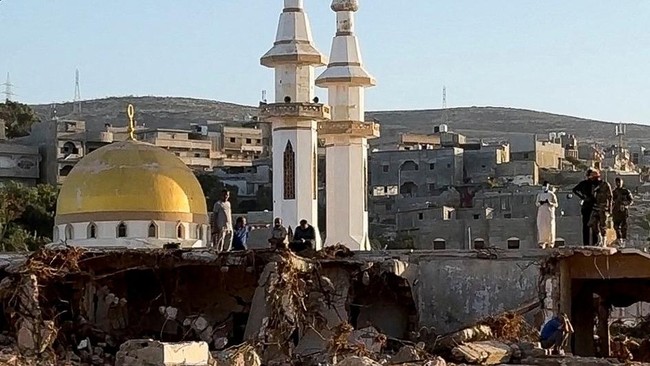
A severe energy crisis, encompassing fuel shortages, electricity blackouts, and a clean water crisis, has paralysed Libya for more than six weeks. This series of interconnected crises has not only devastated the economic activities of citizens but has also triggered waves of demonstrations that have resulted in violence across various regions.
According to Xinhua, long queues of vehicles are visible outside filling stations in the capital, Tripoli, amidst temperatures approaching 40 degrees Celsius. Ahmed Al-Sharif (49), a truck driver, is forced to wait two to three days just to obtain diesel.
The problem is worsened by the skyrocketing price of diesel on the black market, which has reached 8 Libyan dinars or approximately US$1.26 (Rp22,302) per litre, a surge of more than 50 times the official subsidised price.
“If I buy diesel on the black market, I will not be able to meet my daily living needs with the income from my daily work after paying for it,” he said.
Electricity blackouts lasting more than 10 hours a day have also hit the business sector hard. Khaled Ibrahim (32), a supermarket owner in eastern Tripoli, noted that the failure of cooling machines has caused frozen goods to rot and cold water is no longer available to customers.
“This is the worst season for me, and I cannot survive in these conditions,” he explained.
The crisis has even spread to the water system following disruptions to the operations of the Great Man-Made River, a massive aqueduct network that supplies fresh water to much of Libya. Rafaa Zaid, a cafe owner in central Tripoli, has been forced to close his business entirely due to the drought.
“Every day that passes without opening the cafe means another loss, but what can I do? I cannot work without water,” he said.
A report by the Libya Herald at the end of August noted that these widespread power outages have triggered violent demonstrations, where citizens have blocked roads by burning tyres and barricaded government buildings with debris. In response to the chaos, the Chairman of the General Electricity Company of Libya (GECOL), Bashir Al-Marash, promised that the electricity crisis would end within the next two weeks.
On the other hand, the spokesperson for the Brega Petroleum Marketing Company, Ahmed Al-Masallati, highlighted supply obstacles stemming from external factors.
“The global crisis, and specifically shipping disruptions in the Strait of Hormuz as well as the impact of the global energy crisis, have delayed the arrival of several fuel shipments to Libya,” he stated.
He added that decreased production at the Zawia refinery, due to power outages and domestic security issues, has further worsened local supplies. Although Libya possesses the largest proven crude oil reserves in Africa, the country is highly dependent on imports of refined products due to infrastructure limitations. Energy expert from Omar Al-Mukhtar University, Tariq Al-Tarhouni, assessed that the root of the problem in the country is highly complex.
“Libya’s electricity crisis is not merely a power generation crisis, but a crisis in the management of the entire energy system,” he asserted.
Source: jawawa.id (https://jawawa.id/newsitem/oil-rich-nation-faces-energy-crisis-electricity-and-fuel-shortages-spark-protests-1788450833)
Originally published by CNBC Indonesia (https://www.cnbcindonesia.com/news/20260903141346-4-764672/negara-kaya-minyak-krisis-energi-listrik-bbm-tak-ada-warga-demo), translated from Indonesian