
Oil Prices Surge, Fiscal Discipline Becomes the Last Bastion of the State Budget
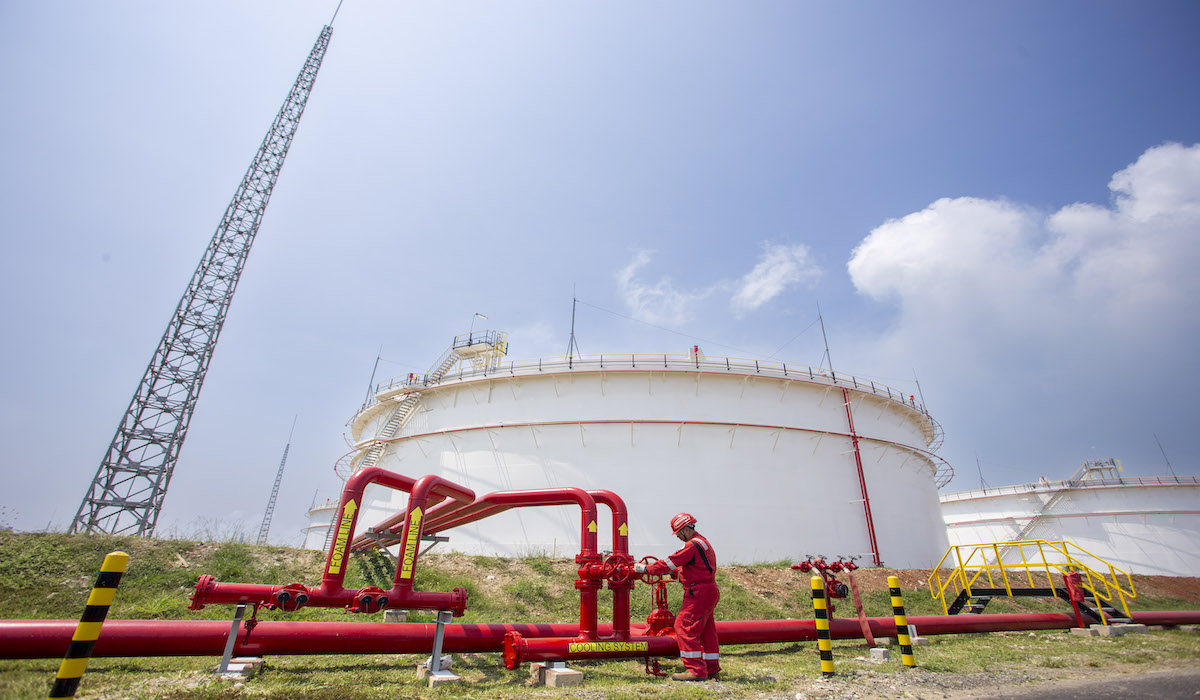
Senior economist and founder of the Institute for Development of Economics and Finance (Indef), Didin S. Damanhuri, stresses the importance of the government maintaining fiscal discipline amid the surge in global oil prices, which could pressure the 2026 state revenue and expenditure budget (APBN).
The rise in global oil prices is seen as posing significant pressure on the APBN, particularly if triggered by escalations in geopolitical conflicts. In extreme conditions, the budget deficit is estimated to potentially widen to exceed 6% of gross domestic product (GDP).
“It is very important to maintain fiscal discipline. Up to now, with a maximum deficit of 3% to maintain financial market confidence,” he told Media Indonesia on Wednesday (1/4).
According to Didin, fiscal discipline is also crucial for preserving ratings from international agencies such as Moody’s in terms of credit ratings and MSCI in the capital markets. Therefore, the government is advised against relaxing the deficit, which risks increasing the debt burden.
As an alternative, the government is encouraged to sharpen efficiency in strategic programmes such as Free Nutritious Meals (MBG), village cooperatives, and food self-sufficiency. The implementation of these large-budget programmes is also expected to involve MSME actors and farmers to deliver broader economic impacts.
In addition, Didin considers improvements in APBN governance and strengthening of the capital markets to be highly urgent steps. In this way, Indonesia is expected to remain capable of maintaining economic growth around 5% while promoting income distribution.
He also highlights the urgency of anticipatory policies in facing the impacts of US-Iran geopolitical conflicts, which risk triggering imported inflation domestically. Given that Indonesia’s economic structure is heavily dependent on household consumption, which accounts for around 53% of GDP, a surge in global energy prices potentially reaching USD 150 per barrel poses a direct threat to people’s purchasing power.
Furthermore, Didin warns of the risk of stagflation, a condition where economic growth slows but is accompanied by high inflation.
“This is particularly because around 74% of household expenditure in Indonesia is highly sensitive to food, energy, and transportation components,” Didin explained.
He outlined three scenarios for the impact of oil prices on Indonesia’s fiscal resilience. In the first scenario, if the conflict ends quickly, oil prices are estimated to stay at USD 100 per barrel, which is already occurring. In the second scenario, if the conflict lasts 1.5 to 3 months, oil prices could rise to USD 150 per barrel, with the APBN deficit around 4%. Meanwhile, in the worst-case scenario, if the conflict is prolonged, oil prices could reach USD 180–200 per barrel, potentially causing energy subsidies to swell to Rp884 trillion and the APBN deficit to surge to 6%.
Contacted separately, economist from the Center of Reform on Economics (CORE) Indonesia, Yusuf Rendy Manilet, assesses that the APBN is indeed highly sensitive to two main factors: oil prices and the rupiah exchange rate.
Roughly, he explains that every one-dollar per barrel increase in oil prices can add to the budget burden by around Rp6 trillion, even approaching Rp7 trillion when prices are already high.
“But subsidised fuel consumption usually also increases when people switch to cheaper types,” he said.
On the other hand, rupiah depreciation also exerts significant pressure. Every Rp100 weakening against the US dollar could add a burden of around Rp6 to Rp9 trillion, stemming from energy subsidies, foreign debt payments, and government import costs.
“This means the APBN faces dual pressures at the same time,” he stated.
He added that in crisis conditions, rising oil prices and rupiah weakening tend to occur simultaneously, thus exacerbating fiscal pressure. With oil prices around US$118 per barrel and the exchange rate approaching Rp16,975 per US dollar, the pressure on the APBN is considered substantial.
An additional budget of Rp90 to Rp100 trillion, in his view, only serves as short-term cushioning. If high prices persist, the fiscal burden could increase far more significantly.
Yusuf also warns that the surge in energy subsidies carries layered risks. In the short term, the budget deficit could widen and affect market perceptions. In the medium term, fiscal credibility could be pressured as response capacity to other crises becomes limited.
In the long term, subsidy pressures could shift budget allocations away from productive spending such as infrastructure, education, and health, ultimately reducing economic growth potential.
On the other hand, there is pressure on PT Pertamina (Persero), which must absorb price differences, as well as the risk of delayed inflation.
“Once prices are finally adjusted, the impact could be greater,” he said.
Regarding subsidy policies, Yusuf believes they cannot be viewed in black and white. In the short term, subsidies are still needed to maintain purchasing power and economic stability. However, with high oil prices, maintaining the same scheme without changes will significantly burden the fiscal position.
He suggests adjustments be made gradually and measurably, starting with improved targeting to make subsidies more precise, followed by gradual price adjustments, and ensuring compensation for the public is prepared in advance.
Source: jawawa.id (https://jawawa.id/newsitem/oil-prices-surge-fiscal-discipline-becomes-the-last-bastion-of-the-state-budget-1775104091)
Originally published by Media Indonesia (https://mediaindonesia.com/ekonomi/875447/harga-minyak-melonjak-disiplin-fiskal-jadi-benteng-terakhir-apbn), translated from Indonesian