
Oil Prices Surge Again as the Strait of Hormuz Becomes a 'Ghost' Sea
Oil prices climbed again, driven by attacks on tankers and the lack of progress in a peace deal between the Trump administration and Iran’s leadership.
According to Refinitiv, in the final trading session of the week on Friday (14/8/2026), Brent crude closed at US$88.52 per barrel, up US$1.45 or 1.67%. Meanwhile, US West Texas Intermediate (WTI) crude ended at US$82.40 per barrel, up US$1.15 or 1.42%.
Over the week, Brent crude strengthened by 5.9%, while WTI jumped 5.4%. The increase broke a weakening trend seen in the previous two consecutive weeks.
“The price increase came after new attacks on tankers and no progress in the ceasefire agreement,” said Andrew Lipow, President of Lipow Oil Associates, to Reuters.
According to Lipow, a “day of reckoning” could occur if ship traffic in the Strait of Hormuz remains restricted. The strait is a route for around 20% of global oil supply.
“Crude oil prices may be US$80 per barrel, but diesel is US$180 per barrel and petrol is US$130 per barrel. This is what directly impacts consumers,” Lipow said.
On Thursday, the US said it could maintain a naval blockade against Iran indefinitely and increase economic pressure on Tehran in response to the stalled ceasefire negotiations.
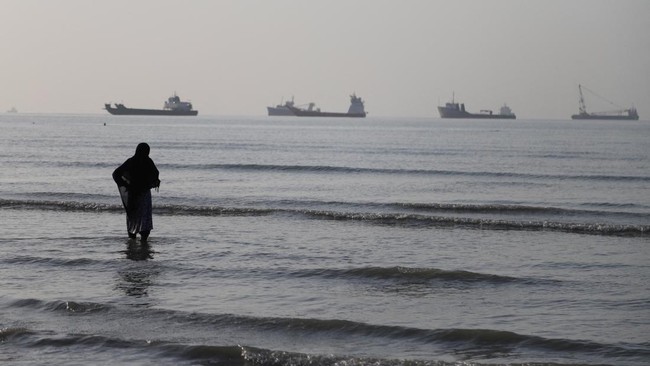
As the US and Iran each claim control over the Strait of Hormuz, ship traffic through the route has fallen below the monthly average.
Before the US-Israel attacks on Iran began in late February, the Strait of Hormuz was a route for around one-fifth of the world’s oil and liquefied natural gas (LNG) supply.
Two vessels belonging to the UAE state energy company, Abu Dhabi National Oil Company (ADNOC), were attacked while transiting the strait on Thursday. The UAE state news agency WAM said the UAE government condemned the incident as an Iranian attack.
“That is the main headline driving prices higher: tankers were attacked,” said Phil Flynn, senior analyst at Price Futures Group.
Russian crude oil exports from the Sheskharis terminal at the port of Novorossiysk on the Black Sea were also temporarily halted on Friday after a drone attack. According to three sources familiar with the matter, the disruption added pressure on one of Russia’s main export routes.
Flynn said the Ukrainian attack on the port of Novorossiysk also contributed to the rise in oil prices.
Amid limited supply from the Middle East, OPEC projections show weaker demand growth. Meanwhile, US crude oil inventories recorded their largest weekly increase in more than 3.5 years.
“The IEA and EIA reports this week were quite revealing. Inventories turned out to be much stronger than feared, which should have pushed oil prices down,” said Norbert Rucker, Head of Economics and Next Generation Research at Julius Baer.
IEA stands for the International Energy Agency, while EIA is the US Energy Information Administration.
The IEA is widely used when discussing global energy prospects, energy transition, electric vehicles, oil demand, gas, coal, and renewable energy. The EIA is more often referenced for US oil production, oil inventories, energy imports and exports, fuel consumption, oil and gas prices, and global energy data.
Iran has asked the US to admit defeat, while President Donald Trump called Iran an evil country and asked the American public to prepare for fuel prices that remain high.
The statements show that the US and Iran are still very far from a peace deal. Peace negotiations and oil tanker traffic through the Strait of Hormuz also remain halted.
“The strait will only be opened and closed on Iran’s orders. As long as you do not accept the reality of defeat and continue to enjoy delusions, Iran will continue to enforce the blockade,” said Iranian Deputy Foreign Minister Kazem Gharibabadi in a post on X on Saturday morning.
“The Strait of Hormuz cannot be seized with a tweet or an aircraft carrier, by issuing orders or delivering campaign speeches,” he said.
Before the US and Israel launched the war against Iran on 28 February, around 1 in every 5 barrels of oil exported worldwide passed through the Strait of Hormuz.
On Friday, Trump asked the American public to accept slightly higher petrol prices as long as the conflict with Iran continues.
During a political campaign event in Garden City, New York, Trump said paying “a little more for petrol” was worth it to ensure that a “very evil country” does not possess nuclear weapons. This was one of the reasons Trump cited for the war.
Rising fuel prices also add pressure on inflation and could become a political issue. According to the American Automobile Association (AAA), the average petrol price in the US reached around US$4.08 per gallon on Friday, up 29% from US$3.16 a year earlier.
According to analysis by ship-tracking firm Kpler, only two vessels passed through the Strait of Hormuz on Friday. One was a grain carrier entering Iranian waters, while an empty bulk carrier moved in the opposite direction.
There was also one empty tanker carrying liquefied petroleum gas products that entered the Gulf region through the strait. However, no crude oil shipments were observed.
Some vessels may still be transiting the strait undetected because they have switched off their transponders. However, the number is still far below the more than 130 vessels per day that passed through the Strait of Hormuz before the war.
Vessels that dare to pass through the strait without Iran’s permission risk missile or drone attacks.
ADNOC said two of its vessels were attacked while transiting the strait on Thursday night. On Friday, WAM news agency reported that another vessel had also been attacked.
Iran describes its control of traffic in the Strait of Hormuz as a blockade, while the US uses the same term for its threats against Iranian vessels leaving port.
“What we are doing is a great service to the world, not just for ourselves… and we are really doing an incredible job,” Trump said.
He also said the 260-day deployment of US aircraft carriers to support the war was “not nearly long enough.”
The temporary agreement in June to end the war has now collapsed, and there is no sign that either the US or Iran will return to the negotiating table.
Iranian Foreign Minister Abbas Araqchi said no decision has been made to resume negotiations with the US. Qatar and Pakistan as mediators are still communicating with Iran and exchanging messages, but this cannot yet be called negotiations.
Rising fuel prices clash with Trump’s campaign promise to lower energy costs. The Democratic Party is also beginning to make the economic impact of the Iran war an issue in the US midterm elections in November.
Gharibabadi said Tehran would not be intimidated by threats or shows of military force. However, signs of economic impact on Iran are beginning to emerge.
Iranian President Masoud Pezeshkian, in a statement broadcast on state television, blamed high inflation on the US blockade of Iranian ports and sanctions on Iranian oil exports.
Trump and Treasury Secretary Scott Bessent both promised to increase financial pressure on Iran. Bessent said an announcement regarding additional measures against Iran would be made next week.
The latest attacks by the Iran-backed Houthi group in Yemen have again raised concerns about the widening of the war in the region.
The internationally recognised Yemeni government said the Houthis fired six ballistic missiles at the port of Mocha on the Red Sea on Friday, killing four civilians.
Source: jawawa.id (https://jawawa.id/newsitem/oil-prices-surge-again-as-the-strait-of-hormuz-becomes-a-ghost-sea-1786762285)
Originally published by CNBC Indonesia (https://www.cnbcindonesia.com/research/20260815081750-128-759583/harga-minyak-membara-lagi-selat-hormuz-kini-jadi-lautan-hantu), translated from Indonesian