
Oil Prices Rise to US$80 as Market Fears Supply Disruptions
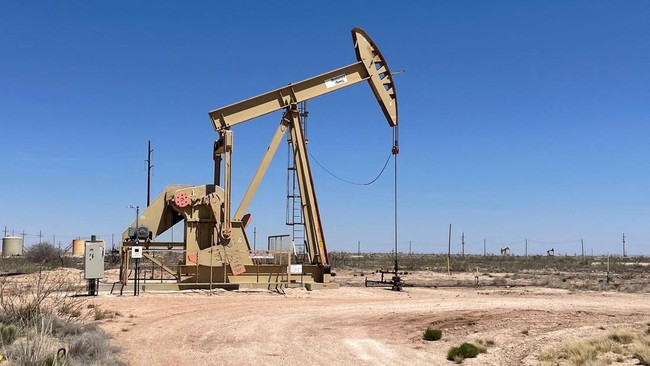
Global oil prices moved slightly higher in trading on Thursday morning (6/8/2026) Indonesian time, after the market digested the latest developments in the Middle East conflict, a rise in United States crude oil inventories, and supply disruptions from several key export routes.
Citing Refinitiv data, on Thursday (6/8/2026) at 08.45 WIB, Brent crude was at US$80.09 per barrel, up 0.81% compared to the previous close of US$79.45 per barrel. Meanwhile, West Texas Intermediate (WTI) crude strengthened 0.69% to US$75.74 per barrel from US$75.22 per barrel.
The increase came after Brent had closed below US$80 per barrel on Wednesday for the first time since mid-July. Over the past week, price movements have remained heavily influenced by geopolitical developments in the Middle East.
The market’s main focus is on the Strait of Hormuz, a shipping lane that before the outbreak of war in late February carried around 20% of the world’s oil and liquefied natural gas (LNG) trade. US President Donald Trump said negotiations had been ongoing throughout the day with Iran and described the talks as positive. However, he still threatened to take tough action if an agreement fails to be reached.
On the other hand, Iran denied any peace negotiations. Iran’s Ministry of Foreign Affairs stated that Tehran and Oman had reached an understanding regarding the management of the Strait of Hormuz, while a joint announcement was still in the finalisation stage.
Hopes that ship traffic in the Strait of Hormuz could return to normal had earlier pressured oil prices in the previous session. Market participants remain cautious because the negotiation process is seen as not yet providing certainty regarding the management mechanism for the strategic waterway.
From the fundamental side, the market also responded to US oil inventory data. The Energy Information Administration (EIA) reported crude oil stocks rose by 2.5 million barrels to 407 million barrels last week. This result was contrary to analysts’ expectations of a decline of around 1.5 million barrels.
The increase in inventories occurred amid reduced refinery processing activity and rising crude oil imports. Stocks at Cushing, Oklahoma, the delivery point for WTI contracts, also increased more than market expectations, which briefly weighed on US oil prices.
Amid these sentiments, the risk of global supply disruptions has not fully disappeared. The Houthi group in Yemen claimed to have attacked a Saudi Arabian oil tanker near the Yanbu export port. At the same time, attacks on ships, ports, and export terminals in the Black Sea region continue to disrupt commodity distribution.
Supply from Kazakhstan is also facing obstacles. The Caspian Pipeline Consortium (CPC), the main export route for Kazakh oil, has halted operations several times this week due to safety issues and limited tanker availability.
Meanwhile, China has relaxed fuel export restrictions in August. The policy could potentially add refined oil product supply to the international market and is one of the factors investors continue to monitor.
Source: jawawa.id (https://jawawa.id/newsitem/oil-prices-rise-to-us-80-as-market-fears-supply-disruptions-1785984662)
Originally published by CNBC Indonesia (https://www.cnbcindonesia.com/market/20260806085301-17-756982/harga-minyak-naik-ke-us-80-pasar-khawatir-gangguan-pasokan), translated from Indonesian