
Oil Prices Plunge 5%, Moving Further Away from US$90/Barrel Level
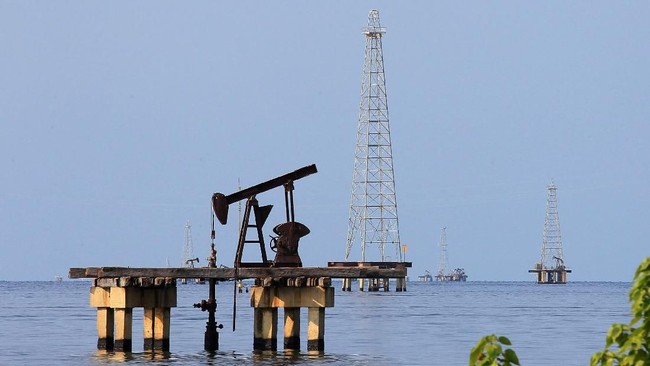
Global crude oil prices fell sharply this week, moving out of the US$90 per barrel zone. In Friday’s trading session (28/8/2026), Brent crude was recorded at US$89.31 per barrel, down 0.43% from the previous day, while WTI fell 0.16% to US$83.4 per barrel. On a weekly basis, both benchmarks dropped 5.38% and 4.20% respectively.
Oil prices fell again following comments from new Federal Reserve Chair Kevin Warsh, who signalled the possibility of an interest rate hike later this year to curb inflation, according to Phil Flynn, senior analyst at Price Futures Group. “The global product market appears strong following continued attacks on Russian oil refineries in Ukraine,” Flynn said. “However, there are many rumours that a deal may be reached to reopen the Strait of Hormuz this weekend,” he added, as quoted by Refinitiv (29/8/2026).
The conflict between the US-Israel and Iran entered its sixth month on Friday. Traders are monitoring the still-fluctuating recovery of oil flows through the strait, a route that previously carried 20% of global oil production before the war broke out. “The market was surprised by additional flows, the Iran-Oman shipping corridor, and US claims of mine clearance,” said Rystad analyst Janiv Shah. “The weekly price decline is likely due to the volume that can exit the strait and the speed of the increase in oil flows. This allows refineries in Asia to take and consume that supply,” he said.
This week, the US announced what it called the “toughest sanctions in history” against Iran. Tehran stated that the sanctions were an “inhumane and hostile act” that was no longer effective. Mediators are stepping up efforts to reopen the Strait of Hormuz. Tehran agreed to draw up a list of conditions to restore normal traffic after a Qatari envoy urged Iran to respect freedom of navigation.
The recovery of oil flows through the strait remains unstable. Preliminary shipping data on Friday showed that on Thursday (27/8/2026), seven commodity-carrying vessels crossed the strait, down from 17 ships the previous day and below the 10-day average of 15 ships. Meanwhile, at Bab el-Mandeb, another key maritime chokepoint, 17 commodity vessels crossed, with six entering and 11 exiting.
On Thursday, Goldman Sachs estimated total Gulf region exports recently stood at around 15 million to 16 million barrels per day, which is 7 million to 8 million barrels per day below pre-war levels but 5 million to 6 million barrels per day above the March low. “The impact on who will remain in or out of OPEC, how Chinese demand is affected, and whether global refinery issues can now be resolved all depend heavily on this volatile war situation,” said John Evans, analyst at PVM Oil Futures.
Officials in President Donald Trump’s administration are pursuing a deal to secure long-term access to part of Venezuela’s crude oil reserves, according to sources familiar with the negotiations on Thursday. The move could ultimately lower oil import costs. Venezuela is also considering leaving the OPEC oil producers’ group, Bloomberg reported.
Separately, geopolitical tensions rose after Moscow warned it could strike British military targets both inside and outside Ukraine in response to Kyiv’s attacks on Russian territory using long-range cruise missiles supplied by Britain. However, Trump said Russian President Vladimir Putin would not attack a NATO member state, dismissing media reports that CIA Director John Ratcliffe had warned Russian officials this week against such an attack. Britain is a founding member of NATO. Ukraine’s military struck a Russian oil refinery in the Yaroslavl region overnight, according to a statement from Ukraine’s General Staff.
Source: jawawa.id (https://jawawa.id/newsitem/oil-prices-plunge-5-moving-further-away-from-us-90-barrel-level-1787982665)
Originally published by CNBC Indonesia (https://www.cnbcindonesia.com/research/20260829074713-128-763254/harga-minyak-ambles-5-mulai-jauhi-level-us-90-barel), translated from Indonesian