
Oil Prices Hit US$107, Europe Raises Rates, and US Faces Critical Economic Data
US stock markets tumbled during Thursday’s trading as US crude oil prices breached the US$100 per barrel mark. Investors are increasingly concerned that the prolonged conflict in the Middle East will trigger an inflationary surge.
The Dow Jones Industrial Average closed down 316.56 points or 0.6% to 52,064.10, while the S&P 500 weakened by 0.58% to 7,591.70, and the Nasdaq Composite slipped 0.65% to 26,081.72. This decline marks the fourth consecutive losing day for the three major Wall Street indices.
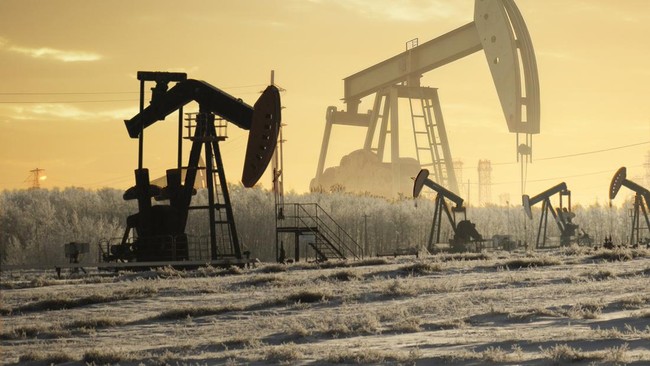
Rising oil prices are once again weighing on market sentiment as the war between the United States and Iran enters its seventh month. West Texas Intermediate (WTI) prices closed up 6.7% at US$102.48 per barrel, while Brent crude rose 5.9% to US$107.63 per barrel. Both benchmarks recorded their highest closing levels since 19 May.
Since the conflict with Iran began in late February, WTI prices have surged by 52.9%, with year-to-date gains reaching 78.5%. This spike in oil prices also pushed US 10-year Treasury yields above 4.95%, the highest level since October 2023.
High-beta semiconductor technology stocks, which previously drove market rallies, also faced pressure. Investors fear that rising interest rates and oil prices could slow economic growth. Intel plummeted 5.6%, while Micron Technology fell 4.7%. Conversely, hyperscalers such as Alphabet and Microsoft saw gains of less than 1%, while Apple shares jumped 3.6% following the successful launch of its first foldable smartphone.
US Inflation Remains a Primary Concern
While the August Producer Price Index (PPI) report was relatively moderate, it failed to ease investor fears regarding interest rate hikes and oil prices. The August PPI rose 0.4% month-on-month after seasonal adjustments, aligning with Dow Jones consensus. On an annual basis, the PPI reached 5.4%, significantly above the Federal Reserve’s 2% inflation target.
This data was released just one day before investors await the Consumer Price Index (CPI) report on Friday. Both indicators are crucial for assessing the direction of inflation, which ultimately influences the Federal Reserve’s primary metric, the Personal Consumption Expenditures (PCE) Price Index. The PCE data is scheduled for release following the Fed’s interest rate decision on 16 September.
Stephen Coltman, Head of Macro at 21shares, noted that the PPI data does not yet provide a clear picture of whether the Fed will raise interest rates next week. However, the surge in WTI prices and the new highs in Treasury yields have increased risks for investors ahead of the CPI release.
According to the CME FedWatch Tool, latest Fed Funds futures contracts show a 71% probability that the Fed will raise interest rates by 25 basis points following next week’s meeting.
Market sentiment is expected to remain cautious following mixed economic signals. While Indonesian retail sales grew and the European Central Bank raised interest rates as expected, US producer inflation strengthened and the labour market remains solid. Investors are now turning their attention to Japanese producer inflation, US consumer inflation, and US consumer sentiment.
- Escalating War Drives Oil Prices Above US$107
Oil prices surged by more than 6% on Thursday. Brent rose 6.34% to US$107.63 per barrel, while WTI jumped 6.69% to US$102.48 per barrel. Both reached their highest levels since 19 May. The surge follows increased attacks on shipping since the Iran war began. Houthi rebels, allied with Iran, have also taken control of the port of Mocha in Yemen, heightening threats to Red Sea shipping lanes. Disruptions in the Strait of Hormuz are further tightening global oil supplies.
- US Treasury Yields Surge
Selling pressure in the US bond market intensified on Thursday. The spike in oil prices triggered inflation fears, while the US Treasury purchased fewer bonds than expected in an expanded buyback operation. The 10-year US Treasury yield jumped to 4.98%, nearly reaching 5%, a level unseen since October 2023. Rising yields reflect growing concerns that the Federal Reserve may raise interest rates at least once before the end of the year, which would increase borrowing costs even if bond markets stabilise.
- Indonesia Retail Sales July 2026
Bank Indonesia announced that Indonesian retail sales grew by 1.1%…
Source: jawawa.id (https://jawawa.id/newsitem/oil-prices-hit-us-107-europe-raises-rates-and-us-faces-critical-economic-data-1789084425)
Originally published by CNBC Indonesia (https://www.cnbcindonesia.com/research/20260910181106-128-767035/harga-minyak-us-107-eropa-kerek-bunga-as-beri-kabar-genting-hari-ini), translated from Indonesian