
Oil Prices Fuel Asian Market Movements This Morning
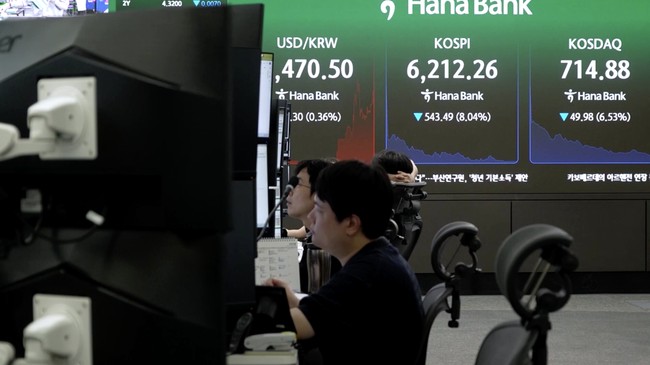
Asia-Pacific stock markets moved in varied directions in trading on Tuesday (8/9/2026), amid escalating geopolitical tensions after the United States (US) and Iran launched attacks against each other.
According to CNBC, South Korea’s Kospi index rose 0.75% at the start of trading, whilst Japan’s Nikkei 225 fell 0.95% and Australia’s S&P/ASX 200 weakened 0.22%.
Market movements were overshadowed by a surge in crude oil prices to a six-week high on Monday evening after the US and Iran attacked each other over the weekend. Brent crude rose 1.1% to US$97.31 per barrel, whilst West Texas Intermediate (WTI) futures gained 1.3% to US$92.66 per barrel.
Crude oil prices have surged over the past month as the US-Iran war continues. The rise in energy prices has heightened market concerns about higher inflation and could put pressure on US government bond yields.
The yield on the 10-year US Treasury note rose last week to its highest level since November 2023. Meanwhile, the two-year Treasury yield reached its highest level since January 2025.
Ed Yardeni, president of Yardeni Research, said a series of central bank meetings in the coming weeks would be a test of the stock market’s composure. According to him, the rise in bond yields globally raises questions about whether the conditions reflect better-than-expected economic growth, higher inflation, or concerns about an approaching fiscal debt crisis.
The US central bank, the Federal Reserve (The Fed), is scheduled to hold a monetary policy meeting next week. Based on CME Group’s FedWatch, market participants currently estimate a roughly 60% chance that The Fed will raise interest rates by 25 basis points following the meeting.
Those expectations could still change this week as the market awaits wholesale and consumer inflation data, due to be released on Thursday and Friday respectively. The Fed’s policy outlook could also be affected again if oil prices surge further due to rising tensions in the Middle East.
Beyond the US-Iran conflict, investors are also facing the potential escalation of trade tensions between the US and Canada. Canada is scheduled to impose retaliatory tariffs on around US$20 billion worth of US goods starting Tuesday.
US President Donald Trump on Monday also warned Canadian aircraft manufacturer Bombardier that it cannot sell its products in the US unless Canada begins manufacturing those products in the US. Trump made the statement ahead of the new tariffs taking effect via a post on the Truth Social platform.