
Oil Prices Drop 5% as China and Saudi Arabia Move to Stabilise Global Market
Global crude oil prices have fallen after China, at the request of Saudi Arabia, asked Iran to limit Houthi group attacks on Saudi oil infrastructure.
According to Refinitiv, in the final trading session this Friday (18/09/2026), Brent crude prices fell by 0.91% to US$103.87 per barrel, while West Texas Intermediate (WTI) dropped 1.58% to US$100.30 per barrel. This decline extends a negative trend, with Brent prices having fallen 4.5% and WTI plunging 5.3% over the last three days.
While WTI prices had been gaining for three consecutive weeks, Brent’s recent decline breaks a two-week upward trend. Global fuel prices remain under pressure due to ongoing crude oil supply disruptions and global refining capacity constraints. In the United States, diesel prices reached a record US$6.4476 per gallon, or approximately US$1.71 per litre, according to American Automobile Association (AAA) data. With oil prices remaining above US$100 per barrel and supplies disrupted, the pressure on global fuel prices remains a primary market concern.
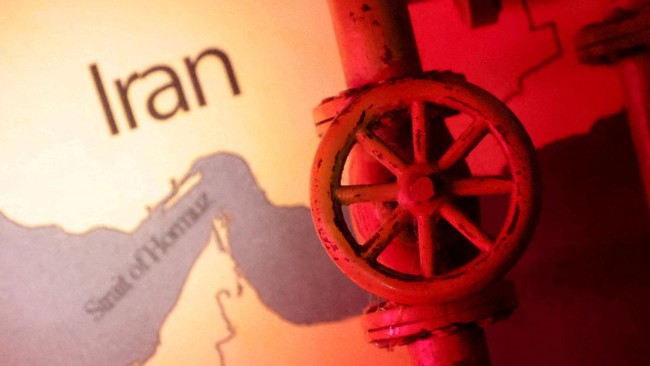
Despite reports of Chinese intervention, analysts believe the oil market outlook remains difficult to predict for the coming months. JPMorgan stated on Thursday that it lacks a clear baseline projection for the oil market for the first time since the US-Israel war against Iran began in February. The situation in the Strait of Hormuz also remains a concern, as the vital oil trade route is nearly severed. Early shipping data showed only four commodity vessels passing through on Thursday, far below the average of approximately 16 ships per day seen in the ten days prior.
Oil prices approached a nearly four-month high earlier this week after sources reported that crude oil loading at Saudi Arabia’s export terminal in the Red Sea, Yanbu, had been halted. Riyadh also cancelled several shipments to Europe after the East-West pipeline was damaged by an attack last week. Saudi Aramco has informed at least two European refinery customers that they will not receive crude oil supplies next month.
Cross-border attacks between Saudi Arabia and the Iran-backed Houthi group recurred on Thursday. The expanding conflict in the Middle East increases the risk of energy supply disruptions. Three pumping stations serving the Saudi East-West pipeline were reported damaged in last week’s attack, a higher number than previously estimated, with repair timelines still uncertain. Saudi Arabia is now working to restore approximately 50% of the East-West pipeline capacity within a few days.
“The key question is whether physical flows can return to normal and how long it will take. If traffic in Hormuz continues to improve, the geopolitical premium on oil prices could be eroded,” said Priyanka Sachdeva, Head of Market Insights at Phillip Nova, to Reuters. Meanwhile, the US and Iran have not resumed peace talks since the temporary agreement reached in June collapsed. The conflict is expected to be a topic of discussion at the United Nations General Assembly next week, where an Iranian delegation is also expected to attend.
The market is hopeful that Saudi Arabia can resume at least 50% of the East-West Pipeline’s capacity, which was previously halted due to drone attacks. Such a recovery would help mitigate disruptions to Saudi oil exports through the Red Sea while the Strait of Hormuz remains practically closed. “This decline is almost entirely due to reports that Saudi Arabia intends to restore at least 50% of the East-West Pipeline capacity in the coming days,” noted Norman Liebke, an analyst at Commerzbank. If the pipeline returns to operation, oil prices could potentially fall further as global supply increases.
Downward pressure on prices is being tempered by reports that state oil giant Aramco will not supply crude oil to European customers next month. Bloomberg reported that at least two European refineries will not receive Saudi shipments. Supply disruptions are further exacerbated by shipping restrictions in the Strait of Hormuz. On Thursday, only four cargo ships traversed the route, significantly lower than the average of nearly 16 ships per day in the preceding ten days.
French President Emmanuel Macron has stated he will convene a G7 meeting in the coming weeks to discuss the potential release of strategic energy reserves through the International Energy Agency (IEA). In March, IEA member nations released 400 million barrels following the outbreak of the Middle East war on 28 February, following US and Israeli attacks on Iran. The French proposal aims to ease market concerns regarding supply, even as tensions remain high. The UKMTO reported two new attacks on tankers between Wednesday and Friday.
Source: jawawa.id (https://jawawa.id/newsitem/oil-prices-drop-5-as-china-and-saudi-arabia-move-to-stabilise-global-market-1789789872)
Originally published by CNBC Indonesia (https://www.cnbcindonesia.com/research/20260919071616-128-769179/harga-minyak-jatuh-5-china-arab-saudi-ramai-ramai-selamatkan-dunia), translated from Indonesian