
Oil Prices Continue to Weaken at the Start of the Week
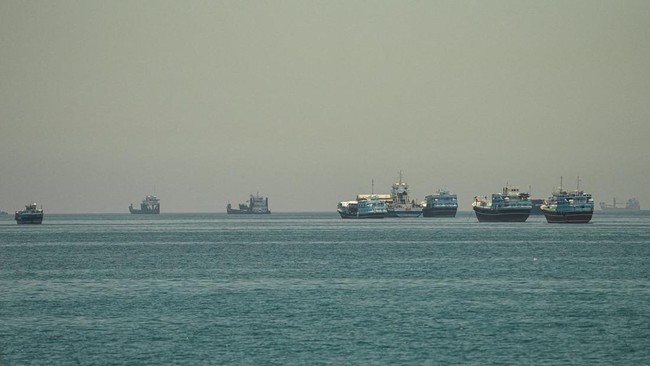
Global oil prices moved downwards in Monday morning trading (22/6/2026), following a sharp correction last week as concerns regarding Middle Eastern supply eased.
According to Refinitiv data as of 09:15 WIB, Brent crude stood at US$79.48 per barrel, a 1.35% decrease compared to last Friday’s closing position of US$80.57 per barrel. Meanwhile, West Texas Intermediate (WTI) crude was at US$76.46 per barrel, down slightly by 0.18% from its previous position of US$76.60 per barrel.
This movement extends the correction phase that has been occurring since mid-June. On 10 June, Brent was still perched at US$93.10 per barrel and WTI at US$90.03 per barrel. This means that in less than two weeks, Brent has lost approximately 14.6% of its value, while WTI has dropped by about 15%.
The greatest pressure stems from changing market expectations regarding global supply. In recent weeks, market participants were concerned about oil distribution disruptions due to the Iran-Israel conflict and uncertainty in the Strait of Hormuz, a vital artery for global energy trade.
Reuters reported that oil prices plummeted by more than 8% last week as the market began to factor in the return of supply that was previously held up in the Persian Gulf region. Additionally, there are hopes that US sanctions on Iranian oil exports could be eased as part of ongoing negotiations.
Nevertheless, tensions have not entirely subsided. Iran announced the closure of the Strait of Hormuz over the weekend, citing violations of peace agreements by Israel and the United States.
Kpler reported that ship traffic crossing the strait has dropped sharply. On Sunday, only five ships were recorded passing through, far fewer than the 26 ships recorded the day before.
This decline in shipping activity serves as a new alarm for the global energy market. The Strait of Hormuz is the most strategic oil shipping route in the world, where millions of barrels of oil from Saudi Arabia, the United Arab Emirates, Kuwait, Iraq, and Iran move towards markets in Asia, Europe, and America.
Saul Kavonic, Head of Energy Research at MST Marquee, believes the market may have been too quick to assume that the Strait of Hormuz would return to normal operations. According to him, Iran still has incentives to maintain pressure on the shipping route as it remains one of the primary bargaining chips in ongoing geopolitical negotiations.
Uncertainty also arises from the first round of talks between US and Iranian officials in Switzerland. The meeting, which was expected to be an initial step towards resolving the conflict, did not proceed smoothly. US President Donald Trump even threatened to continue attacks against Iran if diplomatic developments do not meet Washington’s expectations.
From the supply side, several Middle Eastern producers have begun to widen their supply taps. The United Arab Emirates, Kuwait, and Iraq are reported to have offered additional oil volumes to buyers in the past week. Iraq even plans to gradually increase production to the range of 4.2-4.3 million barrels per day.
At the same time, Iran stated that more than 25 million barrels of its oil have successfully passed through a virtual blockade since the beginning of last week. This influx of supply has reduced market concerns regarding the risk of oil shortages in the short term.