
Oil Price Pressures, Geopolitics and the Fate of Our Economy
Indonesia’s economy cannot be said to be in good shape. Broadly, external shocks are affecting it through three channels: energy and fiscal pressures, global supply chains, and investment and financial markets.
Rising energy prices and supply-chain disruptions could increase production costs, constrain fiscal space, and hinder investment and job creation. Volatility in global financial markets also risks weakening the rupiah, pushing up yields on government bonds and funding costs, and making banks more cautious or even less able to extend credit.
These external shocks are important considerations for economic policy because they could put pressure on the Indonesian economy as a whole. Higher energy costs and fiscal burdens, disruptions to global supply chains and financial-market volatility can spread into the real economy and domestic activity more widely. Economic policy should therefore focus on these three areas to maintain national stability.
The first channel is energy and fiscal policy. Geopolitical escalation could drive up energy prices, raise production input costs and increase the government’s subsidy burden. This could fuel inflation and credit risks while further narrowing Indonesia’s fiscal space.
Fiscal space is already limited, particularly as energy subsidies rise and the government’s programme priorities expand.
The second channel is disruption to global supply chains. Fragmentation and interruptions to supply routes could constrain trade finance and increase businesses’ working-capital needs. This could hamper production, investment and job creation in the years ahead.
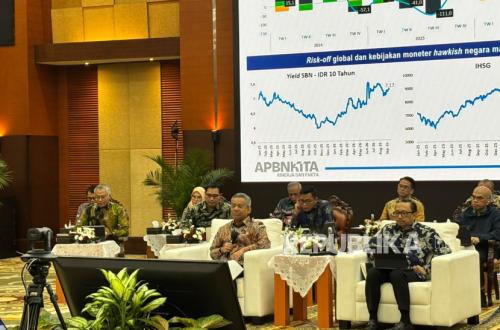
The third channel concerns investment and financial markets. Volatility in global markets, particularly rising yields and investors shifting their portfolios towards assets considered safer, could increase pressure on the rupiah and yields on Indonesian government securities (SBN).
That pressure could raise the cost of funds and make financial institutions more selective in lending. As global uncertainty persists, financing for businesses could become increasingly constrained.
These shocks could remain a challenge for Indonesia’s economy amid geopolitical pressures and wider economic shifts. Although the global economy is growing and making progress, its recovery remains considerably constrained.
Geopolitical uncertainty can clearly affect Indonesia’s economy. Higher energy prices, logistics and production costs, and conditions in global financial markets are realities that require an appropriate policy response. The effects on the real economy could be significant, with risks arising from higher oil prices, uncertainty over physical supplies, and increased logistics and production costs. Dependence on imported crude oil and fuel can affect domestic energy costs, even though not all the oil Indonesia buys comes from the region in question.
The oil and gas trade deficit will also come under pressure, weighing on the rupiah, particularly as the capital market faces pressure following an MSCI review. This could raise production and distribution costs and erode household purchasing power. The government also needs to prepare for a larger energy-subsidy burden, which could narrow fiscal space.
INDEF has published its 2026 mid-year study, titled Navigating Global Shocks: Indonesia’s Economic Resilience Amid Geopolitical, Energy and Climate Crises. The book measures the effects of various global risks on the national economy using a Computable General Equilibrium (CGE) model.
In a scenario involving an energy-price surge caused by conflict in the Middle East, INDEF estimates that gross domestic product (GDP) growth could be reduced by 0.21 per cent. Exports are projected to slow by 2.44 per cent, while real wages could fall by 0.28 per cent. At the same time, inflation could rise by 0.28 per cent and imports surge by 7.8 per cent.
Geopolitical issues will clearly remain a crucial factor for Indonesia’s economy. Conflict in the Middle East that closes the Strait of Hormuz and Bab el-Mandeb has driven up global oil prices. Indonesia has lost around 25 per cent of its fuel-import sources, pushing the Indonesian Crude Price (ICP) to around US$105–106 a barrel. The gap between subsidised and non-subsidised fuel prices is also changing consumer behaviour.
INDEF’s simulation shows that an energy shock could reduce GDP growth by around 0.2 per cent, lower exports, and increase inflation and oil and gas imports. This could in turn widen the trade deficit, weaken the rupiah and add to the energy-subsidy burden.
Pertamina has responded by diversifying its supplies, including from Africa, the United States and other regions, and increasing domestic production. The development of lower-carbon businesses—including biofuels, geothermal, solar, green hydrogen and sustainable aviation fuel (SAF)—is intended to strengthen macroeconomic stability, support gradual subsidy reform and accelerate the transition to renewable energy.