
Oil Palm Farmers Union Proposes Agrarian Reform Bill to Strengthen Smallholders' Rights
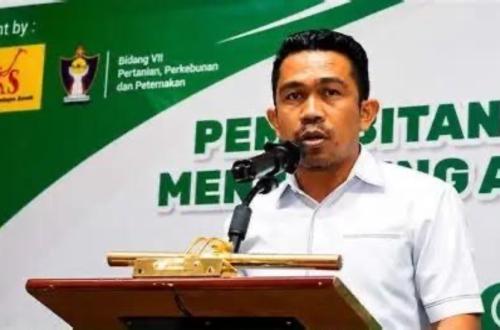
The Indonesian Oil Palm Farmers Union (SPKS) has proposed several provisions within the Agrarian Reform Bill to strengthen the certainty of rights and economic access for smallholder farmers. These proposals include the restructuring of community land within forest areas, the regulation of plantation land control, and the strengthening of access to financing and markets.
SPKS General Chairman Sabarudin stated that the Agrarian Reform Bill needs to serve as an instrument to implement and strengthen the mandate of the 1960 Basic Agrarian Law (UUPA). According to him, agrarian reform must also address the issues faced by smallholders, particularly regarding the certainty of land status.
“Land must be positioned as a basis for production and the livelihood of the people, not merely as an object of land administration. The Agrarian Reform Bill must truly address the structural problems faced by smallholder farmers, including those facing uncertain land status within forest areas,” Sabarudin asserted in an SPKS statement regarding the Agrarian Reform Bill on Tuesday (22/09/2026).
One of the SPKS proposals relates to community plantations located within forest areas. SPKS is requesting that community plantations that have been actively managed for at least five years, with an area of up to five hectares per farmer, be explicitly included as objects of agrarian reform.
SPKS also proposed restructuring plantation land control to provide more space for smallholders and cooperatives. In their proposal, 80 per cent of plantation area control should be allocated to smallholders and cooperatives, while corporate holdings should be limited to 20 per cent.
“We propose that 80 per cent of plantation area control be allocated to smallholders and cooperatives, while companies are limited to 20 per cent. Companies should be directed to play a larger role in processing, industry, technology, trade, and downstreaming,” said Sabarudin.
According to Sabarudin, agrarian reform is not only about resolving existing land conflicts. He believes that land restructuring should also consider land that can be redistributed to reduce land ownership inequality.
“The objects of agrarian reform should also include land that can be restructured based on the principles of agrarian justice and to correct land ownership inequality,” Sabarudin emphasised.
Regarding the recipients, SPKS proposes the recognition of rural communities, indigenous peoples, and smallholder farmers who have occupied land for generations despite lacking formal legal titles. This recognition, according to SPHM, should take into account the actual conditions of land occupation on the ground.
SPKS also proposed that the objects of agrarian reform should not only originate from conflict resolution, remaining company land, the release of forest areas, or land banks. Such restructuring is expected to include the re-regulation of land based on the principles of agrarian justice.
To reduce the potential for overlapping authority between the land, forestry, plantation, and spatial planning sectors, SPKS supports the implementation and institutionalisation of an integrated agrarian reform.
Sabarudin stated that certainty of land rights must go hand-in-hand with the economic strengthening of smallholders. Access to financing, the strengthening of cooperatives, the Indonesian Oil Palm Replanting Programme (PSR), and market access are deemed essential components of support following land redistribution.