
Oil Palm Biomass Production Faces Several Challenges
Jakarta (ANTARA) — A number of stakeholders say Indonesia has enormous potential for oil palm biomass, but the volume produced does not automatically translate into valuable feedstock, as it continues to face various challenges.
M. Windrawan Inantha, Executive Director of the UN Global Compact Network Indonesia (IGCN), said that biomass production faces obstacles including costs, logistics, mill operations and sustainability guarantees.
“Residues must be recoverable using appropriate technology, collected and transported at a reasonable cost, and supplied without neglecting plantation needs and environmental protection,” he said in a statement in Jakarta on Friday.
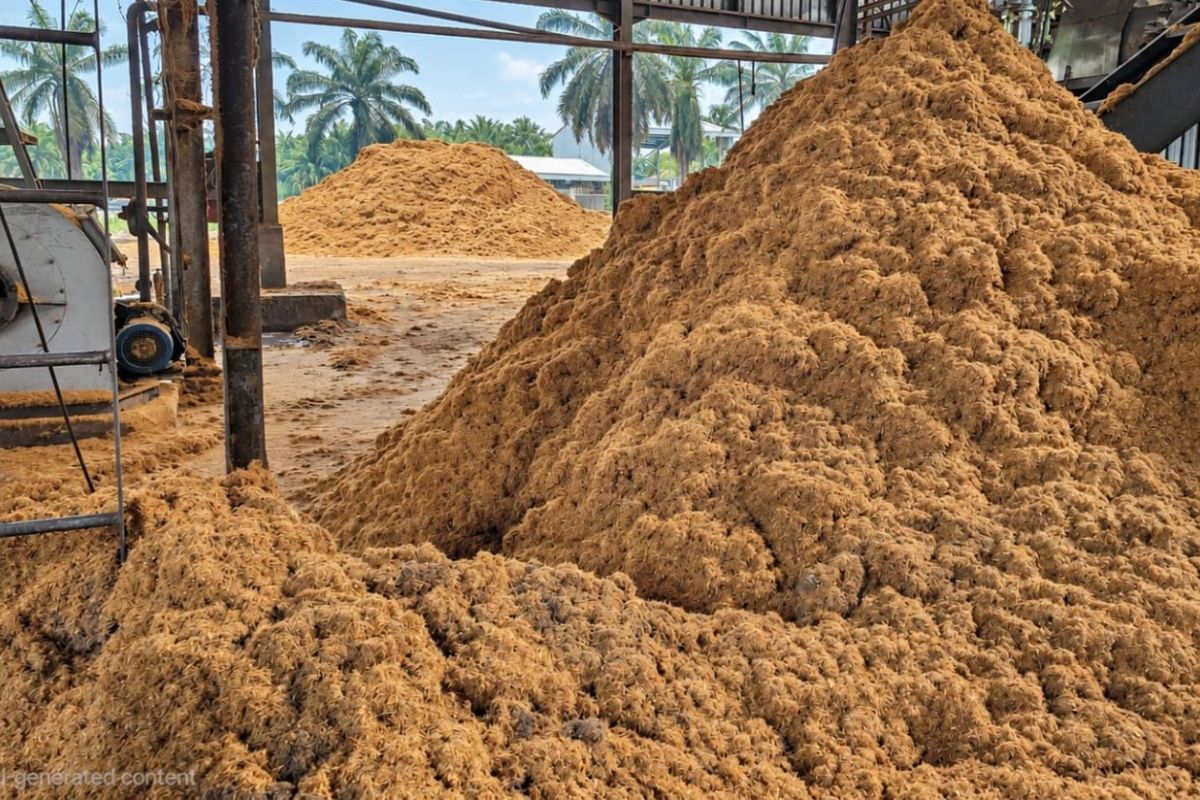
Speaking at the session “The Circular Bioeconomy of Oil Palm Biomass: A Circular Economy Built on Technological Feasibility, Supply Chain Reliability, and Sustainability” at Palmex Medan 2026, he said Indonesia produces 48.2–55.4 million tonnes of oil palm empty fruit bunches (EFB) a year, 24.1–36.1 million tonnes of mesocarp fibre and 11.4–16.9 million tonnes of palm kernel shells.
The volume of oil palm fronds is estimated at 175–242 million tonnes of dry matter a year, while palm oil mill effluent (POME) totals around 120–181 million cubic metres.
These figures indicate the scale of the available resources, he said, but each biomass stream has different characteristics, existing uses and processing challenges.
Prof. Dr Diana Chalil of the Consortium Studies on Smallholder Palm Oil at the University of North Sumatra (USU) said that, of an estimated 46.16 million tonnes of EFB produced nationally, around 23.08 million tonnes could potentially be available after accounting for existing uses.
EFB is returned to plantations as organic matter, processed into ash for fertiliser, or sold for other uses. Distance, road conditions and truck capacity also determine transport costs.
For bioethanol production using EFB, transport costs make up a much larger share of feedstock costs than the price of the EFB itself, she said.
“Therefore, the location of processing plants and the design of logistics are important determinants,” she said.
She stressed that biomass use needs to be planned from the upstream stage through to the market. Companies must establish the volume that can genuinely be recovered and calculate collection and transport costs.
They must then ensure that the technology produces goods that meet buyers’ needs, while making sure that new uses do not undermine the role of residues on plantations or sustainability commitments across the supply landscape.
With this approach, oil palm biomass could offer mills and plantations an opportunity to diversify, she added. However, its economic value will only be realised if technology, supply, logistics, market certainty and sustainability guarantees function as an integrated system.
Jimmy Wilopo, Senior Project Manager for Landscape at Daemeter Consulting, presented lessons from the Siak Pelalawan Landscape Programme (SPLP), which involves nine upstream and downstream palm oil companies operating in the same supply landscape.
Around 20 per cent of national palm oil production comes from Riau Province, he said, while 35 per cent of the Siak and Pelalawan landscape is forested, including some of the remaining peatland expanses in Sumatra.
The SPLP encourages companies, government and local stakeholders to share responsibility through forest and peatland protection, monitoring and responses to deforestation, support for smallholders and villages, traceability, social dialogue and multi-stakeholder collaboration.
Source: jawawa.id (https://jawawa.id/newsitem/oil-palm-biomass-production-faces-several-challenges-1791528858)
Originally published by Antara (Indonesian) (https://www.antaranews.com/berita/5778196/produksi-biomassa-sawit-hadapi-sejumlah-kendala), translated from Indonesian