
Oil, Fuel, and LPG Imports to be Managed via Lemigas, Explains Bahlil
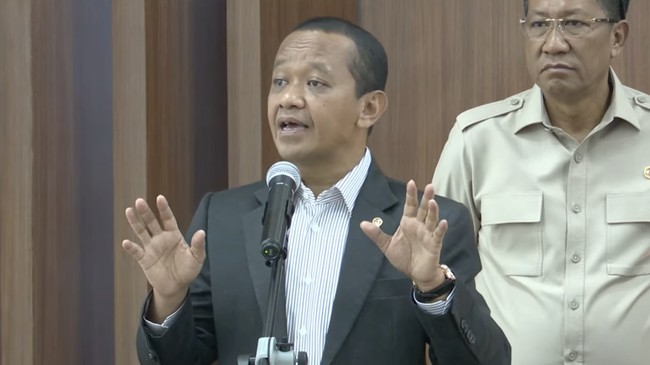
The Minister of Energy and Mineral Resources, Bahlil Lahadalia, has revealed a new scheme for importing oil and gas through the Public Service Agency (BLU), specifically the Lemigas (Oil and Gas Testing Laboratory). Bahlil stated that this policy is a follow-up to presidential directives issued via Presidential Regulation (Perpres) Number 2<0xC2>6 of 2026 regarding the Procurement of Crude Oil, Fuel, and/or Liquefied Petroleum Gas (LPG) for National Energy Security.
He mentioned that the government will coordinate to ensure Lemigas can fulfil this mandate as an extension of the state. “I will begin communicating this today because the President’s directive through the Perpres expects that energy sector imports, including crude, fuel, and LPG, can be managed by the BLU, in this case, Lemigas,” he said when met at the DPR RI Building, Jakarta, on Monday (8/6/2026).
Bahlil emphasised that involving Lemigas as an import manager is intended to simplify the government’s ability to establish direct agreements with partner nations. Under this scheme, energy procurement can be conducted through Government-to-Government (G2G) frameworks, which are then translated into business schemes with other nations. “The goal is to cut the supply chain processes that have occurred previously and enable G2G. If the President enters into cooperation with other countries regarding crude, it can be done directly via G2G and followed up through G2B (Government to Business) with the respective countries,” he added.
Furthermore, the government is opening opportunities to source these energy commodities from various countries, including oil from Russia. Lemigas will be directed to play a key role in managing the technical aspects of these imports to guarantee the stability of national energy reserves. “One of them (Russia) is fine. It will be directed so that this possibility can occur,” Bahlil responded regarding the potential for imports from the Russian Federation.
Through this policy, the government is optimistic that the stability of domestic energy supply can be better maintained amidst global market dynamics. Authorities will continue to refine infrastructure readiness and technical regulations so that Lemigas can execute its energy import mandate transparently and accountably.
President Prabowo Subianto officially issued Presidential Regulation (Perpres) Number 26 of 2026 to serve as the new legal umbrella for ensuring national energy availability, including allowing energy sector BLUs to conduct oil and fuel imports. This regulation was officially signed by President Prabowo on 30 April 2026.
Article 2 of the regulation states that the primary objective is to maintain good governance in the procurement of crude oil, fuel, and LPG, while increasing supply continuity, energy system reliability, and national energy security. The scope covers both domestic procurement and imports. For domestic procurement, Article 3 stipulates that crude oil shall originate from national upstream oil and gas activities, while fuel and LPG shall come from refinery production by energy sector business entities.
Article 4 regulates the import procurement mechanism, outlining three pathways: inter-governmental cooperation, cooperation between the Central Government and foreign providers, and cooperation between energy sector business entities and foreign suppliers. The regulation specifies that for imports involving inter-governmental or central government-to-provider agreements, implementation may be carried out by energy sector BLUs and/or State-Owned Enterprises (BUMN).
Additionally, the Perpres provides greater flexibility during emergencies. Article 5, Paragraph 1, allows BLUs and BUMNs to conduct imports under criteria such as geopolitical conditions threatening global supply, supply chain disruptions, natural disasters or force majeure in supplier nations, supply shortages leading to high price fluctuations, or when national reserves fall below the minimum threshold. The Minister is authorised to declare an emergency based on these criteria. Notably, Article 5, Paragraph 3, allows for price variations in emergency procurement based on quantity, product type, country of origin, or delivery timing as per contract agreements. Regarding funding, Article 6 stipulates that import financing by BLUs can be sourced from internal BLU funds or other legal funding sources in accordance with prevailing laws.