
Oil Exists, But the Routes are Locked
The global oil crisis does not always begin when oil runs out. It can begin when oil is still available, but the routes to bring it to market become increasingly closed. This is exactly what is happening. The US–Iran conflict has turned the Strait of Hormuz into the most vulnerable point in global energy trade.
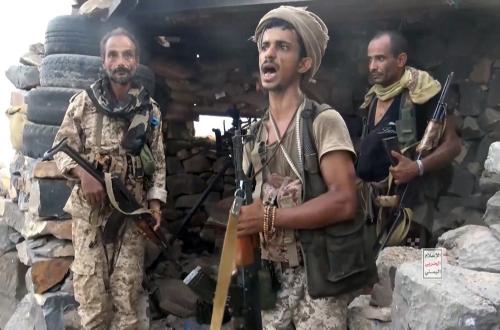
Now, that threat is moving south. The Houthi control over several strategic areas on the Red Sea coast and around Bab el-Mandab creates the possibility that two vital global energy routes could be disrupted simultaneously.
This is what makes the current situation different. The world is not just facing rising oil prices, but an energy security crisis that could potentially evolve into a global trade crisis. When two strategic chokepoints are under pressure at the same time, the issue is no longer just about how much oil is available, but whether that oil can still move safely to consumers.
The Strait of Hormuz has long been one of the world’s primary energy arteries. As war causes shipping in the region to plummet, the market loses certainty. Ships wait, shipping companies recalculate risks, and insurance premiums rise. Since the conflict erupted in late February, commodity ship traffic in Hormuz has plummeted by 95 per cent compared to pre-war conditions, according to Kpler data, and this pressure continues to this day, far from recovery. But the problem does not stop at Hormuz.
On the other side of the Arabian Peninsula, the Houthis are increasingly controlling the Yemeni coast of the Red Sea. They have taken over Mocha and Perim, strategic islands located in the middle of Bab el-Mandab. This control provides a critical position to monitor one of the sea lanes connecting the Red Sea to the Gulf of Aden.
The most worrying development is the emergence of reports regarding the use of sea mines. The Yemeni government previously reported the discovery of a mine believed to have been placed by the Houthis in the vital Bab el-Mandab area. On 15 September, reports re-emerged that the Houthis had planted sea mines in or around the strait, although the latest reports have not yet received adequate independent confirmation.
However, even without confirming all these reports, the threat is serious enough. Mines do not need to actually explode to disrupt trade. The mere risk of mines forces commercial vessels to reduce speed, change routes, wait for escorts, or choose longer paths. In global trade, uncertainty itself is a cost. One delayed ship may seem insignificant, but when such a risk occurs at a chokepoint used for international trade, the impact can multiply.
Bab el-Mandab is even more important than just oil routes. The strait is the gateway to the Red Sea and the Suez Canal, meaning disruptions within it can hinder the flow of ships connecting Asia and Europe. Previous Houthi attacks have shown how shipping companies choose to reroute via the Cape of Good Hope when security in the Red Sea deteriorates. The consequence is longer journeys, higher fuel consumption, increased shipping costs, and extended distribution times.
Ironically, the routes built to reduce dependence on Hormuz are also facing problems. Attacks on the Saudi Arabian East-West Pipeline have halted one of the important routes to the Yanbu terminal in the Red Sea. At the same time, ships leaving Yanbu for international markets still face the issues at Bab el-Mandab. Thus, the alternative to Hormuz appears not to be truly free from geopolitics.
This is where the real problem lies: oil may still exist, but the paths are increasingly locked.
When Hormuz is disrupted, Bab el-Mandab is threatened, alternative pipelines are attacked, and ships begin to avoid high-risk areas, the energy market loses flexibility. The impact then ripples from oil to fuel, logistics, industry, food, inflation, and the cost of living. Such a crisis also reveals the weakness of a global energy architecture that relies too heavily on a few narrow geographical routes. As long as these routes are safe, this dependency does not appear to be a problem. But when conflict turns them into geopolitical weapons, the entire trading system feels the consequences.
For Indonesia, these developments cannot be viewed merely as a distant conflict in the Middle East. Indonesia is part of an Asian economy that is highly dependent on the smooth flow of global trade and energy. When transport and energy costs rise, that pressure ultimately enters the domestic economy. Therefore, Indonesia’s energy security must involve more than just discussing reserves and imports. Diversification of energy sources, trade routes, strategic reserves, and the protection of supply chains must be part of the national security agenda.
Consequently, the biggest question is no longer when oil prices will return to normal. The question is: how long can the world maintain global trade when two strategic energy gateways—Hormuz and Bab el-Mandab—are both under pressure?
A new oil crisis does not necessarily mean the world is running out of oil. It could mean the world is losing the ability to transport oil safely. And when oil routes are locked, it is not just energy that is held hostage, but global trade itself.
Source: jawawa.id (https://jawawa.id/newsitem/oil-exists-but-the-routes-are-locked-1789538358)
Originally published by Republika (https://analisis.republika.co.id/berita/tlfvmy393/minyak-ada-tetapi-jalannya-terkunci), translated from Indonesian