
Oil and Gas Revenue Sharing Funds Reach Hundreds of Billions, Upstream Sector Becomes Pillar of Regional Economy
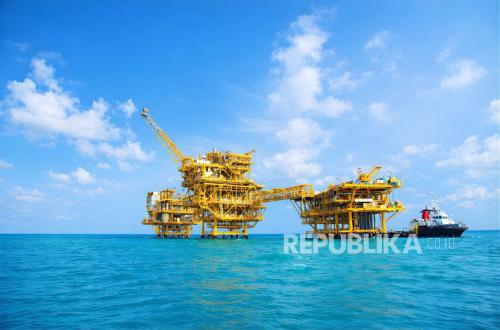
REPUBLIKA.CO.ID, JAKARTA — The contribution of the upstream oil and gas sector to regional economies continues to strengthen, as reflected in the substantial flow of Revenue Sharing Funds (DBH) and Land and Building Taxes (PBB) received by producing regions.
Rinto Pudyantoro, a lecturer at the Faculty of Economics and Business at Universitas Pertamina, explained that the presence of the upstream oil and gas industry has broad economic impacts, particularly through state revenues that are redistributed to the regions.
“The upstream oil and gas contribution to the regions can be seen directly from the oil and gas Revenue Sharing Funds and the oil and gas Land and Building Taxes. This is a tangible form of revenue that directly enters regional coffers and becomes part of the Regional Revenue and Expenditure Budget,” he stated in Jakarta on Thursday (2/4/2026).
He noted that nationally, the oil and gas sector contributes around half of the total PBB receipts. Of that amount, approximately 98 per cent is redistributed to the regions, thereby providing significant impacts to producing areas.
In the regions, this contribution is evident. In Tanjung Jabung Regency, Jambi Province, activities by PetroChina International Jabung Ltd have become the largest contributor to regional revenues from the oil and gas sector.
Based on 2025 data from the Ministry of Finance, contributions from this sector reached around Rp698 billion through DBH oil and gas and approximately Rp280 billion from PBB in the oil and gas sector. These figures are the largest compared to other regencies and cities in Jambi Province.
These revenues serve as one of the main sources of funding for regional development, from infrastructure and education services to health and welfare improvement programmes.
Rinto added that the impact of the upstream oil and gas industry does not stop at direct revenues but also creates multiplier effects on the economy.
“Upstream oil and gas activities create a chain effect, from job creation and local economic circulation to support for other sectors such as electricity and industry,” he said.
With ongoing contributions, the upstream oil and gas sector is seen as remaining one of the main pillars of the regional economy. Strengthening synergy between the central government, regional authorities, and industry players is considered important to optimise sustainable economic benefits.