
Oil and Gas Lifting Unachievable Without Government–KKKS Cohesion
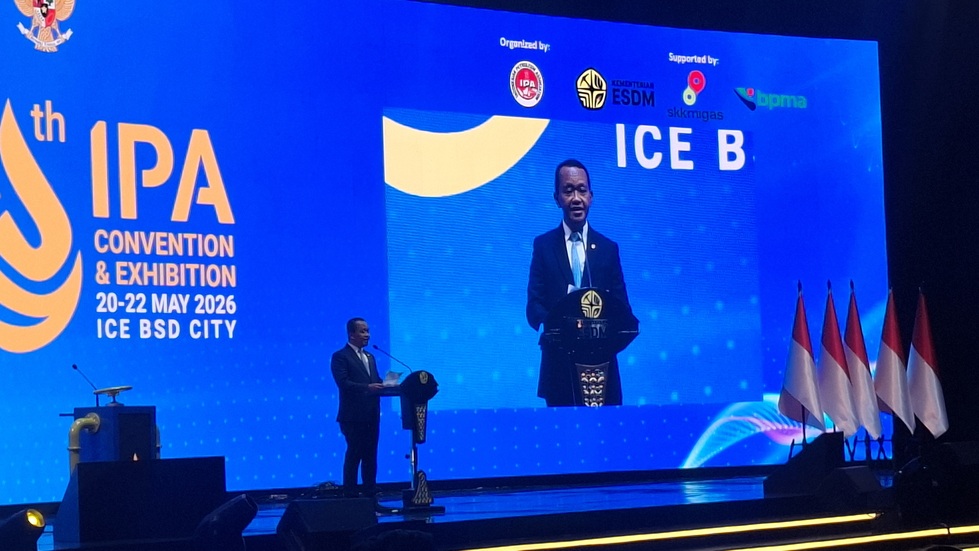
Energy and Mineral Resources Minister (ESDM) Bahlil Lahadalia has stressed that Indonesia’s national oil and gas lifting target is impossible to achieve without close collaboration between the government and the Contractual Cooperation Contractors (KKKS). In the face of global uncertainty and rising domestic energy demand, the government is urging all parties to accelerate the realisation of oil and gas projects and to remove bureaucratic and regulatory hurdles that slow investment.
Bahlil said almost every country now tends to protect its own energy interests. From various meetings with heads of oil-producing and non-oil-producing countries, he said there is a common view that global conflict does not bring universal benefits because it creates global economic uncertainty.
Indonesia, on the other hand, still faces a wide gap between energy consumption and production. Indonesia’s consumption of fuel oil (BBM) currently stands at around 1.6 million barrels per day, while national oil lifting in 2025 is projected to be only around 600 thousand barrels per day. The 2026 state budget target is 610 thousand barrels per day, but the realisation is still below that figure.
“I believe lifting will not be able to run well without good collaboration between KKKS and the government,” Bahlil said at the Indonesian Petroleum Association Convention and Exhibition (IPA Convex) 50 at ICE BSD City, Tangerang, Banten, on Wednesday (20 May).
According to Bahlil, the condition means Indonesia still has to import around 1 million barrels of oil per day. However, the government is seeking to reduce imports through the development of palm-based energy. The biodiesel programme B40, which will be increased to B50 from 1 July, is believed to be able to substitute around 200,000 to 300,000 barrels of imports per day through the conversion of crude palm oil (CPO).
With this scheme, fuel oil imports are expected to be reduced to around 600,000 to 700,000 barrels per day. The government even targets to stop importing diesel in 2026, except for high-quality diesel such as C51 and C48.
“That is all achievable if we can do it,” he said.
The government also asks all companies that have concessions and have completed the Plan of Development (POD) to immediately realise their projects. According to Bahlil, various on-site obstacles must be communicated promptly so the government can help find solutions to accelerate upstream oil and gas projects.
“The government asks for help that all friends who have obtained concession rights and have long-held PODs and are completed should be executed immediately,” he stressed.
In addition to biodiesel, the government plans to push ethanol blends through the E10 to E20 programme. This step is taken because the current national gasoline needs stand at around 39 million to 40 million kilolitres per year, while domestic production is only around 19 to 20 million kilolitres, meaning Indonesia still has to import around 20 million kilolitres of gasoline.
Nevertheless, Bahlil emphasised that fossil energy and industrial feedstock demand remain large. Indonesia still imports LPG up to 8.6 million metric tonnes per year. An additional around 3 million tonnes is expected to appear in 2027 to support petrochemical industries such as Lotte Chemical and Chandra Asri. In addition, Indonesia still lacks naphtha used as feedstock for industry.
Therefore, the government targets oil lifting to increase to 900 thousand to 1 million barrels per day by 2029–2030 in line with President Prabowo Subianto’s directives.
In the occasion, Bahlil again emphasised the importance of synergy among the central government, regional governments, SKK Migas, and business players to accelerate upstream oil and gas projects.
“Government here means not only the central government but also regional governments, regencies, and cities, must join hands to complete this,” he said.
He also urged SKK Migas to accelerate regulatory reform and not hesitate to replace officials who hamper licensing and development of projects.
“For this way only can we accelerate oil and gas lifting,” Bahlil asserted.
Aside from regulatory reform, the government also highlights the importance of technology to raise production from ageing wells. Bahlil cited the success of ENI in discovering a new gas reservoir in East Kalimantan of about 5 TCF, estimated to produce around 200 thousand barrels of condensate per day and expected to start production in 2028–2029 through cooperation with Petronas.
Bahlil also asked regional business players to be involved in the upstream oil and gas supply chain provided they meet professional standards and occupational safety.
“I’m a former regional entrepreneur. Upstream oil and gas business must be professional; this is not a government-owned enterprise as a default to operate,” he said.
He added that the government also asks KKKS that have not handed over participating interests (PI) to regions to realise it in accordance with applicable regulations.
Meanwhile, the President of the Indonesian Petroleum Association, Kathy Wu, said the Indonesian oil and gas industry is currently supported by collaboration between national energy companies such as Pertamina, MedcoEnergi, EMP, and Saka Energy, together with global investors such as ExxonMobil, ENI, Inpex, Petronas, Mubadala Energy, KUFPEC, and BP.
According to Kathy, there are three fundamental foundations for building successful partnerships in the upstream sector: legal certainty and contracts, accelerated project execution, and strengthened exploration. “These help create conditions in which investment can deliver meaningful value for Indonesia,” she added. She assessed the project cycle time…