
Oil and Gas Imports to Go Through Public Service Agency, Expert Questions Efficiency
JAKARTA — Oil and gas practitioner Hadi Ismoyo has warned that a policy requiring crude oil, fuel and LPG imports to go through a Public Service Agency (BLU) risks adding layers of trading margins. The risk is greatest if the new mechanism is used to procure energy from countries that are not subject to international sanctions.
Hadi said the policy, set out in Presidential Regulation No. 107 of 2026, had positive aspects, particularly in opening up access to energy supplies from countries such as Russia. However, he questioned whether the mechanism would be efficient if applied broadly without taking account of the characteristics of supplier countries.
“It is not good for countries that are not under sanctions, because it adds a layer of margins and is actually inefficient,” said the former secretary-general of the Indonesian Association of Petroleum Engineers (IATMI), speaking to Republika.co.id on Wednesday (28 October 2026).
Hadi said oil and gas trading required strong technical and commercial capabilities. He questioned whether the Oil and Gas Research and Development Centre (Lemigas) was ready to procure energy if assigned to do so through the BLU mechanism.
He identified three key considerations in trading crude oil, fuel and LPG: competitive pricing, delivery on schedule to meet refinery operating requirements, and the quality of the commodities being traded.
“The BLU in this case is Lemigas. It has no experience in oil and gas trading,” he said.
Hadi stressed that managing all three aspects required extensive experience in international energy trading. Errors in pricing, delivery schedules or product specifications could disrupt procurement and the fulfilment of domestic energy needs.
He said Pertamina was better prepared to handle oil and gas imports. He also referred to Presidential Regulation No. 26 of 2026, which, in his view, had given Pertamina greater commercial flexibility to secure cargoes of crude oil, fuel and LPG.
“An institution should not be replaced because of a few governance mistakes,” Hadi said.
He urged the government to improve procurement governance without transferring all trading responsibilities away from Pertamina. He added that Pertamina’s position as part of an international corporation should also be considered, particularly in transactions involving countries subject to international sanctions.
The government previously issued Presidential Regulation No. 107 of 2026 to change the procurement arrangements for crude oil, fuel and LPG. The policy shifts procurement from business-to-business (B2B) transactions towards government-to-government (G2G) and government-to-business (G2B) cooperation.
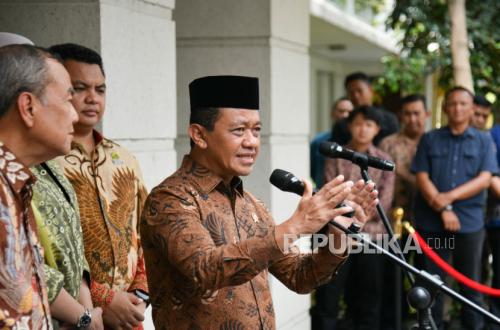
Coordinating Minister for Downstreaming and Energy Transition and Energy and Mineral Resources Minister Bahlil Lahadalia said the change was intended to strengthen the security of national energy supplies. The government aims to address procurement tenders that have taken a long time and have not always guaranteed supply.
“So far, Pertamina has used B2B processes, and the tenders take a long time. Under this regulation, we are moving to G2G and G2B. This means we can now choose which countries to source from,” Bahlil said at a press conference in Jakarta on Monday (26 October 2026).
Under the new mechanism, the government negotiates directly with supplier countries, after which procurement is carried out by an assigned BLU. Pertamina then buys crude oil, fuel or LPG from the agency. The government says this approach enables procurement without involving other intermediary companies.
The government will nevertheless allow Pertamina to import directly in certain circumstances, including when national energy reserves are very low or geopolitical disruption affects a supplier country. Such imports must be co-ordinated with the BLU to ensure energy procurement meets domestic needs.
Source: jawawa.id (https://jawawa.id/newsitem/oil-and-gas-imports-to-go-through-public-service-agency-expert-questions-efficiency-1793170260)
Originally published by Republika (https://ekonomi.republika.co.id/berita/tnlsxu490/impor-migas-bakal-lewat-blu-pakar-pertanyakan-efisiensinya), translated from Indonesian