
OIKN weather modification succeeds in reducing rain in several areas
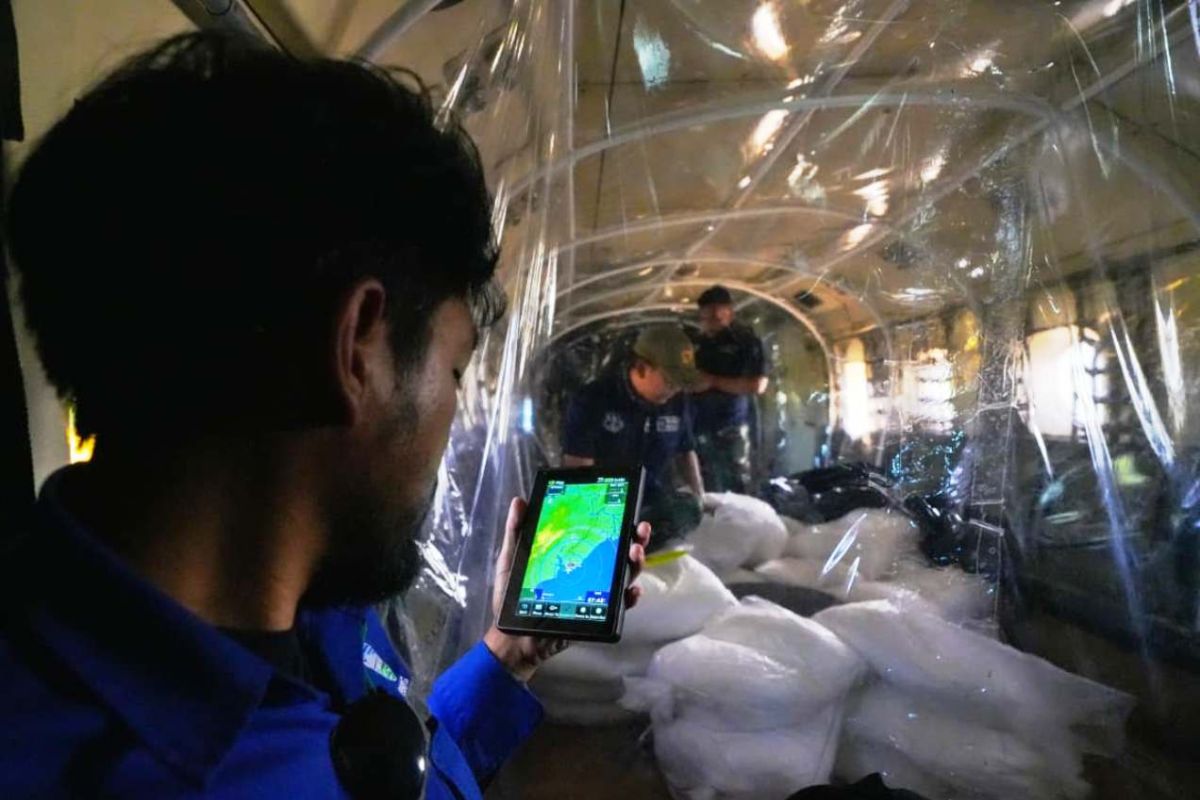
The weather modification carried out by the Nusantara Capital City Authority (OIKN) from Friday (21/8) to Monday (24/8) has succeeded in reducing rain in several areas, such as Mahakam Ulu and Kutai Kartanegara regencies in East Kalimantan.
“Based on the development of the weather modification operation (OMC) up to today at 10.00 WITA, rain has begun to be observed in several areas,” said Danis Hidayat Sumadilaga, Special Staff to the Head of OIKN for Construction Management and Strategy, in Nusantara on Monday.
According to rainfall data from the Long Lebusan post in the upper Mahakam River basin, the post recorded rain in Mahakam Ulu Regency on Saturday (22/8) from 02.00 to 02.30 WITA with rainfall of around 20 millimetres.
He added that the OMC is being carried out to maintain surface water availability in the IKN area and its surroundings.
In the IKN area, he said, the water level at the Sepaku River intake, which is one of the raw water sources for IKN needs, has also risen following the OMC.
The water elevation, previously at +2.04 metres, increased to +2.05 metres, or a rise of about 1 centimetre, at 08.20 WITA. He hopes this elevation will continue to increase as the OMC continues.
“As of Monday at 10.00 WITA, five flight sorties have been carried out using a Casa 212 A-2105 aircraft from the Dhomber Air Force Base Operations Headquarters in Balikpapan, carrying around 800 kilograms of seeding material in the form of sodium chloride (NaCl) on each sortie,” he said.
This OMC is part of a mission to anticipate the impacts of El Niño, the dry season, drought, and the potential for forest and land fires.
The mission is being carried out in collaboration with several parties, including the Meteorology, Climatology and Geophysics Agency (BMKG), the Indonesian Air Force (TNI AU), the local Regional Disaster Management Agency (BPBD), and a number of related agencies.
He said that OMC is a science- and technology-based effort to optimise the potential for rain through cloud seeding.
“Its implementation is carried out in a measured manner by considering atmospheric conditions. The aim is to direct the seeding material at clouds that have the potential to produce rain,” he said.