
Oh No, Price of Petrol Equivalent to Pertalite in This Region Reaches Rp33,400/Litre
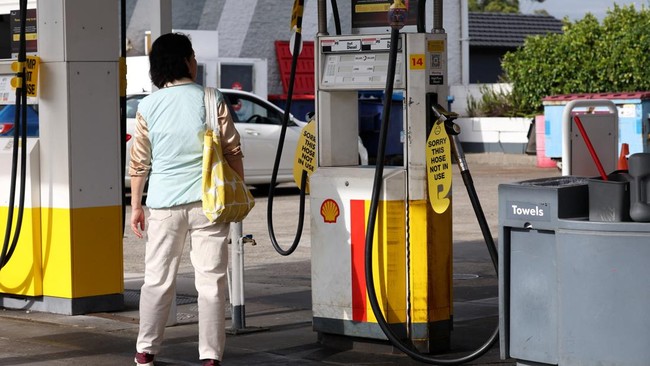
Jakarta, CNBC Indonesia - Fuel price increases are currently occurring almost worldwide due to disruptions in the crude oil supply chain in the Strait of Hormuz. In Indonesia, the price hikes only apply to non-subsidised fuels, while subsidised fuel prices remain stable.
The Indonesian government has chosen to continue bearing the subsidy burden to prevent rises in Pertalite and Biosolar prices. Currently, Pertalite is still sold for Rp10,000 per litre and Biosolar for Rp6,800 per litre to maintain public purchasing power.
This situation differs from neighbouring countries like Australia and New Zealand, which have already raised petrol prices equivalent to Pertalite. This is also felt by Indonesians living in Auckland, New Zealand, when buying fuel there.
Quoting a video uploaded to the Instagram account @catatansiwok, petrol prices in the region have surged sharply and even change almost daily.
He revealed that over the last four weeks, petrol prices have continued to climb. Nevertheless, supplies in major cities like Auckland remain relatively secure.
“Four weeks of war, every day watching petrol prices rise more. Luckily, I’m in Auckland, which is a big city, so supply is still safe,” he said, quoted on Friday (24/4/2026).
However, conditions differ in small towns. According to him, RON 91 fuel or equivalent to Pertalite is reported to be starting to become scarce.
Based on the conversation in the video, he mentioned that petrol prices in Auckland now reach around 3.3 New Zealand dollars (NZD) per litre for RON 91 and 3.5 NZD per litre for RON 95.
When converted to rupiah assuming an exchange rate of Rp10,124 per 1 NZD, the price for RON 91 is equivalent to about Rp33,409 per litre and RON 95 to about Rp35,434 per litre.
This price increase directly impacts the account owner’s expenses. He said that previously, weekly petrol costs were around 40 NZD, but now they have risen to 60 NZD.
According to him, before the increase, petrol prices were around 2.3 NZD per litre, but now they have risen to about 3.3 NZD per litre, or a jump of about 1 NZD per litre.
He then compared the situation to Indonesia, which still provides fuel subsidies. Indonesians are relatively fortunate because Pertalite prices are still subsidised by the government.
“If here it’s calculated daily, so prices change every day. Look, Rp600,000 only gets 17 litres. Yeah, lucky in Indonesia there’s still subsidies,” he said.
For information, based on the latest data, fuel prices in New Zealand remain at quite high levels, with petrol prices at several major terminals averaging above 3 NZD per litre.
Based on BP fuel prices at New Zealand service stations as of 21 April 2026, the price of RON 95 petrol (M95) at the Marsden Point TLF terminal was recorded at 3.17 NZD per litre. Meanwhile, at the Wiri terminal, M95 prices even reached about 3.19 NZD per litre.
For RON 91 (M91), prices were recorded at Marsden Point TLF, Wiri, Mount Maunganui, Napier, New Plymouth, Hutt City, Seaview, Nelson, Lyttelton, Dunedin ranging from 3.05-3.09 NZD per litre.
List of Countries Still Selling Petrol Equivalent to Pertalite
Based on CNBC Indonesia records, Indonesia is not the only country still using fuel with a Research Octane Number (RON) below 92. Several other countries also continue to maintain the use of low-octane fuels, although their numbers are increasingly limited.
Globally, the trend in fuel use shows a shift towards fuels with higher RON. The majority of countries have now switched to petrol with a minimum octane of 92 or higher.
Countries such as Egypt, Uzbekistan, and neighbours like the Philippines and Thailand still sell fuels below RON 92. Egypt is one of the world’s largest economies in North Africa that still sells fuel with a relatively low RON of just 80.
Fuel subsidies are still applied in Egypt to keep fuel prices affordable for the public. The government allocates a large budget for these subsidies to maintain low fuel prices for low-income residents.
Purchasing power in Egypt tends to be lower compared to developed countries, so the government maintains options for cheaper fuels like RON 80.
In addition to low purchasing power, from the perspective of infrastructure and vehicle technology, many vehicles in Egypt, especially old vehicles and public transport, can still use RON 80 fuel without significant issues.
Older vehicles with low-compression engines do not require high-RON fuel, so demand for RON 80 remains high.
Quoted from the Ministry of Petroleum and Mineral Resources of the Arab Republic of Egypt, there are three types of local gasoline: Gasoline 80, Gasoline 92, and Gasoline 95.
Not only Egypt, neighbouring countries like Thailand and the Philippines also sell fuels with RON below 92 or precisely RON 91.
Both countries still sell RON 91 fuel due to several main factors related to regulatory standards, vehicle needs, and the balance of price and fuel quality.
This policy is also adjusted to the needs of modern vehicles and stricter regulatory standards compared to countries that still use fuels with lower RON like 80 or 87.