
Often Overthinking? Here's How to Overcome It
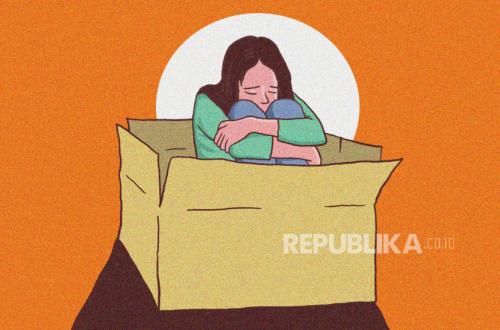
The Ministry of Health of the Republic of Indonesia (Kemenkes RI) has recorded that around 28 million Indonesians experience mental health problems. Besides depression, overthinking is one of the mental issues frequently complained about by the public, especially young people.
Psychologist from Universitas Muhammadiyah Yogyakarta, Ratih Ratnasari, stated that overthinking, or the habit of excessive thinking among youths, often becomes a barrier to mental health. Thoughts such as “What if I fail?”, “Am I good enough?”, or “What will people say?” often arise to the point of disrupting daily activities.
According to her, thinking about something or the future is very normal. However, if young people think about something too deeply to the point of causing anxiety and restlessness, that is a sign of overthinking.
“Thinking is good as long as it produces solutions. But when thoughts actually make us more anxious and hinder action, that is when overthinking starts to become a problem,” Ratih said in a written statement.
She explained that overthinking is a thought pattern that appears repeatedly, excessively, is difficult to stop, and tends to focus on negative things. Common symptoms include constantly regretting past mistakes, always imagining worst-case scenarios (catastrophizing), difficulty sleeping (insomnia), and emotional fatigue.
Ratih explained that overthinking can also form a destructive negative cycle. Starting from one trigger, negative thoughts emerge that trigger negative emotions. As a result, a person may procrastinate, avoid social interaction, seek excessive validation on social media, and withdraw from their surroundings.
This condition is further exacerbated by cognitive distortions, which are errors in thinking that make a person believe something that is not necessarily true. Examples include mind reading, or feeling one knows the bad thoughts of others, or seeing everything in black and white without a middle ground.
“Often what makes us suffer is not the situation, but the way we interpret that situation,” said Ratih.