
Often Accused of Being Unhealthy, Instant Noodles Sell 123 Billion Servings a Year: Why?
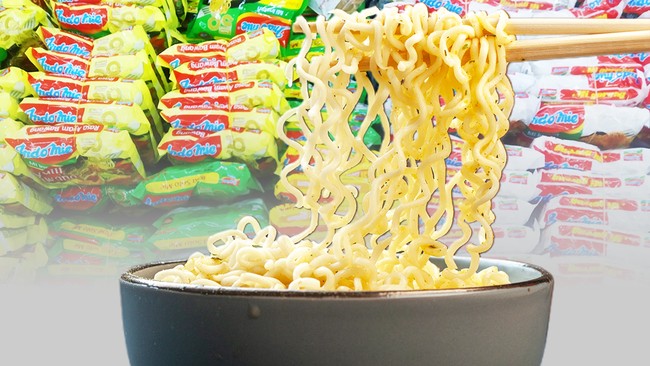
The World Instant Noodles Association (WINA) has recorded a surge in global instant noodle consumption, reaching a record high of 123 billion servings per year. It is no surprise that instant noodles have become a reliable go-to when hunger strikes. Despite frequent criticism over health concerns, the processed food industry is projected to continue growing rapidly, with its market value expected to swell from USD 64.67 billion in 2025 to USD 98.46 billion by 2032.
Management at Nissin Foods Group explained that the strong cross-border appeal of instant noodles is rooted in fulfilling basic human food needs. The global company stated that instant noodles have evolved from a post-war hunger solution into a ‘comfort food’ relied upon by millions daily. ‘The reason instant noodles are widely accepted worldwide as a comfort food lies in their ability to offer universal values that people seek in food - namely delicious taste, convenience, ease of storage, affordability, and safety,’ management said.
Based on the latest global consumption data, China still dominates the market as the largest consumer, consuming 43.8 billion packets per year. Indonesia ranks second globally with total consumption reaching 14.6 billion servings, followed by India in third place with 8.3 billion servings per year. A WINA representative noted that in Vietnam, noodles have long been rooted in the country’s culinary culture, and as the economy grows, the demand for quick and convenient food options has also increased.
Research into ultra-processed foods reveals that the popularity of instant noodles is driven by hyperpalatability, a highly appetising combination of salt, sugar, fat, and carbohydrates. This composition creates a taste sensation that triggers the brain to continue consuming, coupled with high energy density that provides instant physical and psychological satisfaction. ‘I love instant noodles. They are the ultimate comfort food when you are hungry but short on time or feeling lazy. They are also very democratic - everyone can afford them - a cheap dopamine hit. In just five minutes, you have endless possibilities,’ said David Lai, a chef whose restaurant ranks 24th in Asia’s 50 Best Restaurants 2026.
Beyond daily consumption, instant noodles play a strategic role as a physical food safety net in emergency and disaster situations. As of May 2026, the association has distributed approximately eight million servings of instant noodles for global humanitarian aid, providing guaranteed warm meals for refugees in conflict zones and disaster-affected areas. ‘It is still about serving people who do not have enough food at the right time. When everything else in the city is closed, but you have a packet of noodles at home, it means you can get a satisfying meal quickly,’ David Lai concluded.
Despite various medical studies continuing to warn of risks such as heart disease, dementia, and hormonal imbalances from instant noodle consumption, manufacturers are beginning to pivot through food technology. This step aims to change public perception by creating products that are not only practical but also have a more balanced nutritional profile. A WINA representative stated regarding product lines with complete nutrition, ‘We aim to expand new possibilities in food that achieves both delicious taste and health - not by asking what can be done despite it being instant food, but by embracing what can be done because it is instant food.’