
Often a Bust, Data Shows Most IPOs Fail to Match the Hype
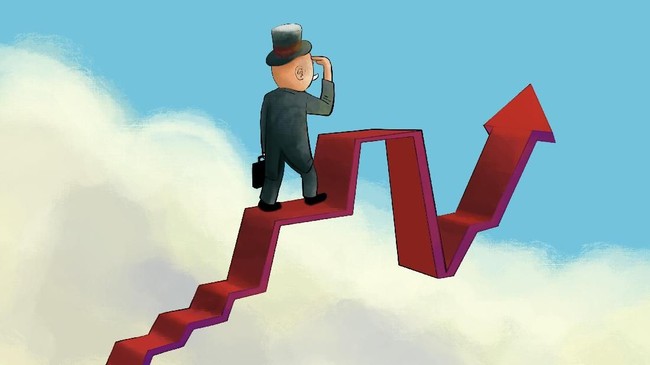
The debut of SpaceX on the stock market in June 2026 successfully raised US$86 billion, or approximately Rp 1,548 trillion (at an exchange rate of US$1 to Rp 18,000), and propelled the rocket maker’s valuation to more than US$2 trillion (Rp 36,000 trillion). However, its market capitalisation had already shrunk by hundreds of billions of dollars even before the company reported financial results that exceeded expectations on 4 August 2026. SpaceX’s listing is just the beginning. Several other companies are also potentially listing on the stock exchange this year with fantastic valuations, including OpenAI and Anthropic, two artificial intelligence (AI) development companies, payment processing firm Stripe, and data software company Databricks. The enormous valuations of these companies have attracted the attention of Wall Street, the centre of the American financial industry. Whether these shares will truly generate profits for investors remains an open question. It is not difficult to understand why initial public offerings (IPOs) are so tempting to investors. Buying shares in a newly listed company often feels like getting in before its value skyrockets, with the chance to reap huge profits. Bonnie Brown, Google’s in-house massage therapist who joined in 1999, received stock options that ultimately made her a multimillionaire. Meanwhile, David Choe, an artist hired to paint murals at Facebook’s Palo Alto office in 2005, accepted shares as payment for his services. The value of those shares was later estimated to be in the hundreds of millions of US dollars. When a company lists on the stock exchange, most of the profits have usually already been reaped earlier. Company founders, employees, and venture capital firms have typically held the company’s shares for years. The median age of a newly listed company in the United States is now around 12 years, up from about eight years in the 1980s. When the IPO takes place, institutional investors such as pension funds are usually the first to get the opportunity to buy shares at the offering price. Retail investors enter later and often have to pay a higher price for the opportunity. The historical track record is also less than encouraging. Shares of newly listed companies often surge on the first day of trading. In 2025, the average first-day share price increase reached around 30%. After that, the euphoria tends to fade. Data compiled by Jay Ritter, a professor at the University of Florida, shows that companies that went public between 1980 and 2024 underperformed the overall market by about 21 percentage points in the three years following their IPO, equivalent to roughly 5.5 percentage points per year. This average masks enormous variation. The Economist analysed the one-, three-, and five-year share returns of more than 3,500 companies in the United States that listed between 2010 and 2025. The results were highly varied. A small number of companies managed to outperform the market by hundreds of percentage points, while many others lagged by an equally large margin. Buying shares in a newly listed company is therefore akin to buying a lottery ticket. Nevertheless, the coming wave of mega-IPOs may perform better than the typical newly listed company. Data from Jay Ritter indicates that technology companies that went public between 1980 and 2024 underperformed the market by 5.1 percentage points in the three years following their IPO. However, companies with annual sales of at least US$100 million actually outperformed the market by 13.7 percentage points. The market’s enthusiasm for these mega-IPOs may not be entirely misplaced.