
Offshore Wind Energy and Indonesia's New Maritime Economic Path
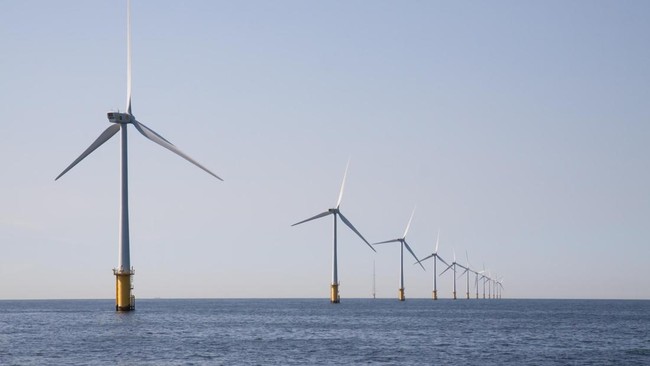
Not many countries have a coastline as long as Indonesia’s, seas as vast, and energy needs as great. Yet, the sea has more often been viewed as a space for fisheries, shipping, defence, tourism, and inter-island connectivity. We have not fully positioned the sea as a future economic space for energy. Therefore, when the World Bank mapped Indonesia’s technical offshore wind potential at 277 GW, this figure should not be read merely as a renewable energy statistic, but as a strategic signal that Indonesia has a new door to building a green maritime industrialisation. This 277 GW potential consists of approximately 198 GW of fixed-bottom offshore wind and around 79 GW of floating offshore wind. Of course, this figure does not mean all of it can be built immediately. Technical potential is not ready-to-construct project capacity. Significant work remains regarding economic feasibility, sea depth, wind speed, transmission network readiness, marine spatial planning permits, port readiness, financing capability, and social acceptance by coastal communities. However, it is precisely here that the strategic importance of this figure lies. The vast potential is not merely a promise of energy, but an invitation to draft a new economic roadmap.
Until now, wind energy in Indonesia has often been placed on the periphery of the clean energy transition conversation. The national clean energy narrative has been dominated by solar, geothermal, hydro, bioenergy, and more recently, energy storage. In the long term, however, offshore wind can become one of Indonesia’s main sources of clean energy, particularly for coastal industrial zones, new growth centres, and island regions requiring large-scale, low-carbon electricity. Indonesia is not a small country with static electricity demand. It is a large nation pursuing industrialisation, downstreaming, digitalisation, and equitable development. All these agendas require electricity that is large-scale, reliable, clean, and competitive. The 2025-2034 Electricity Supply Business Plan (RUPTL) has given an important initial signal for national wind energy, targeting 7.2 GW of capacity. However, this target must be read correctly. The 7.2 GW figure is essentially in the context of developing onshore wind farms (PLTB), not offshore wind. This means Indonesia’s offshore wind agenda still requires its own separate roadmap.
This is precisely where the strategic opportunity lies. If onshore wind serves as the initial phase to prove that wind energy is viable for the national electricity system, offshore wind can be the next horizon, connecting the energy transition with maritime industrialisation. This distinction is important so that we do not misread the policy direction. Onshore wind is relatively closer to medium-term project readiness because its infrastructure needs are simpler than offshore wind. Conversely, offshore wind is far more complex. It requires marine surveys, foundation technology, installation vessels, submarine cables, specialised ports, offshore operating systems, and long-term financing. Yet, it is this complexity that makes offshore wind attractive as an economic agenda. Offshore wind is not just a power plant; it is an industrial ecosystem. Behind one offshore wind project lies a need for marine surveys, geotechnics, foundation design, submarine cables, offshore substations, installation vessels, logistics ports, steel, fabrication, operations and maintenance services, digital systems, and offshore occupational safety standards. This means the added value arises not only from the electricity generated, but from the entire supply chain built. If managed correctly, offshore wind can open new jobs, strengthen the steel industry, revitalise shipyards, expand the role of ports, and create a new class of Indonesian maritime engineering professionals.
Indonesia has adequate initial capital. We have long experience in the offshore oil and gas industry. We have engineers, contractors, operators, support vessels, ports, and a service ecosystem that has long dealt with offshore energy operations. This initial capital should begin to move towards low-carbon energy, in line with global energy trends. The offshore capabilities built over decades can be partially transformed into new capabilities in offshore wind. Moving towards low-carbon energy does not mean abruptly abandoning oil and gas, but using oil and gas experience as a bridge towards a more diverse maritime energy industry. A healthy energy transition is not the destruction of old capacity, but the transformation of old capacity into new strength. If nickel has opened a new chapter in mineral downstreaming, offshore wind can open a new chapter in maritime energy downstreaming. The difference is that nickel downstreaming relies on mineral wealth extracted from the land, whereas offshore wind relies on the wealth of wind, sea, technology, and industrial capability. This is a more complex form of industrialisation because its value chain is long and requires integration between energy, manufacturing, ports, financing, data, research, and industrial diplomacy. If Indonesia merely becomes a buyer of turbines, installation vessels, and foreign technology, the economic benefits will be limited. But if Indonesia builds fabrication, engineering, operations, maintenance, and supporting component capabilities from the outset, offshore wind can become a new economic engine. Therefore, the main question is no longer whether Indonesia has the potential. The main question is whether Indonesia has a roadmap. Potential without a roadmap is just a number in a report. A roadmap without projects is just a document.