
Offshore Economy: From Oil and Gas to Offshore Energy Hubs
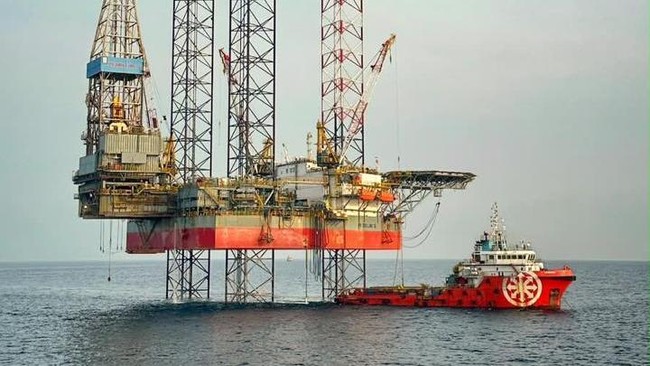
For over five decades, offshore regions have been synonymous with oil and gas exploration. Drilling rigs have served as symbols of how the sea supports a nation’s economic development and energy security. However, this landscape is now changing. Across the globe, the ocean is no longer viewed solely as a space for hydrocarbon production. Offshore areas are evolving into new economic hubs that integrate renewable energy, carbon storage, green hydrogen, subsea power grids, manufacturing, and maritime logistics. The sea is moving from being the ‘backyard’ of the oil and gas industry to becoming a strategic space for the next generation of growth engines.
This shift has given rise to the concept of an ‘offshore energy hub’—an offshore energy zone that unites various activities within a single ecosystem. This includes energy generation, transmission, carbon storage, green hydrogen and ammonia production, ports, maritime industries, logistics centres, and operation and maintenance services. Its economic value stems not just from energy sales, but from the industrial supply chain, technological innovation, and the surrounding investment growth.
Indonesia possesses a massive opportunity to join this transformative wave. As the world’s largest archipelagic nation with vast maritime territory, Indonesia has long-standing experience in developing the offshore oil and gas industry. Various oil and gas fields in Natuna, Kalimantan, Java, Sulawesi, Maluku, and Papua have established an ecosystem of shipyards, steel fabrication, subsea engineering, supporting ports, oil and gas service companies, and thousands of skilled offshore workers. This capital should serve as the foundation for the next generation of the offshore economy.
Transitioning towards offshore energy hubs does not mean abandoning oil and gas. On the contrary, the long-standing expertise of the oil and gas industry can be a competitive advantage in accelerating future offshore energy development. Skills in constructing steel structures, installing subsea installations, operating specialised vessels, maintaining safety standards, and managing large-scale projects are also essential for offshore wind energy, Carbon Capture, Utilisation and Storage (CCUS), and new energy infrastructure. In other words, the offshore energy transition does not need to start from scratch; Indonesia already possesses the industrial capital that can be further developed.
In terms of resources, the potential is immense. Beyond oil and gas, Indonesia has significant geothermal potential, abundant solar and hydro resources, a growing bioenergy sector, and an offshore wind potential of approximately 277 GW, according to World Bank studies. This potential includes about 198 GW for floating turbines and approximately 79 GW for fixed-bottom turbines. These figures indicate that Indonesia’s seas hold great opportunities to strengthen energy security while creating new economic growth centres.
However, this potential should not be viewed merely as an opportunity to build power plants. The greatest added value arises when energy becomes a driver for industrialisation. Every offshore energy project requires steel, subsea cables, installation vessels, ports, engineering services, digital systems, financing, and operation and maintenance services. The economic benefits spread to manufacturing, shipyards, the cable industry, logistics, technology, vocational education, research institutions, and small and medium enterprises within the supply chain. This is where an offshore energy hub differs from a standard power plant project; it builds an economic ecosystem that creates value for decades.
Various countries have proven that this approach can generate much larger economic benefits. The Netherlands has developed the North Sea as an integrated energy hub, connecting offshore wind farms, cross-border electricity interconnections, green hydrogen production, and the Port of Rotterdam as one of Europe’s largest energy logistics hubs. Even depleted gas fields are being repurposed as carbon storage sites to support Carbon Capture and Storage (CCS). The sea is no longer just a production site, but a space for new industrial growth.
Denmark has taken a more progressive step through the ‘Energy Island’ concept. Artificial energy islands are designed as collection hubs for electricity from various offshore wind farms before being distributed to Denmark and other European nations via interconnection networks. In the future, these areas will also support green hydrogen production as a fuel of the future. This approach demonstrates that offshore areas can serve as regional energy nodes that strengthen energy security while opening new economic opportunities.
The UK experience is also relevant. After decades of building the North Sea oil and gas industry, the UK did not start its energy transition from zero. Oil and gas infrastructure, ports, shipyards, engineering firms, and the workforce that previously supported the oil and gas industry are being repurposed to accelerate the development of offshore wind, CCS projects, and the hydrogen industry. The energy transition does not erase the role of the oil and gas industry but expands its economic benefits through industrial diversification. In Asia, China offers another lesson. Offshore wind projects are developed alongside coastal industrial zones, turbine manufacturing, the steel industry, ports, and hydrogen production facilities. This integration creates a strong domestic supply chain, reduces investment costs, and increases national industrial competitiveness.
Source: jawawa.id (https://jawawa.id/newsitem/offshore-economy-from-oil-and-gas-to-offshore-energy-hubs-1785560245)
Originally published by CNBC Indonesia (https://www.cnbcindonesia.com/opini/20260801111534-14-755659/ekonomi-lepas-pantai-dari-migas-menuju-offshore-energy-hub), translated from Indonesian