
Officials Must Be Righteous: The Hard Road to Saving the Nation
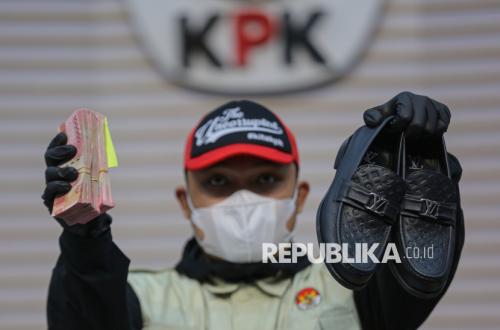
Corruption in Indonesia never truly disappears—it merely changes form. When one case is uncovered, another emerges with even more staggering figures. The 2025 Corruption Perceptions Index, which has dropped to 34/100, placing Indonesia at 109th out of 180 countries, confirms one thing: the approaches taken so far are insufficient. Corruption is not merely a deviation but has become a pattern of governance.
The losses are not just trillions of rupiah in figures. It robs the public of rights to education, health, and welfare. In Amartya Sen’s terms, corruption is a form of deprivation of capabilities—the basic human ability to live decently.
So far, anti-corruption strategies have relied on enforcement and systemic reforms. However, experience shows that even a good system can collapse if operated by individuals lacking integrity. Thus, the fundamental question is: how to ensure that integrity is truly present?
From Moral to Regulation: Righteousness Must Be Enforced
In sociological tradition, Émile Durkheim emphasised that social order arises from strong moral norms. Meanwhile, Max Weber reminded that rational bureaucracy requires an ethic of responsibility.
Indonesia’s problem is not the absence of values, but the failure to institutionalise them. Therefore, righteousness cannot be merely encouraged or exhorted—it needs to be enforced as the operational standard for public officials.
In this context, righteousness must not be reduced to mere symbolism or rhetoric. It must be present in the daily practices of officials, measurable, and monitored. This means:
Public officials must not only perform formal worship such as prayer or devotions, but also be encouraged to undertake spiritual disciplines like optional fasting (for example, on Mondays and Thursdays) as training in self-control.
Their lifestyles—houses, vehicles, clothing—must be kept from exceeding the average reasonableness of society, as a form of social empathy and prevention of corrupt lifestyles.
This standard does not stop at the individual but also encompasses the immediate family, because in corruption practices, family relations often become the entry point for corruption.
In addition, practices of philanthropy such as zakat, infak, sedekah, and wakaf (ZISW) need to be reported transparently to a supervisory body, as an indicator of social commitment and moral accountability.
This idea may sound harsh. However, in the framework of Jean-Jacques Rousseau’s social contract, officials are not ordinary citizens—they are holders of public trust whose rights can legitimately be restricted.
Why This Approach Makes Sense
First, corruption is an extraordinary crime with widespread impacts, thus requiring extraordinary measures. In Jeremy Bentham’s utilitarian ethics, restrictions on a small group (officials) can be justified if they produce great benefits for the wider society.
Second, lifestyle is an early indicator of corruption. Many major cases are uncovered from the impropriety of officials’ and their families’ lifestyles. By limiting living standards, the space for accumulating illegal wealth can be curbed from the outset.
Third, enforced discipline can shape character. In Pierre Bourdieu’s theory, repeated practices will form habitus. In other words, righteousness that is initially enforced has the potential to become an internalised habit.
Towards a Moral Infrastructure for the Nation
So far, anti-corruption efforts have relied too heavily on law and surveillance technology. Yet, what is needed is something deeper: a moral infrastructure for the state.
Righteousness—in the sense of integrity, simplicity, and social responsibility—must be made the minimum standard for public officials, not merely a personal choice. The state does not only regulate what may and may not be done, but also how an official should live.
Indeed, this approach is not without risks. However, maintaining the status quo—allowing officials to live without strict moral discipline amid massive public losses—is far more dangerous.
If corruption is the chronic disease of the nation, then perhaps it is time to stop relying on ordinary medicine.
Harsh discipline—even to the point of enforcing righteousness within certain limits—could be the therapy we need. Righteousness should not only be exhorted and recommended in speech forums or study sessions, but its implementation must be enforced in the daily lives of those officials bearing the mandate of the people.