
Official: Bahlil Issues Regulation to Accelerate Non-Conventional Oil and Gas
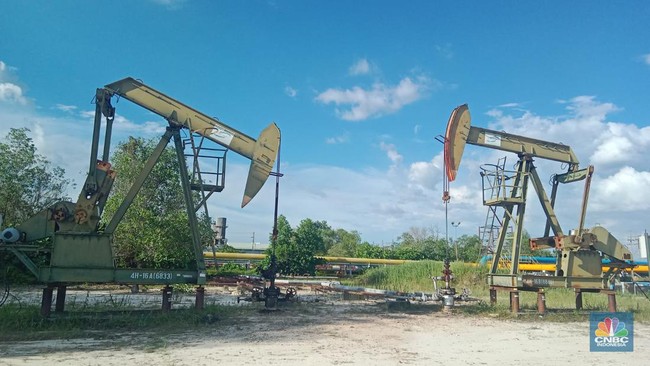
Jakarta, CNBC Indonesia - Minister of Energy and Mineral Resources (ESDM) Bahlil Lahadalia has issued Ministerial Decree No. 246.k/MG.04/MEM.M/2026 concerning the Acceleration of Non-Conventional Oil and Gas Exploitation in the Rokan Working Area. The regulation was signed by Minister Bahlil Lahadalia on 11 June 2026 and takes effect on the date of its enactment. This acceleration rule for non-conventional oil and gas is intended for the development of working areas that hold non-conventional oil and gas reserves, both for existing and new oil and gas fields. There are several key points governing the acceleration of non-conventional oil and gas management in the Rokan area, including technology, oil and gas potential, contracts, and production sharing. The core points are as follows: First: a. In the execution of upstream oil and gas business activities based on the stipulated Working Area, the following technologies may be used: 1. conventional; and/or 2. non-conventional. b. Conventional oil and gas exploitation as referred to in point a number 1 is carried out based on the existing Cooperation Contract. c. Non-conventional oil and gas exploitation as referred to in point a number 2 may be proposed by the Contractor in the existing conventional oil and gas Working Area as referred to in point b whose areas overlap, based on the results of a non-conventional oil and gas potential study. d. Non-conventional oil and gas exploitation as referred to in point c may be proposed: 1. as part of the existing conventional oil and gas Working Area; or 2. as a new non-conventional oil and gas Working Area. e. Non-conventional oil and gas potential study activities in the conventional oil and gas Working Area as referred to in point c may be charged as operating costs. Second: In the event that the implementation of activities under the conventional oil and gas Cooperation Contract has been determined, the implementation of non-conventional oil and gas in the Working Area as referred to in the FIRST Dictum point d shall be subject to a production split and incentives in accordance with technical and economic feasibility, taking into account: a. the amount of investment and operations (capital expenditure and operating expenditure); b. oil and gas prices; c. the volume of oil and gas production. Third: The calculation of incentives as referred to in the SECOND Dictum is carried out separately for the conventional oil and gas Cooperation Contract and the non-conventional oil and gas Cooperation Contract based on the form of the incentive scheme, recording and reporting, and the term of the Cooperation Contract. Fourth: The implementation of the conventional oil and gas Cooperation Contract for the Rokan Working Area refers to the Minister of Energy and Mineral Resources Decree No. 1923K/lO/MEM/2018 concerning Approval of Management and Determination of the Form and Principal Terms and Conditions of the Cooperation Contract in the Rokan Working Area, as amended several times, most recently by Minister of Energy and Mineral Resources Decree No. 199.K/MG.04/MEM.M/2025. Fifth: The production split for the non-conventional oil and gas Cooperation Contract in the Rokan Working Area takes into account: a. the provision of incentives based on the results of the non-conventional oil and gas potential study. b. the recommendation of the Special Task Force for Upstream Oil and Gas Business Activities on the results of the potential study as referred to in point a, which includes: 1. technical aspects containing subsurface evaluation, activity plans, drilling technology, and production; 2. economic aspects covering parameters such as Internal Rate of Return (IRR), Net Present Value (NPV), and the State and Contractor shares; 3. risk levels based on activity stages, location, and availability of data and infrastructure; and the greatest benefit for the state through increased investment and the creation of multiplier effects such as the utilisation of domestic goods and services, local economic development, labour absorption, and the supply of oil and gas as raw materials for downstream industries. Sixth: The Contractor may sell non-conventional oil and gas production generated before the plan of development approval, with the sales proceeds divided based on the production split in accordance with the Cooperation Contract without first accounting for the first tranche petroleum and operating cost recovery. Seventh: Contractors of conventional oil and gas Working Areas who are currently conducting non-conventional oil and gas potential studies in their Working Areas may continue the implementation of these potential studies.