
OECD urges Indonesia to strengthen semiconductor industry ecosystem
Jakarta (ANTARA) - The Organisation for Economic Co-operation and Development (OECD) has urged Indonesia to strengthen its semiconductor industry ecosystem to attract more investment in the sector.
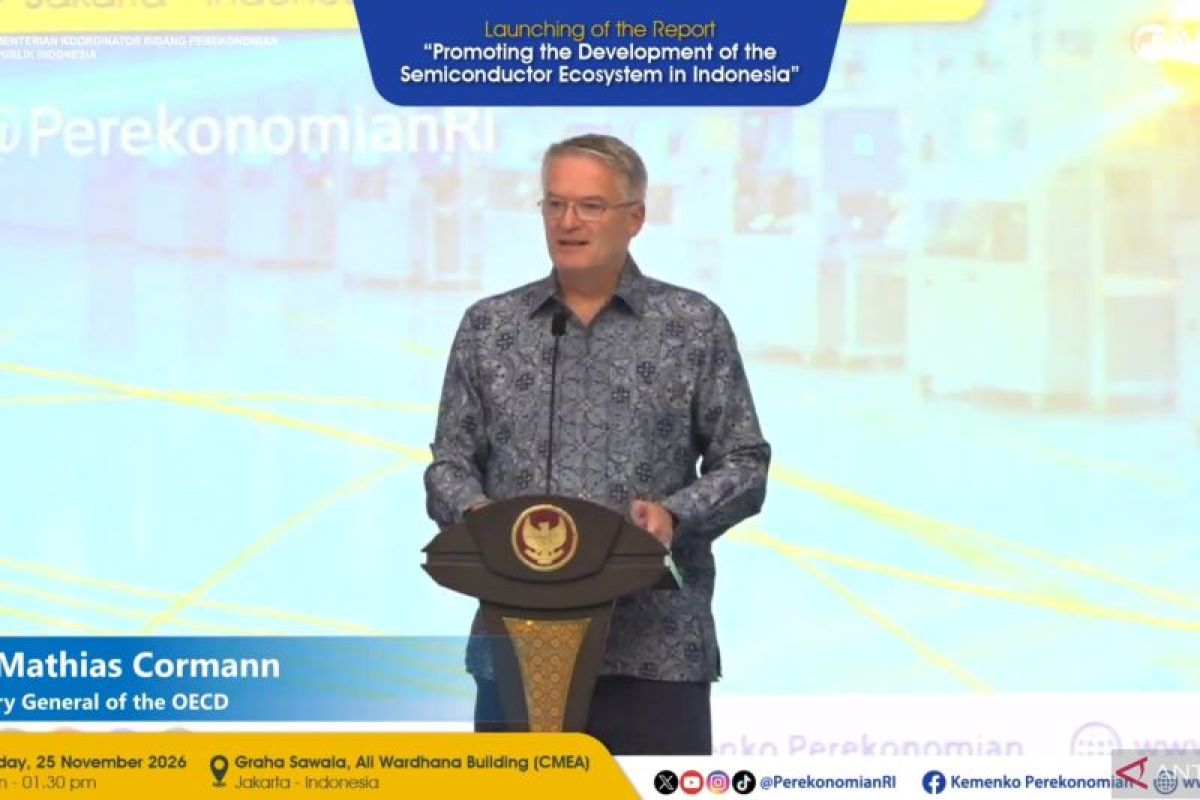
OECD Secretary-General Mathias Cormann said Indonesia had an opportunity to develop its semiconductor industry as global demand rises for chips used in electronic devices, vehicles and artificial intelligence (AI) technologies.
“Published strategies setting out specific policy commitments can help strengthen expectations and encourage increased investment,” Cormann said at the launch of an OECD report on developing Indonesia’s semiconductor ecosystem, followed online in Jakarta on Wednesday.
He said Indonesia already had a semiconductor industry base, particularly in assembly, testing and packaging, most of which operates in Batam.
Indonesia should develop the industry by improving regulation, upgrading workforce skills, strengthening infrastructure and fostering innovation, he said.
Investors need certainty about the direction of semiconductor industry policy and confidence that adequate ecosystem support is in place, as investment in the sector is long-term and capital-intensive.
Cormann said the industry could be strengthened by optimising assembly, testing and packaging, since Indonesia already has companies, infrastructure and workforce training in these areas. These stages are also relatively more labour-intensive than chip fabrication.
On regulation, the OECD highlighted the importance of simplifying import permits for the raw materials and components needed by the industry. Dependence on overseas inputs makes smooth trade essential to maintaining production efficiency.
The OECD noted that an expansion of import controls through the Commodity Balance System in 2023 contributed to delays involving around 26,000 containers at several of Indonesia’s main ports in 2024. It said the situation could raise costs and disrupt supply chains for internationally integrated companies.
“Semiconductor plants also typically depend on inputs arriving on time. This makes import rules central to the industry’s international competitiveness. Customs clearance is already relatively efficient. Among the Asian countries we compared, Indonesian ports recorded the shortest cargo waiting times. However, import licensing remains a source of delays and costs,” he said.
The OECD recorded a real increase of about two-thirds in Indonesia’s exports of goods related to semiconductor production between 2020 and 2024.
That growth points to an opportunity for Indonesia to expand its role in the global chip supply chain.
On infrastructure, the OECD stressed the importance of reliable electricity and water supplies for industrial zones. Batam still faces challenges in electricity supply as industrial demand grows, while water availability also needs attention as manufacturing activity potentially increases.
The OECD called for stronger electricity transmission networks, greater use of renewable energy, and investment in water storage and management to support industry’s long-term needs.
On innovation, the OECD said companies should be encouraged to increase investment in research and development (R&D), including by making better use of tax incentives already provided by the government.
Cormann said strengthening these areas would benefit not only the semiconductor industry, but also improve the competitiveness of the wider medium- and high-technology manufacturing sectors.
Source: jawawa.id (https://jawawa.id/newsitem/oecd-urges-indonesia-to-strengthen-semiconductor-industry-ecosystem-1795593450)
Originally published by Antara (Indonesian) (https://www.antaranews.com/berita/5877227/oecd-dorong-indonesia-perkuat-ekosistem-industri-semikonduktor), translated from Indonesian