
Odeng Honey and the Long Journey of Baduy Children into the City
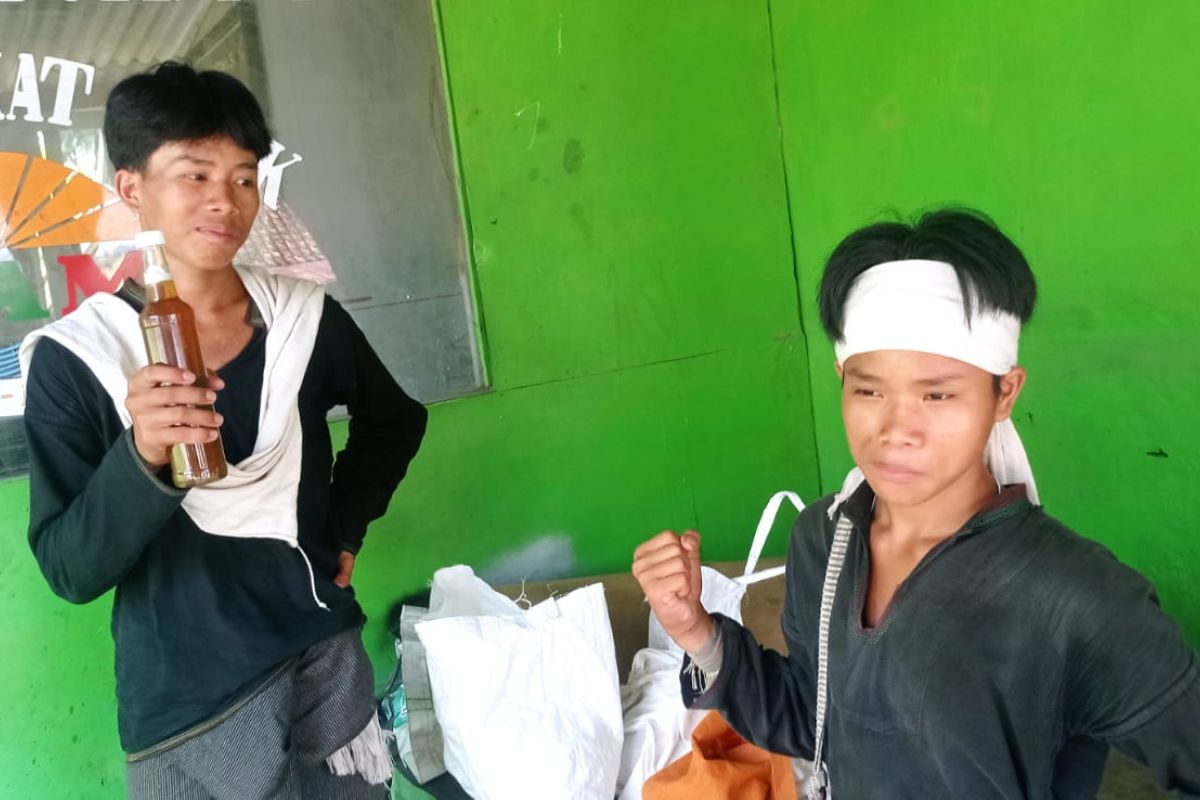
Amid the rapid pace of modern change, the bare footsteps of Sarip and Samid along the roads paint a picture of how tradition, perseverance, and economic struggle continue to coexist in Baduy land. Lebak (ANTARA) - The midday sun scorches the city of Rangkasbitung. At an abandoned security post, two teenagers sit in the shade, wiping sweat from their brows. They are siblings from Baduy Dalam: Sarip (16) and Samid (14). Beside them lie two large bags containing 40 bottles of Odeng honey, a forest honey that has been a source of livelihood for the Baduy indigenous community in Kanekes Village, Lebak Regency, Banten, for generations. This honey is more than mere merchandise. The sweet liquid is the result of a long journey across forests, hills, and asphalt roads spanning hundreds of kilometres, all covered on foot. For the Baduy Dalam community, customary rules prohibit the use of motorised vehicles. Therefore, Sarip and Samid must rely on their feet to transport the honey from Cikeusik Village in the Baduy Dalam area to various marketing regions in Banten, DKI Jakarta, and West Java. They set off on Tuesday (12/5). In addition to the honey, they carry minimal clothing. During the journey, they stayed overnight at the Cimarga Police Sector before continuing along the Rangkasbitung-Tangerang route, offering the honey from house to house and along the roads. “If the honey sells out today, we go home today,” said Sarip enthusiastically. That afternoon, only two bottles had been sold. Yet his face remained calm. He has been accustomed to such journeys since the age of 14. Over the past two years, Sarip has regularly traded honey to help his parents’ economy as well as meet his personal needs. Now, he is starting to teach his younger brother the trade. Samid has joined him on four such walks. In the Baduy Dalam community, it is not uncommon for children to help sell honey. Many of them contribute to the family from a young age. The Odeng honey they sell comes from cultivating wild bees in the Gunung Kendeng area, a protected forest in the Baduy ancestral land. In a single trip, the 40 bottles of honey that Sarip carries can generate income of around Rp6.5 million, with selling prices ranging from Rp150,000 to Rp200,000 per bottle. The journey to Tangerang usually takes about a week until all the honey is sold. When tired, they rest at security posts or police stations. At night, they seek safe places to sleep. Sarip admits he never dares to sell late into the night to avoid crime. “Once it’s sold out in Tangerang, we return to Baduy. The journey takes two days,” he said. Sarip and Samid walk barefoot over hot asphalt, rocky paths, and sharp gravel. However, they claim to be used to it. Feelings of fatigue and pain seem overshadowed by the determination to bring money home. “We are happy if the honey sells out and we can bring money for the family,” said Sarip. A similar spirit is shared by Santa (55), a Baduy Luar resident who regularly walks to sell Odeng honey as far as Cilegon and Merak. From Serang, she covers about 20 kilometres on foot. Over the past five years, Santa has travelled around selling honey to Serang, Cilegon, Merak, and even Jakarta. In a week, she can sell 35 bottles of honey, earning around Rp4 million. According to Santa, demand for Odeng honey remains high because many customers believe in its health benefits. The honey is believed to maintain stamina, boost immunity, prevent anaemia, reduce the risk of osteoporosis, and help fight infections. Her customers come from various backgrounds, from the general public, drivers, herbal sellers, officials, to businesspeople. However, honey production is not always stable. Harvest yields depend heavily on the development of Odeng bees nesting in large trees in the Gunung Kendeng area. Cultivation is done traditionally. The honey is taken directly from the beehives and then squeezed into ready-to-sell liquid. Lately, production has increased with the shift from rainy to dry season. Many trees are flowering and producing abundant nectar, so one hive can yield four to six bottles of honey. “Now production can reach 40 bottles per week,” said Santa.
Source: jawawa.id (https://jawawa.id/newsitem/odeng-honey-and-the-long-journey-of-baduy-children-into-the-city-1778788046)
Originally published by Antara (Indonesian) (https://www.antaranews.com/berita/5567603/madu-odeng-dan-jalan-panjang-anak-anak-badui-menembus-kota), translated from Indonesian