
Oceans Become Oil Battlefield: Tankers Hunted from Hormuz to the Black Sea
Global oil prices reversed their gains after new hopes emerged for diplomatic efforts between the United States (US) and Iran. The decline occurred amid escalating conflict in the Middle East and threats to global shipping routes. However, oil prices remain under significant threat going forward.
Brent crude closed at US$96.78 per barrel, down 3.88%, ending a five-day rally that saw prices surge 19.5%. West Texas Intermediate (WTI) crude weakened 3.12% to US$89.31 per barrel, also snapping a five-day winning streak. Over the week, Brent prices rose 9.9%, marking four consecutive weeks of gains totalling 31.3%, while WTI gained 8.3% for the week, extending its rally to three weeks.
Pakistan is reportedly seeking to reopen negotiations between the US and Iran. Three sources familiar with the discussions said Islamabad’s initiative has support from China. A Pakistani government official told Reuters, “China is unhappy because Iran’s attacks on Gulf states and the closure of the Strait of Hormuz have disrupted its interests.”
US Strikes on Iran Continue
Despite the price dip, upward pressure remains. The US Central Command (CENTCOM) confirmed it has completed 13 consecutive nights of operations against Iran, targeting military command centres, drone storage facilities, communication networks, coastal surveillance sites, and maritime capabilities. CENTCOM stated the operations aim to reduce Iran’s threat to commercial vessels transiting the Strait of Hormuz. The US military also revealed that more than 50,000 personnel are now deployed in the Middle East region.
Trump Threatens Larger Attack
Amid the intensifying conflict, US President Donald Trump indicated he is considering a significantly larger military strike against Iran. In an interview with Axios, Trump said the option would be the largest attack since the war began. “I’m considering a massive attack. Bigger than before. Everything is ready,” Trump stated. The remarks followed his assertion that Iran would be held responsible for any further attacks by the Houthi group on commercial ships in the Red Sea, describing the Houthis as an Iranian proxy force. Meanwhile, Iran’s Revolutionary Guard claimed to have struck US military facilities at an American base in Jordan.
Geopolitical Risk Remains High
Daniela Hathorn, senior analyst at Capital.com, assessed that ongoing disruptions to the world’s main shipping lanes have reintroduced a geopolitical risk premium into the oil market. “Attacks on commercial vessels in the Red Sea are worsening concerns about global trade and energy security. Coupled with tensions in the Strait of Hormuz, the market now believes geopolitical risks will not ease soon, keeping energy supplies tight and inflation risks elevated,” she said.
Similarly, UBS Global Wealth Management strategist Giovanni Staunovo believes the market has been too optimistic about the recovery of oil production in the Middle East. He noted that the normalisation process will be slower as it requires increased vessel traffic into the region. “With the conflict heating up again, ship traffic remains very limited. This will keep the oil market tight and support prices,” he said.
Oil Tankers Under Fire
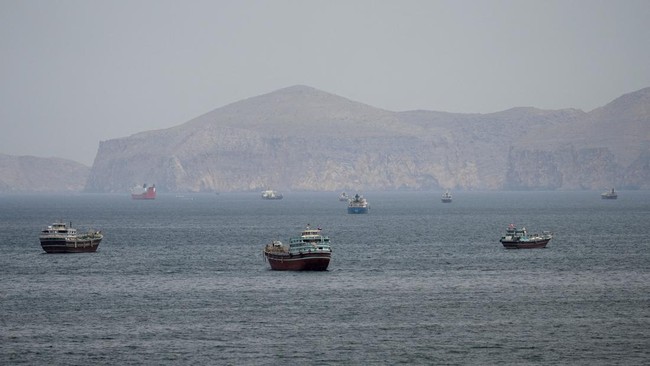
Oil tankers are increasingly becoming targets across multiple regions as economic warfare intensifies. Iran has stepped up attacks on tankers around the Strait of Hormuz this month in a bid to assert greater control over the world’s primary oil shipping route. Meanwhile, Iran’s allies in Yemen, the Houthis, opened a new front by attacking two Saudi oil tankers in the Red Sea after declaring a maritime embargo against Riyadh. Ukraine has also claimed to have struck more than 150 tankers, cargo ships, and other vessels linked to Russia’s shadow fleet in the Sea of Azov and the Black Sea, according to a Kyiv Post report. The oil market now faces a multi-front war.
Hormuz Traffic Plummets
Vessel traffic through the Strait of Hormuz has slumped again after briefly recovering following the signing of a Memorandum of Understanding (MoU) between the US and Iran on 17 June to reopen the strait. “After that MoU collapsed, we are now entering the worst phase of this conflict for commercial shipping,” said Dimitris Maniatis, CEO of Athens-based maritime risk services firm Marisks. He assessed that Iran wants to demonstrate greater authority and control over activities in the Strait of Hormuz.
According to data from the International Maritime Organization (IMO), a United Nations body, 61 commercial ships have been attacked in the Persian Gulf, Strait of Hormuz, and Gulf of Oman since 1 March, resulting in at least 17 crew deaths and dozens of injuries. This month alone, at least 12 tankers have been hit around the Strait of Hormuz, killing at least two seafarers, as the conflict between the US and Iran escalates.
Red Sea Becomes New Threat
Houthi attacks in the Red Sea are now threatening millions of barrels of oil per day that Saudi Arabia had previously rerouted through the waterway.
Source: jawawa.id (https://jawawa.id/newsitem/oceans-become-oil-battlefield-tankers-hunted-from-hormuz-to-the-black-sea-1784951441)
Originally published by CNBC Indonesia (https://www.cnbcindonesia.com/research/20260725073946-128-753744/lautan-jadi-medan-perang-minyak-tanker-diburu-dari-hormuz-laut-hitam), translated from Indonesian