
Obstacles to Developing Pineapple Village Using Used Water Gallons in Seyegan, Sleman
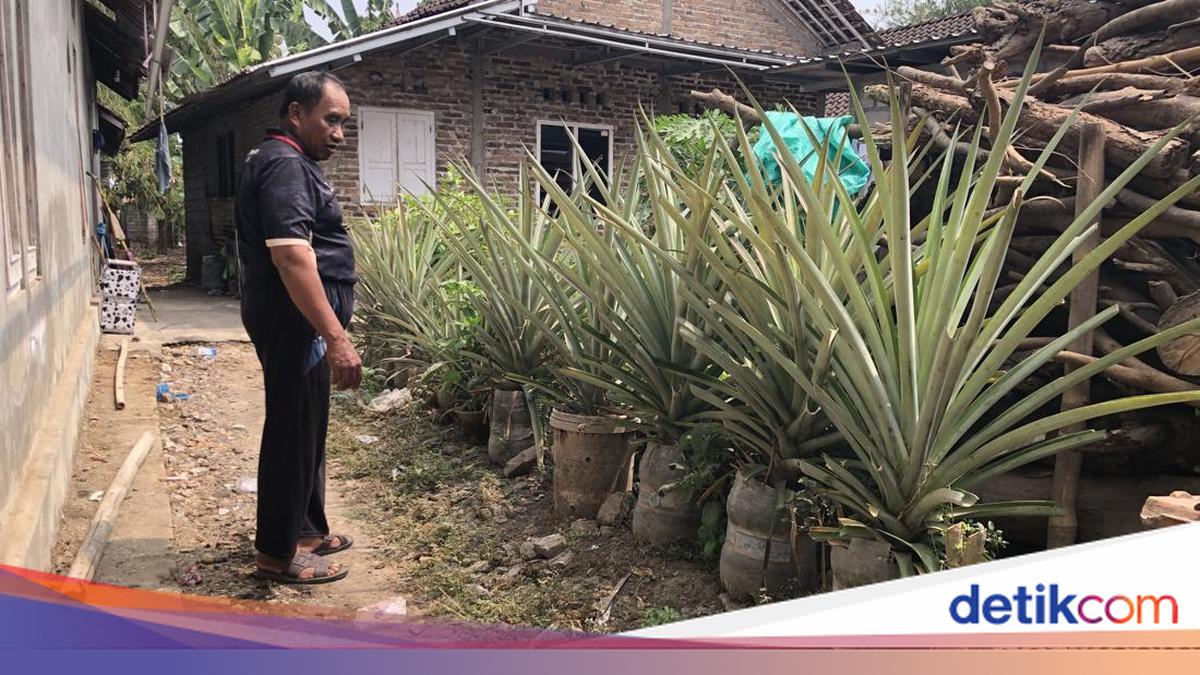
In Kampung Nanas Amargaluwih Jumbo, Padukuhan Barak, Kalurahan Margoluwih, Seyegan, Sleman, there is an innovation of growing jumbo pineapples using used water gallons as media. However, the innovation has proven difficult to develop in the pineapple village for the following reasons.
Kampung Nanas Amargaluwih Jumbo was initiated in 2023 by Jamaludin Nur Ridho (25), a millennial farmer who owns Jamal Farm. Jamal aspires to advance the economy of Padukuhan Barak residents through pineapples that he has been developing since 2020.
“I want to see what I can contribute to the community,” Jamal explained when met at Jamal Farm on Sunday (16/8/2026).
Because he wanted every household to have a jumbo pineapple plant of the Smooth Cayenne Philippines variety that he had previously cultivated, Jamal chose an urban farming method, using used water gallons as the planting medium.
Jamal involved the youth of Padukuhan Barak and educated residents to be willing to plant pineapples. His hope was that jumbo pineapples could increase residents’ income and that Barak would become an edufarm-style pineapple village.
“The millennial farmer concept here is urban farming in the yard, with pineapple plants beside the house that produce fruit, with only a water gallon as capital,” Jamal explained.
Jamal started at his own place by planting one jumbo pineapple. The results were satisfactory and attracted the attention of the village government and the Sleman regency government. As a result, funding assistance began to arrive.
Jamal used the funds to buy and distribute pineapple seedlings to all residents free of charge, starting with one seedling per household and later up to five seedlings per household. However, his ambition proved difficult to realise at first.
“From there we were supported by the government and many other parties, developing slowly. We distributed one plant per household, and when there was more funding we distributed three plants,” Jamal said.
“It was very difficult to educate residents. When given seedlings they accepted them, but some placed them in front of the house and left them, some did not plant them until they died, and some planted them but did not fertilise or care for them. Slowly they saw, oh, the fruit is big,” he added.
After seeing the results of the jumbo pineapples for themselves, the seedlings gradually spread and thrived in almost every household in Padukuhan Barak.
Dukuh Barak 1, Sirmanto, said residents were very enthusiastic about planting pineapples after seeing the results. In addition, pineapple is considered a hardy plant that does not disturb and requires minimal care.
“The jumbo pineapple seedlings were distributed free of charge. That was done per RT here. In Barak 1 there are two RWs, RW 14 and RW 15. Then there are five RTs, RT 1, RT 2, RT 3 in RW 14, and RT 4 and RT 5 in RW 15. The number of households per RT is almost the same, around 55 households,” Sirmanto explained when met at his residence on Wednesday (19/8).
“Our socialisation was done at RT meetings. The seedlings were distributed free by Mas Jamal. Residents did not have to buy anything; they only used water gallons that would otherwise be thrown away, then cut them, made holes, and planted the seedlings. As time goes by, if you observe, every house will have one,” he added.
Development obstacles
After residents began planting pineapples, the hope of Padukuhan Barak becoming a pineapple village grew. However, the main goal remained to make jumbo pineapples a source of income for residents, and many steps still needed to be taken.
On the other hand, pineapple is a perennial crop that requires at least a year to harvest.
“Pineapple is a perennial plant. It flowers at the age of 7-8 months and can be harvested at 11-12 months. From flower to fruit takes 3-4 months,” Jamal explained.
The long wait means residents only enjoy the harvest after a considerable time. Even after harvesting, residents choose to consume the fruit themselves, even though Jamal has offered to buy their pineapples.
“Residents plant an average of five plants per household, and on average they consume the fruit themselves,” Jamal said.
“Residents’ pineapples are always eaten by themselves. Every time I want to buy them, they say, ‘No, this has been ordered by the neighbourhood watch for refreshments,’ or ‘No, this will be used for cut fruit at the arisan,’ or ‘No, this will be eaten by ourselves,’” he continued.
Meanwhile, Sirmanto added that because of the long wait to enjoy the harvest, residents began to be reluctant to plant pineapples properly. The pineapples were still planted but not properly cared for. Some residents even replaced pineapples with chilli plants because chillies can be harvested more quickly.
These two factors have prevented the jumbo pineapple innovation using water gallon media in the pineapple village from developing into an additional source of income for residents.
“Their view is that pineapple takes too long to enjoy the results, so after fruiting the pineapple is left alone. Residents who have harvested usually say, ‘I’ll just replace it with chillies,’ because chillies are quicker to harvest,” Sirmanto said.
“Actually, Mas Jamal’s programme is very good. But residents want something instant: plant today, harvest tomorrow. That does not exist. We farm and cultivate; planting chillies takes four months. We plant rice for months. Pineapple certainly cannot be instant,” he concluded.
Source: jawawa.id (https://jawawa.id/newsitem/obstacles-to-developing-pineapple-village-using-used-water-gallons-in-seyegan-sleman-1787187027)
Originally published by detikJogja (https://www.detik.com/jogja/berita/d-8626283/ini-kendala-mengembangkan-kampung-nanas-pakai-galon-bekas-di-seyegan-sleman), translated from Indonesian