
Observing the 'Dark Ages' in South Kalimantan
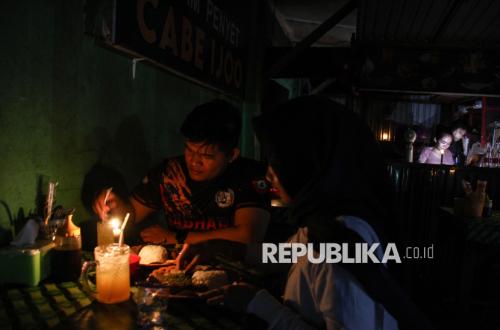
Europe in the 5th century AD once fell into a dark period known as the Dark Ages. That era was marked by the decline of science, the death of critical reasoning, and the paralysis of rational societal governance. When worldly crises struck, solutions were sought not through technical innovation or empirical investigation, but were surrendered entirely to dogma and mystical resignation. The shadow of the ‘Dark Ages’ now seems to find an ironic resonance in present-day South Kalimantan. This region, rich in energy resources, is repeatedly plagued by massive power outages that cripple residents’ activities. The uproar intensified when news went viral that the electricity provider had resorted to inviting and requesting prayers from a local charismatic figure so that the electrical system would be restored immediately.
For Indonesian society, which is religious and upholds spiritual values, seeking prayers from the Creator is certainly a noble and primary aspect of every endeavour. However, if this phenomenon is dissected through the lens of industrial, organisational, and cognitive psychology, a danger signal lurks: when a public institution diverts responsibility for a technical crisis to the spiritual realm, it indicates cognitive dysfunction and a defence mechanism that risks systemically harming the wider community.
In modern psychology, there is the concept of Locus of Control, first studied by Julian Rotter. Individuals or organisations with an internal locus of control believe that success or failure is determined by their own actions, capacity, management, and decisions. Conversely, an external locus of control attributes every outcome to external factors such as luck, fate, or supernatural forces beyond human reach. When a state-salaried public service institution approaches a religious figure to solve a technical electricity problem, a drastic shift in locus of control from internal to external has occurred. Instead of conducting a forensic audit, evaluating management weaknesses, or being transparent about infrastructure damage, the responsibility for system recovery is placed outside the domain of rational accountability.
The psychological impact on the community—particularly on micro, small, and medium enterprises whose livelihoods depend on electricity supply—is massive. When citizens are repeatedly faced with uncertainty without any accountable management improvements, they become susceptible to learned helplessness. The public is conditioned to feel that protests, complaints, or any action they take will never change the situation, because the infrastructure problem has been framed as a ‘trial of fate’ that can only be resolved through passive resignation.
From a cognitive perspective, the act of transferring a technical-managerial problem to the spiritual domain can be categorised as spiritual bypassing. This term was first coined by psychologist John Welwood to describe the tendency to use spiritual reasons or practices to avoid solving unresolved emotional, technical, or psychological issues. Prayer essentially serves as a moral anchor and a source of inner strength to face life’s trials. Yet, when prayer is positioned as a substitute for technical accountability, performance audits, and compensation for public losses, a moral distortion occurs. The public is subtly directed to feel guilty or ‘lacking in faith’ if they are critical in demanding their basic rights. The narrative is manipulatively shifted from the realm of public service professionalism to the realm of individual spiritual patience.
A healthy, modern public institution requires the moral courage to face cognitive reality and take full responsibility. Admitting management failures, transparently disclosing disruption data, and objectively presenting technical mitigation steps are far more crucial for rebuilding the public trust that has collapsed. South Kalimantan is a region rich in primary energy resources. It is an excessively heavy psychological and economic burden for citizens to constantly have to adapt to the darkness of an uncertain electricity supply amidst claims of modernisation. We must not allow passive resignation to replace scientific rationality. The prayers of the community and religious leaders are certainly important for peace of mind, but the absolute duty of the electricity authority is to ensure the technical system operates optimally, accountably, and professionally. Do not let the power engines die, and then allow common sense and rationality to be extinguished along with the darkness.