
Observing Dharmasraya Regency from a Social Legal Studies Perspective
Note: This article is the personal opinion of the author and does not reflect the views of the CNBC Indonesia editorial team.
This small reflection began with my first journey to Jorong Sukoharjo, Nagari Tiumang, Tiumang District, Dharmasraya Regency, West Sumatra Province, some time ago. A trip I had initially imagined as merely a family visit turned into a space for learning that revealed how law, society, culture and everyday life intertwine.
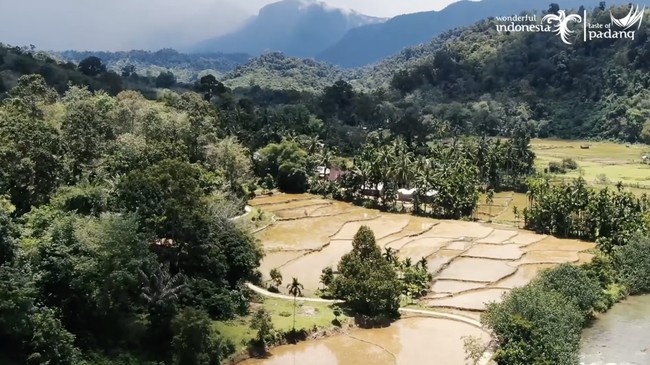
I departed from Jakarta to Muara Bungo Airport, a flight of roughly one hour and thirty-five minutes. From the airport, the journey continued for about another two hours to Dharmasraya. Along the way, my eyes were treated to expanses of greenery and air that felt utterly different from Jakarta. Yet behind this beauty, there was a phenomenon that kept stirring my attention.
At nearly every public fuel filling station (SPBU) we passed, queues of vehicles stretched for several kilometres. According to my relatives, Mas Edi and Mbak Rini, this situation was nothing out of the ordinary — it is simply part of daily life for the local community.
As a Master of Law student at the University of Indonesia studying Social Legal Studies, I no longer see this phenomenon merely as a matter of fuel scarcity. I began to question the relationship between the state, law, public policy and the social realities of the community.
From the perspective of Social Legal Studies, law does not stop at the text of regulations; it must be seen in terms of how it works in real life (law in action). The state may possess all manner of regulations on energy distribution and fuel oversight. However, when people still have to spend hours obtaining a basic right in the form of access to energy, questions arise about the effectiveness of that policy’s implementation.
The fuel queue phenomenon shows that the existence of law is not always synonymous with the creation of justice. As Prof. Sulistyowati Irianto frequently emphasises in lectures, law must be read through the social context in which it operates.
In other words, legal analysis cannot stop at the question of “what does the rule say”; it must develop into “why does the rule fail to produce the conditions expected by society.”
This perspective led me to understand that law is influenced by many factors, from geographical conditions and governance to resource distribution, economic relationships, and the social practices that develop within communities.
The fuel queues I witnessed may stem from logistical distribution problems, suboptimal oversight, high community demand, or even possible irregularities in energy distribution. None of these factors can be understood through a purely normative legal approach.
The concept of legal pluralism, another key topic in Social Legal Studies, further enriched the way I viewed Dharmasraya society. Community life there is regulated not only by state law, but also by Minangkabau customary norms, religious values, kinship ties, and a still very strong culture of mutual cooperation (gotong royong). These various normative systems live side by side and together shape social order.
The most moving experience came when I visited my aunt, Sri Wahyuningsih, and my uncle, Suratman. We had not seen each other for many years. During the four days I stayed with them, I felt a tranquillity that is difficult to find in big cities.
The simplicity of their lives actually revealed an extraordinary wealth of social values. Every day I enjoyed produce from the gardens they cultivated themselves. Fresh vegetables were available without reliance on modern markets. This simple life demonstrated a harmonious relationship between people and their environment.
Most inspiring of all was their current decision to build a mosque for the surrounding community. On approximately 2,500 square metres of land stands the Asy-Syifa H. Suratman Mosque, with a building footprint of about 27 metres by 27 metres. All of this was done not out of legal obligation or state demand, but out of moral awareness, faith, and social responsibility to the community.
Here I found an important lesson from Social Legal Studies. Social order does not always arise from legal sanctions. In many communities, order is instead built through social capital — trust, solidarity, mutual cooperation, and human values that live among the people.
Robert Putnam explains that social capital is a crucial foundation for a society’s success. What I saw in Dharmasraya became a tangible example of how trust and care can produce benefits far greater than mere compliance with formal rules.
This journey also revealed the two faces of Indonesia. On one side, there is the fuel distribution problem, which highlights the challenges of implementing public policy. On the other side, there is a community that maintains solidarity, helps one another, and continues to do good despite living in hardship.
As a law student, I learned that the task of a scholar is not only to identify the weaknesses of law, but also to discover the social values that can serve as capital for building a more just legal system. The Social Legal Studies approach teaches that society is not merely an object of law, but an active subject that shapes, applies, and even corrects the workings of law.
This short journey ultimately changed the way I view law. Law is not only statutes compiled in the state gazette; it is also present in acts of sharing, mutual cooperation, care for others, and the trust that grows within communities.
I returned from Dharmasraya not only with memories of beautiful scenery, but also with a new understanding that living law is law capable of delivering justice, prosperity, and humanity. Perhaps that is the essence of the Social Legal Studies we learn at the University of Indonesia: understanding law through human life itself.