
Observer: Utilising Recycled Water Strengthens Jakarta's Water Security
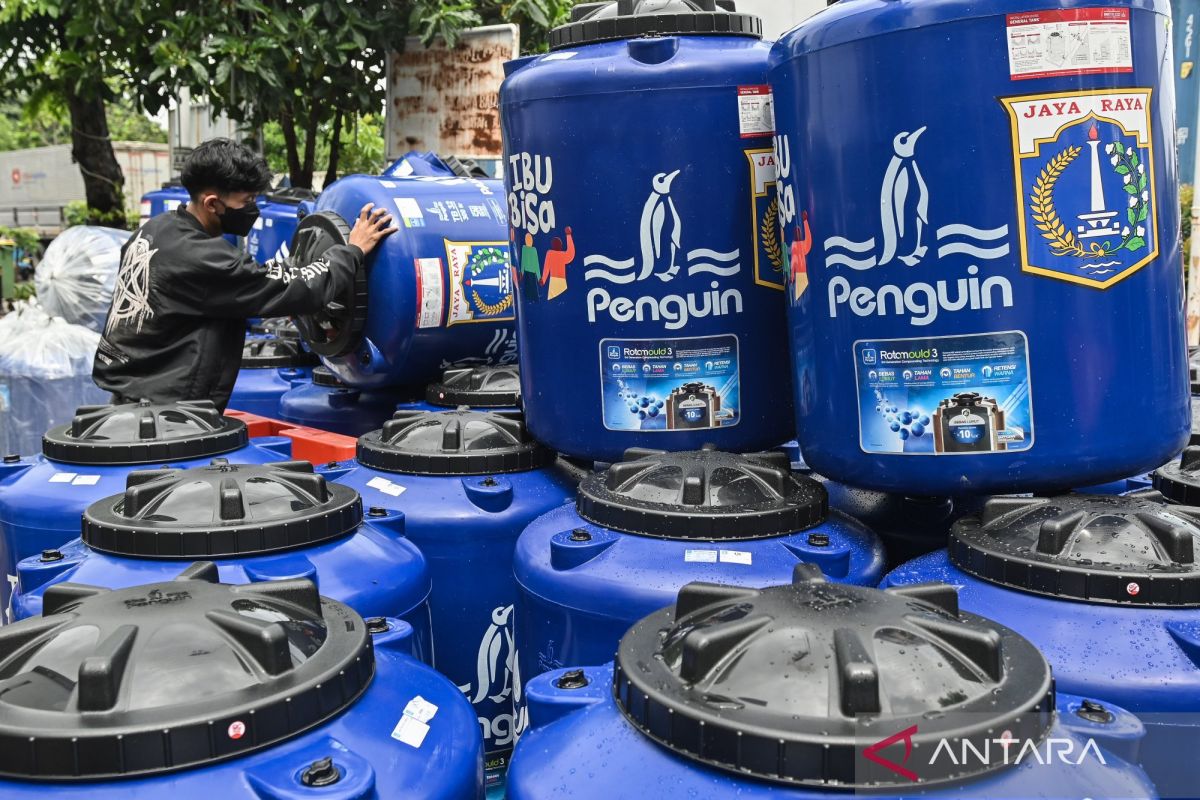
Jakarta policy observer Zulfikar Marikar believes the development of recycled water utilisation is a strategic step to strengthen the capital’s water security amidst increasing demand for clean water and pressure on water resources. “Jakarta needs a new paradigm in water management, namely viewing water as a resource managed in a complete cycle, from extraction, utilisation, and treatment to reuse,” Zulfikar said in a written statement in Jakarta on Monday.
According to Zulfikar, efforts to expand piped water services by the DKI Jakarta Provincial Government together with PAM Jaya must be balanced with integrated wastewater management to make the water management cycle more sustainable. He appreciated the steps taken by the DKI Jakarta Provincial Government and PAM Jaya, which continue to expand piped water coverage, now reaching around 82 percent of the population and targeted to reach 100 percent by 2029.
However, he noted that Jakarta’s water security challenges are not over because the raw water supply still depends on areas outside Jakarta, while years of groundwater exploitation have triggered land subsidence in several areas. Zulfikar pointed out that several countries have already made recycled water part of their urban water supply systems. Singapore, Australia, Japan, and the state of California in the United States have utilised treated water for various non-consumptive needs, such as industry, watering green open spaces, toilet flushing, and building cooling systems.
This concept aligns with circular economy principles, which treat wastewater as a resource with both economic value and environmental benefits. In the context of Jakarta, he assessed that the municipally owned company Perumda PAL Jaya holds a strategic position as the manager of domestic wastewater. Although piped wastewater service coverage is currently only around 20 percent, the existing treatment plants are considered to have the potential to produce recycled water for various non-potable needs.
He mentioned that utilising recycled water could not only potentially increase company revenue but also reduce groundwater exploitation, improve clean water use efficiency, lower long-term water supply costs, and support the implementation of Environmental, Social, and Governance (ESG) principles and green buildings. Therefore, he encouraged the DKI Jakarta Provincial Government to formulate policies accelerating the use of recycled water, including mandating its use in new commercial buildings, industrial estates, hospitals, hotels, apartments, shopping centres, and integrated areas for non-drinking purposes such as flushing, cooling towers, landscape watering, and fire suppression systems.
Beyond regulation, he also proposed providing various incentives, such as reductions in Land and Building Tax (PBB), groundwater tax incentives, and licensing facilitation for buildings that use recycled water. From an institutional perspective, Zulfikar assessed that the plan to transform Perumda PAL Jaya into a Regional Company (Perseroda) could be a step to strengthen the company’s flexibility in obtaining funding, building business partnerships, and accelerating investment in recycled water distribution networks. He also encouraged collaboration between PAL Jaya, PAM Jaya, and related regional-owned enterprises so that the construction of clean water networks, wastewater networks, and recycled water distribution networks can be carried out in an integrated and more efficient manner. “Water that has been used should not be viewed as waste, but rather as a new resource that can be reused. When wastewater is treated as a strategic asset, Jakarta not only strengthens its water security but also reinforces its commitment to sustainable development,” Zulfikar said.