
Observer Urges Electronic Parking to Break the Chain of Illegal Parking
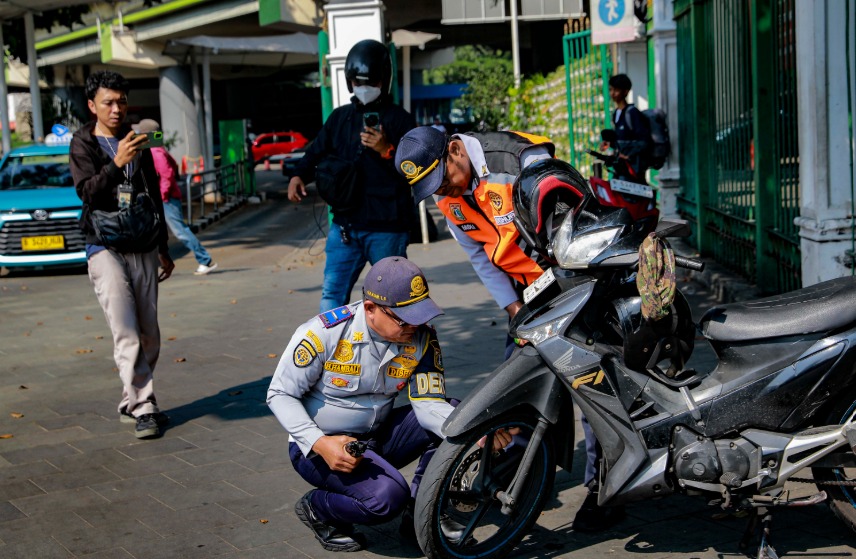
The Jakarta provincial government’s operation to curb illegal parking and illegal parking attendants is deemed ineffective in creating a deterrent effect if it relies solely on raids and on-the-ground enforcement. Urban planning expert Nirwono Joga assesses that the practice of illegal parking has grown into an economic field worth hundreds of billions to trillions of rupiah, involving many parties, from parking attendants and community groups to certain individuals who have long profited from the business. “Ticketing, valve stem removal, or raids are merely therapy. They will not deter anyone without a comprehensive solution and a definitive replacement system,” Nirwono said today. According to Nirwono, the enormous economic potential of the parking sector is one of the main reasons illegal parking continues to emerge despite repeated enforcement actions. He cited several calculations estimating Jakarta’s parking revenue potential at between Rp500 billion and Rp1 trillion per year. However, this figure largely reflects only the legal parking sector. Illegal parking activities scattered across various points in the city are believed to hold a far greater economic value, although they have never been accurately mapped. “If we look around, there is actually more illegal parking than legal parking everywhere. This potential, in my view, must be considered because in the future it could become a significant source of locally generated revenue for DKI Jakarta,” he stated. According to Nirwono, illegal parking has developed into an economic ecosystem involving many parties. Therefore, enforcement alone does not solve the problem as long as the income source from this practice remains wide open. “We all know that illegal parking in Jakarta is managed—in quotation marks—by certain parties, ranging from mass organisations, security personnel, and other elements who take a share of the pot there,” he said. Rather than relying on periodic enforcement operations, Nirwono believes the government must build a parking system capable of closing the loopholes that allow illegal parking to emerge. The first step is to increase adequate legal parking facilities. According to him, land limitations leave Jakarta with few options other than constructing professionally managed multi-storey car parks. Beyond infrastructure provision, digitalisation is an equally important factor. Nirwono considers an electronic parking system and cashless payments the most effective way to sever revenue leakage while eliminating space for illegal levies. He cited business districts and shopping centres in Jakarta that have fully implemented digital parking systems without cash transactions. “If the private sector can manage it, why can’t the government? This means there are other parties deliberately not optimising revenue digitally. In fact, electronic parking cuts through two problems at once: illegal parking and illegal levies. Everything is recorded, so it does not result in revenue leakage,” he said. To manage the parking sector more professionally, he proposes the DKI Jakarta provincial government form a special body in the form of a Regional Public Service Agency (BLUD) or a municipal company. According to him, such an institution could integrate parking management from location planning and system digitalisation to supervision, in order to suppress revenue leakage and illegal parking practices. “So there is spatial planning, there are rules, and there is also monitoring. This should be a note for our colleagues in the Regional House of Representatives who are forming a special committee on parking, to see that this could be one of the recommendations provided,” Nirwono said. Nevertheless, he cautioned that the overhaul of the parking sector should not be solely oriented towards increasing regional revenue. “The note is, do not fixate on the money. Parking must become an instrument to reduce congestion, improve air quality, and encourage the public to switch to public transport,” he concluded.