
Observer Supports MPR's Decision to Open PPHN Draft to the Public to Strengthen Public Participation
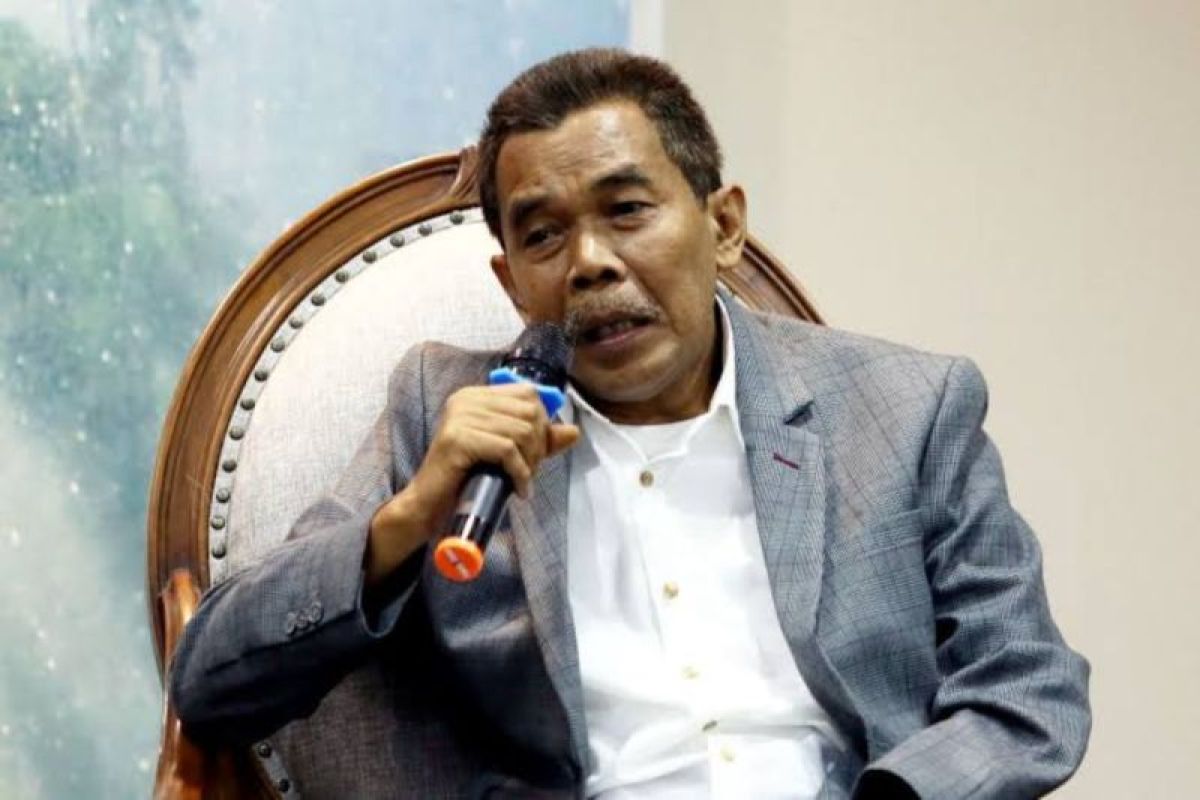
Jakarta (ANTARA) - Socio-political observer and legal practitioner Agus Widjajanto believes that the MPR RI’s move to open the PPHN draft to the public is essential to ensure that the direction of national development is formulated through a participatory process.
According to Agus, public participation is necessary so that the PPHN becomes a cross-government consensus and does not merely become an elite document. “Academics, community organisations, local governments, business actors, professional groups, the younger generation, and even people in rural areas must be given space to provide input. Therefore, we support the MPR in opening the PPHN draft,” Agus stated in Jakarta on Sunday.
Agus noted that the PPHN needs to encompass strategic agendas that require continuity beyond a single government term, such as food and energy security, human development, downstreaming, economic equality, digital transformation, the environment, defence, and regional development. However, he cautioned that the national guidelines should not regulate policy in too much detail, allowing the government to maintain flexibility in facing changes in technology, geopolitics, the global economy, and social conditions.
“Without public participation, the PPHN will only be an elite document, but without national guidelines, our development risks changing direction every five years,” he added.
Agus stated that the idea of the PPHN is inseparable from the changes in the constitutional system following the Reformation. The MPR’s authority to establish the Broad Guidelines of State Policy (GBHN) was abolished through four amendments to the 1945 Constitution between 1999 and 2002. Since then, national development planning has relied on the National Long-Term Development Plan (RPJPN), the National Medium-Term Development Plan (RPJMN), and the Government Work Plan (RKP).
“For 27 years, Indonesia has essentially been sailing without a national compass. Every president has their own vision and development priorities, meaning the continuity of long-term policy is potentially disrupted,” said Agus.
He assessed that several strategic agendas require more than one presidential term, thus their continuity must be maintained through national consensus. “The development of the New Capital City (IKN), downstreaming, food and energy security, human resource development, defence, and economic transformation require 20 years or even more. Not all of these can be completed within a single presidential term,” he said.
Agus emphasised that the PPHN should not be interpreted as an attempt to restore the MPR to the highest state institution. The President still holds a direct mandate from the people and the authority to run the government based on the 1945 Constitution. “GBHN or PPHN must serve as a development compass, not as political orders to the President. The President must still have the space to govern according to the people’s mandate and the changing times,” he asserted.
Meanwhile, the Chairman of the MPR, Ahmad Muzani, stated that the PPHN is being prepared as a guideline for development across different administrations, rather than as technical instructions for the President. “The PPHN is the nation’s philosophical guideline in achieving state objectives. Therefore, the PPHN is not a technical manual for the administration of government,” Muzani said.
Agus noted that one issue requiring study is the legal form of the PPHN. He believes the option of establishing it through an MPR Decree (TAP MPR) requires constitutional study to avoid conflicts of authority or dualism in political legitimacy. He also suggested the possibility of limited amendments to the 1945 Constitution to provide a constitutional basis for the PPHN without altering the presidential system.
“What is needed is not a full return to the past. We must take the substance that remains relevant and then design it according to the constitutional democracy established after the Reformation,” said Agus.
According to him, opening the PPHN draft to the public provides an opportunity to test these ideas while ensuring that development continuity proceeds alongside democracy. “Indonesia needs a compass, but that compass must not turn into a rudder held by a single political institution,” concluded Agus.