
Observer: Sugarcane-based bioethanol development needs market certainty
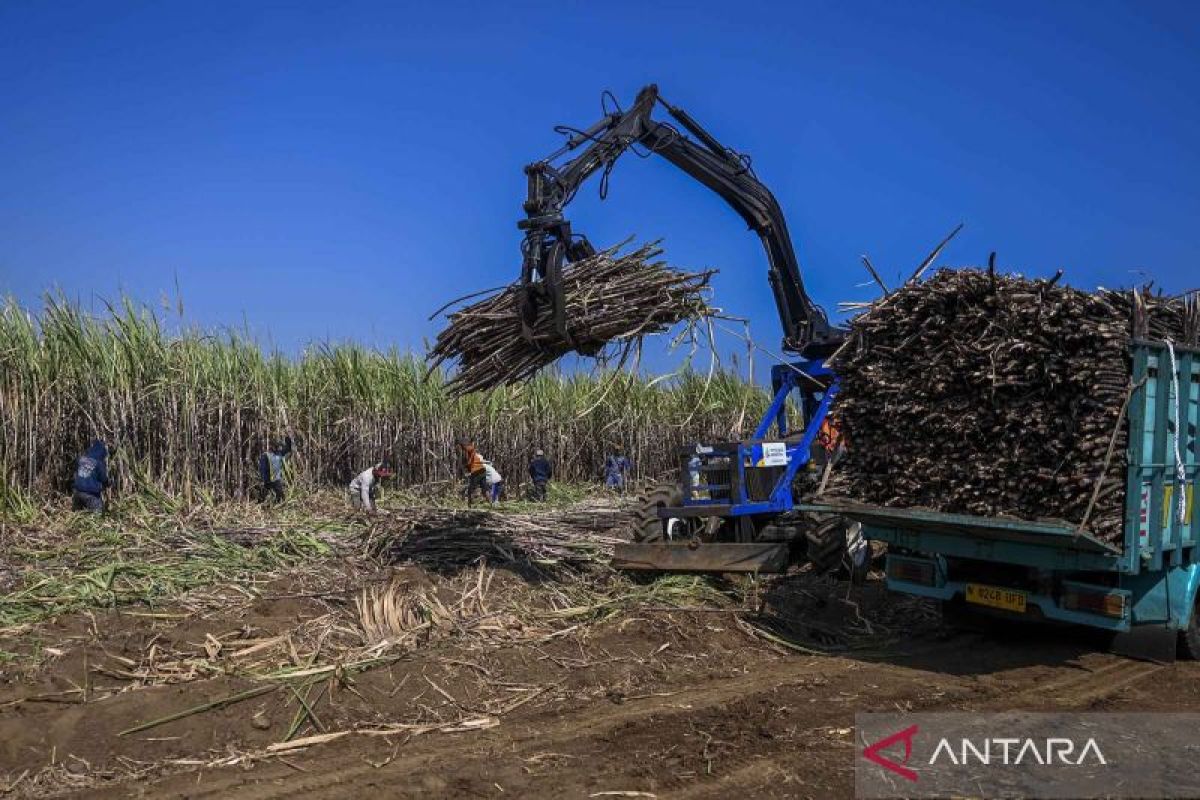
Jakarta (ANTARA) - Agricultural observer Khudori of the Indonesian Political Economy Association (AEPI) believes the development of a sugarcane-based bioethanol industry requires a scheme that guarantees business sustainability, from market certainty and offtakers to funding support.
According to him, the success of bioethanol development is determined not only by increased sugarcane production, but also by the availability of an ecosystem capable of maintaining bioethanol’s competitiveness in the long term.
“To this day there is no public service agency such as BPDP (Plantation Fund Management Agency) in the sugarcane-based sugar industry. When fossil fuel prices are cheap, will the government subsidise bioethanol? And who will be the offtaker?” said Khudori in a statement in Jakarta on Friday.
He said the biodiesel programme was able to grow to the implementation of the B50 blend because it has a fixed buyer, namely PT Pertamina (Persero), as well as funding support through the Plantation Fund Management Agency (BPDP).
According to him, a similar scheme needs to be considered if the government wants to develop bioethanol sustainably.
Khudori reminded that Indonesia once developed the gasohol programme, petrol with a 10 per cent ethanol blend, in the 1980s, and again promoted biofuel utilisation through Presidential Regulation Number 5 of 2006 on National Energy Policy and Presidential Instruction Number 1 of 2006 on the Provision and Utilisation of Biofuel as an Alternative Fuel.
However, neither programme continued, partly because bioethanol lost its competitiveness when fossil fuel prices fell.
Beyond sustainability, he said the sugarcane production target of 110.1 million tonnes by 2030 also faces challenges in terms of land expansion, productivity improvement, yield, and certainty of raw material supply.
Khudori highlighted the projection that PT Sinergi Gula Nusantara’s (SGN) sugarcane area will expand to 670,561 hectares by 2030, whereas its area in 2025 has only reached 212,437 hectares, based on data from the Directorate General of Plantations at the Ministry of Agriculture.
He also questioned the assumption that all sugarcane molasses can be allocated for bioethanol production, given that molasses has so far also been used as a raw material by the food, alcohol and cosmetics industries.
“If we rely on sugarcane molasses, as long as sugarcane production does not rise significantly, the continuity of bioethanol raw material supply will become an existential problem,” he said.
The government plans to accelerate the development of molasses-based bioethanol to support the rollout of 10 per cent ethanol-blended petrol (E10) as part of efforts to strengthen national energy security.
To support the programme, the government is targeting the construction of 30 to 50 bioethanol plants.
At present, PT Pertamina (Persero) has only implemented sales of 5 per cent ethanol-blended petrol (E5) on a limited basis at around 170 public fuel filling stations (SPBU) in Jakarta and East Java.