
Observer: Strengthening Pancasila requires literacy and dialogue
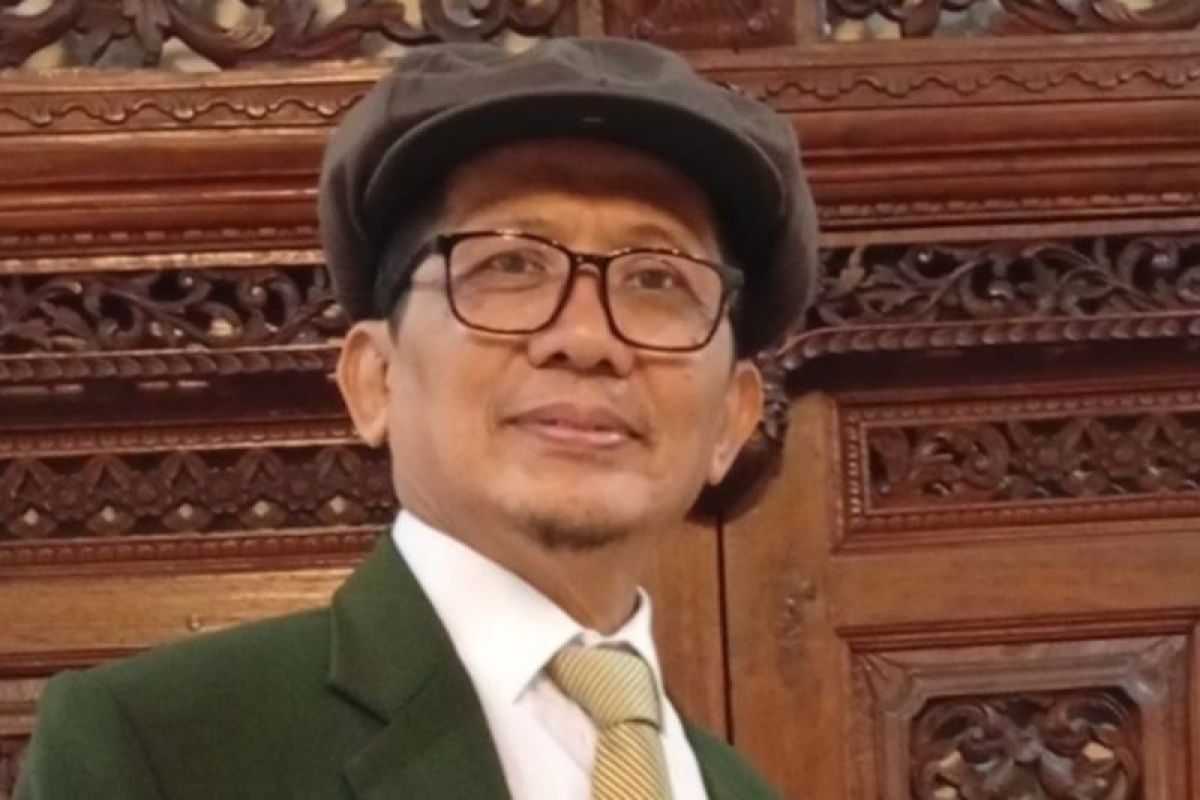
Jakarta (ANTARA) - Academic and observer of radicalism and terrorism, Amir Mahmud, believes that the strengthening of Pancasila needs to be carried out through education, literacy, national dialogue, and social resilience to face extreme ideologies and divisive politics in the digital space.
“Pancaseral is very effective as a bridge for differences. From Sabang to Merauke, from differences in ethnicity, race, to religion, everything can be accommodated,” Amir stated in Jakarta on Tuesday.
The lecturer at the Postgraduate Programme of Islamic Religious Education at Nahdlatul Ulama University (UNU) Surakarta said that Indonesia’s pluralistic society requires shared values to manage differences so they do not develop into segregation, intolerance, or open conflict.
“Pancasila teaches that difference is a social reality that must be managed through humanity, unity, deliberation, and justice,” he said.
According to him, extreme ideologies are now increasingly easy to spread through social media, carrying narratives of hatred, intolerance, and calls for violence, packaged using religious or nationalist language.
Therefore, handling extremism and radicalism is not enough to rely solely on a security approach.
“Extremism and radicalism that drive hatred and violence need to be addressed not only through a security approach, but also through education, literacy, dialogue, and the strengthening of social resilience,” he said.
The Director of the Amir Mahmud Center stated that a security approach is necessary when hate speech has developed into armed physical action. Meanwhile, at the stage of discourse and propaganda, literacy and dialogue become important instruments to prevent the development of intolerant ideologies.
“As long as it remains in the form of hate speech or dislike, this can only be addressed through literacy and dialogue,” said Amir.
Amir also encouraged that the strengthening of Pancasila should not stop at the elite level, but reach the community down to the village level through focus group discussions (FGD) and open discussion forums involving people from various backgrounds.
“The community must have the ability to recognise that narratives of intolerance, radicalism, and terrorism have the potential to destroy the social order of the nation and state,” said Amir.
He assessed that efforts to face transnational ideologies and divisive politics need to be directed towards strengthening national awareness, rather than creating new hatred towards different groups.
“Combating transnational ideologies and upholding Pancasila is done not by building new hatred, but by strengthening dialogue, literacy, and national awareness. This would be extraordinary,” he said.
According to Amir, Pancasila Sanctity Day should serve as a momentum to reflect on the application of Pancasila values in community life and state administration.
“Indonesia is a very pluralistic nation; we need a common ground that allows differences to remain alive without turning into conflict. That is the spirit of plurality upheld by our heroes,” he revealed.
He called on the community to continue understanding and studying the relevance of Pancasila through daily life practices.
“Pancasila must continue to be understood, studied, and its relevance proven through the practices of community life. The measure of the strength of Pancasila is not merely how often we utter or profess it, but how far those values are able to answer the real problems facing this nation,” he concluded.