
Observer Says Bioethanol Development Requires Clear Roadmap
Jakarta (ANTARA) - Agricultural analyst Khudori believes the government needs to draw up a clear and detailed roadmap for developing the bioethanol industry so that the target for 10 percent ethanol-blended petrol (E10) can be achieved sustainably.
According to him, the roadmap must set out a clear work plan, strategies for reaching the target, evaluation mechanisms, and the division of roles among every stakeholder involved in implementing the programme.
“A detailed roadmap is needed to guide the work plan, how to achieve it, evaluation through to outcomes,” Khudori said in a statement received in Jakarta on Friday.
He said that in addition to drawing up a roadmap, the government must also ensure a clear division of tasks between agencies and consistency in on-the-ground implementation.
According to him, the biggest challenge facing various government programmes to date has not merely been setting targets, but policy integration and consistent execution.
The statement was made amid government efforts to accelerate the development of sugarcane-based bioethanol to support the implementation of E10.
President Prabowo Subianto has targeted the construction of 30 to 50 bioethanol plants to reduce dependence on imported petrol while strengthening national energy security.
The government is also currently revising Presidential Regulation Number 40 of 2023 on the Acceleration of National Sugar Self-Sufficiency and the Provision of Bioethanol as Biofuel.
The revision will, among other things, accommodate additional capacity for bioethanol blending facilities.
Nevertheless, Khudori cautioned that bioethanol development also requires certainty of feedstock supply.
According to him, sugarcane molasses, which has been the main feedstock for bioethanol, is also used by various other industries, such as the seasoning, alcohol and cosmetics industries.
“Can it be ensured that all molasses, especially those owned by private firms, will be channelled into the biofuel programme and processed into ethanol? What if the molasses cannot be diverted? What are the alternatives?” said Khudori.
Meanwhile, Pertamina New & Renewable Energy is currently developing bioethanol from a range of feedstocks, not only sugarcane molasses but also palm sap, sorghum, cassava and maize.
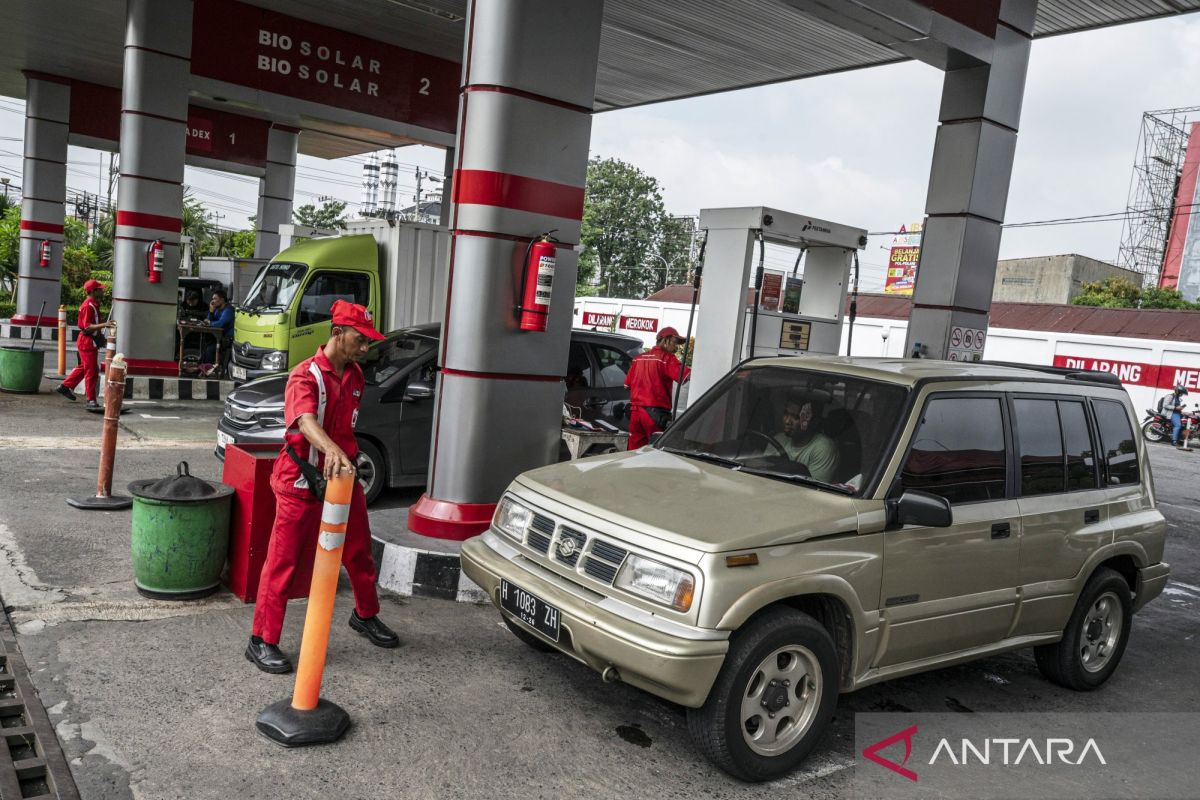
At present, the implementation of five percent ethanol-blended petrol (E5) remains limited to around 170 Pertamina petrol stations in East Java and Jakarta.
Pertamina New & Renewable Energy CEO John Anis estimates that Indonesia will need around 20 to 30 new bioethanol plants over the next two years to support the wider rollout of ethanol-blended fuel.