
Observer: Rice surplus does not guarantee affordable prices in all regions
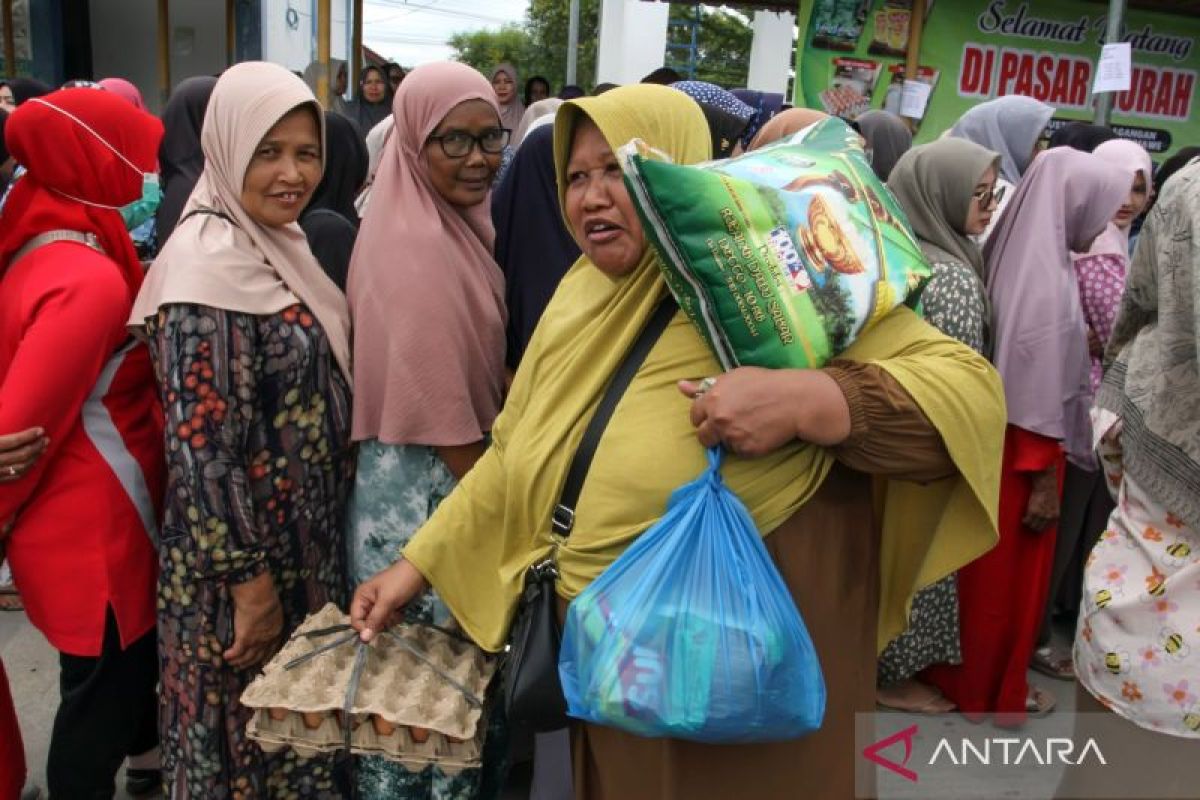
Jakarta (ANTARA) - Agricultural analyst Eliza Mardian of the Center of Reform on Economics (CORE) has assessed that a national rice production surplus does not automatically guarantee that all Indonesians have access to rice at affordable prices.
According to her, speaking in Jakarta on Monday, aggregate national rice availability and high government rice reserves (CBP) do not necessarily translate into equitable distribution to remote areas and small islands.
She cited several remote regions that still face food access problems when distribution is disrupted. Such conditions can cause consumer-level rice prices to surge to Rp25,000-Rp30,000 per kilogramme.
Eliza said this situation shows that rice availability at the national level does not automatically guarantee that the commodity can be accessed by all members of society.
Based on the Ministry of Agriculture’s food balance projections, rice production in 2026 is estimated to reach 34.77 million tonnes, while national demand stands at 31.10 million tonnes, resulting in a surplus of approximately 3.67 million tonnes.
“However, the fact is that consumer-level prices in remote areas can still spike sharply,” Eliza said.
Data from the National Strategic Food Price Information Centre (PIHPS) accessed on Monday (24/8) shows the national average price of medium-quality grade I rice was recorded at Rp16,500 per kilogramme.
However, rice prices in several eastern Indonesian regions are above the national average. The average price of medium-quality grade I rice in Maluku was recorded at Rp17,600 per kg, North Maluku at Rp18,000 per kg, and Papua at Rp19,350 per kg.
Higher prices were also recorded in Jayawijaya Regency, reaching Rp23,500 per kg, while in Mimika Regency the price stood at Rp19,500 per kg.
According to Eliza, the main problems lie in inter-island distribution chains, high logistics costs, limited storage facilities in the regions, and market structures that remain constrained in remote areas.
She argued that food security is not only measured by availability, but also by access, price affordability, and supply stability.
She urged the government to strengthen the food distribution system more systematically, including through the addition of storage facilities in remote regencies, regular and measured market operations, and improved inter-island connectivity.
On the other hand, the government continues to intervene through the distribution of government rice reserves (CBP) to maintain price and supply stability.
The National Food Agency (Bapanas) recorded CBP distribution from January to August 2026 reaching 1.65 million tonnes, carried out through programmes such as the Food Supply and Price Stabilisation programme (SPHP) and food assistance.
Bapanas Deputy for Food Availability and Stabilisation I Gusti Ketut Astawa said the acceleration of distribution was undertaken to control rice price developments, particularly amid the El Nino challenges occurring at the peak of the dry season.