
Observer: Requesting clarification from prospective suspects is important
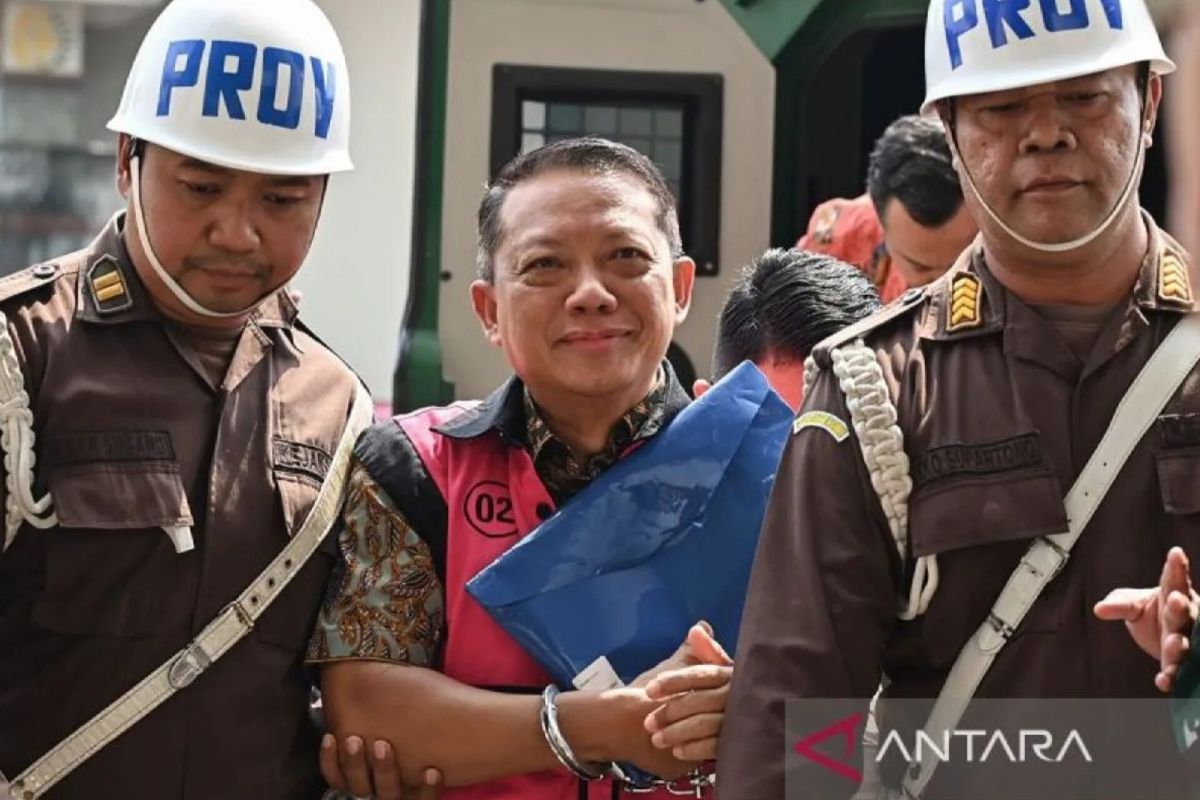
Jakarta (ANTARA) - Legal observer from the Faculty of Law at the Islamic University of Indonesia, Wahyu Priyanka Nata Permana, stated that in handling a case, requesting clarification from a prospective suspect is important.
Wahyu said in a statement in Jakarta on Tuesday that the request for clarification is part of applying the principle of due process of law, the right to be heard, and the right to prepare a defence. This is despite the fact that the new Criminal Procedure Code (KUHAP) no longer explicitly requires the examination of prospective suspects.
“Therefore, to avoid unfair prejudice or unreasonable bias, in my view it is proper for a person to be examined first before being named a suspect, to avoid losing when tested in a pretrial hearing,” he said.
His statement was in response to the alleged corruption and money laundering (TPPU) case that has named former Deputy Attorney General for Special Crimes Febrie Adriansyah as a suspect.
He also questioned the issuance of the investigation order (sprindik) in the case, which could lead to differing views regarding the applicability of Constitutional Court Decision Number 21 of 2014.
Wahyu said that although Article 90 of the KUHAP states that naming a suspect must be based on at least two pieces of evidence, Article 91 of the KUHAP states that naming a suspect prohibits actions that create a presumption of guilt.
“For example, the neglect of the right to prepare a defence. In my opinion, the person should be examined first, although views may differ, and it is not an obligation under the current KUHAP. But the implication is the protection of human rights. Furthermore, it is in line with Article 91 of the KUHAP, which prohibits acts of presumption of guilt,” he said.
Therefore, he said, prospective suspects should be given the opportunity to provide clarification so that the process of naming a suspect also avoids arbitrariness on the part of investigators.
“This does not only apply to this case. When the procedural requirements in the process of naming a suspect are not fulfilled, it could result in the suspect designation being invalid, but the procedure must go through a pretrial mechanism. It will then be up to the judge to grant or reject it,” Wahyu said.
He said that under the old KUHAP regulations, a pretrial motion would be dismissed if the case had been transferred to court. However, under the new KUHAP, the pretrial ruling must be awaited before the main case can proceed.
“But regarding, for example, the examination of violations of a suspect’s rights, that cannot be tested. So, if we look at whether there is a need for improvements to the pretrial institution, yes, there is,” Wahyu said.