
Observer: Regional Election Reform Must Focus on Improving Political Governance
Jakarta (ANTARA) - The Indonesian Institute (TII) believes reform of local democracy should be focused on fixing political governance, such as oversight, political financing and the eradication of money politics, rather than changing the mechanism for electing regional heads (pilkada) through the regional legislative council (DPRD).
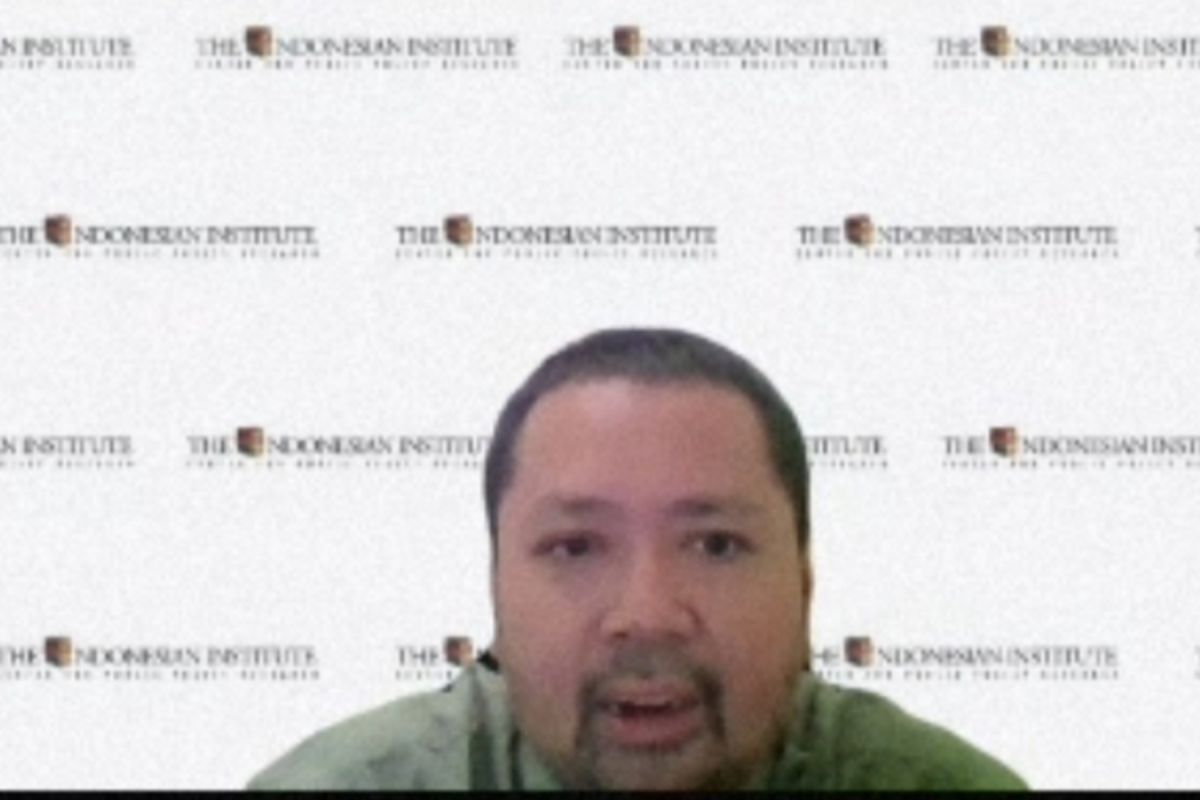
TII Research Associate Arfianto Purbolaksono, speaking at an online public discussion entitled “Assessing the Future of Local Democracy: Following the Constitutional Court Ruling on the Regional Election System” in Jakarta on Wednesday, said the idea of electing regional heads through the DPRD has resurfaced because of the high cost of politics, the prevalence of regional head corruption cases and money politics practices in electoral contests.
However, according to him, changing the election mechanism is not necessarily capable of resolving these problems.
“The question that should be answered is not simply whether the regional election mechanism needs to be changed, but whether that change would genuinely resolve the fundamental problems of local democracy in Indonesia. If the root of the problem is weak political governance, then what needs to be fixed is the system, not the people’s right to choose their leaders directly,” Arfianto said.
Some elites support the indirect mechanism on the grounds of budget efficiency, reduced political costs and governmental stability, while those who reject it consider direct regional elections part of citizens’ constitutional rights and a manifestation of popular sovereignty.
On the other hand, the results of various national surveys analysed by TII show that the majority of the public still want regional heads to be elected directly, indicating a perception gap between some political elites and public aspirations.
Arfianto also considered the assumption that regional elections through the DPRD would automatically reduce political corruption to lack a strong empirical basis.
According to him, past experience shows that money politics still occurred when regional heads were chosen by the DPRD.
“Political corruption is not determined by the election mechanism. Far more decisive factors are the quality of oversight, transparency, the integrity of political actors and the system of political financing. Changing the mechanism without improving these factors will only relocate the arena of corruption, not eliminate it,” he said.
He added that direct regional elections provide stronger political legitimacy because regional heads receive their mandate directly from the public.
Conversely, the DPRD-based mechanism is considered likely to create an empirical legitimacy deficit that could reduce public trust and strengthen regional heads’ dependence on political elites.
According to him, the problems of political costs, corruption and money politics cannot be used as reasons to reduce public participation in choosing their leaders.
Busyro added that Constitutional Court Ruling Number 195/PUU-XXIV/2026 has provided constitutional certainty that regional heads are to remain elected directly by the people.
Therefore, the reform agenda needs to be directed towards fixing political financing, party cadre development, oversight and the eradication of money politics.
Meanwhile, Populi Center Research Manager Dimas Ramadhan said public preference for direct regional elections has approached a national consensus.
According to the Populi Center National Survey, 89.6 per cent of respondents want governors to remain directly elected, while 94.3 per cent want regents and mayors to be directly elected by the people.
According to Dimas, a change to the regional election system could only be accepted if it delivers a better quality of democracy than the current system.
“As long as that prerequisite has not been met, public preference for direct regional elections cannot be ignored,” he said.
In its recommendations, TII is pushing for reform of political financing, stronger oversight and law enforcement, improved integrity of political parties, civic political education and public involvement in every electoral policy change, as efforts to strengthen the quality of local democracy without diminishing citizens’ constitutional right to elect regional heads directly.