
Observer: PKE Exports Prove Downstreaming Does Not Always Require Large Investment
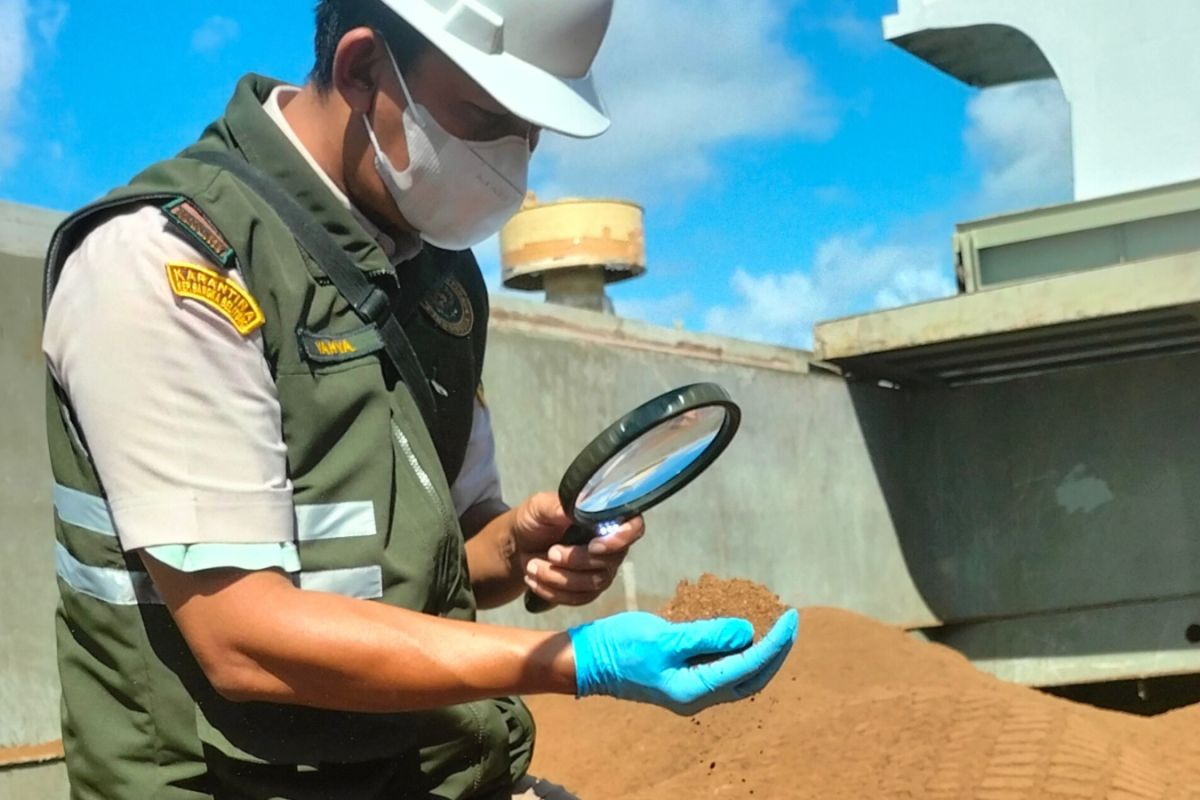
Jakarta (ANTARA) - Agricultural observer Eliza Mardian of the Center of Reform on Economics (CORE) has said that exports of palm kernel expeller (PKE), or palm kernel cake, show that downstreaming of palm oil derivative products can be carried out without requiring large investments.
According to Eliza, PKE is a by-product of palm kernel processing that is able to deliver higher economic value without the need for major investment to build downstream industries such as oleochemical plants.
“These PKE exports demonstrate our ability to capture added value from parts of the palm tree that were previously underutilised or sold at very low prices,” Eliza told ANTARA in Jakarta on Monday.
She added that revenue from PKE sales can also improve the margins of palm oil mills (PKS) and indirectly support the price of fresh fruit bunches (TBS) received by farmers.
She said optimising derivative products such as PKE could form part of a downstreaming strategy for the palm oil industry, carried out by utilising processing capacity that is already available.
According to Eliza, PKE exports to New Zealand also show there are market opportunities for Indonesian palm oil derivative products in developed countries.
Although not a primary market for Indonesian palm oil, New Zealand has a dairy industry that imports PKE in large quantities as a raw material for livestock feed supplements.
“This shows the opportunity to expand market access to developed countries with strict biosecurity standards … this is a signal that opportunities are also open in the by-product and livestock feed segments,” she said.
The Lampung Animal, Fish and Plant Quarantine Centre recently released an export of 14,000 tonnes of palm kernel expeller (PKE), or palm kernel cake, to New Zealand with an economic value of around Rp20 billion.
Head of the Lampung Quarantine Centre Donni Muksydayan said New Zealand is one of the potential markets for PKE because it uses the product as a raw material for animal feed, particularly for dairy and beef cattle.
Throughout 2025, Lampung recorded 184 PKE export shipments with a volume of around 1.34 million tonnes worth Rp3.12 trillion, an increase compared with 172 shipments in 2024, when the volume was around 569,000 tonnes with a value of Rp2.58 trillion.