
Observer on Viral Teddy Video Clip: Must Be Viewed in Full
Jakarta (ANTARA) - Political communication observer Hendri Sat懲Satrio (Hensa) has reminded the public not to be in a hurry to understand an event based solely on video clips or ‘clippers’ circulating on social media.
He stated that while advancements in communication technology make it easier for the public to access information, this ease must be accompanied by caution, as the information received may not represent the full story.
“In this era of communication technology, the era of social media, and the era of ‘homeless media’, one must be careful in digesting a story. The story must be viewed in its entirety and clearly,” Hensa said in a statement in Jakarta on Friday.
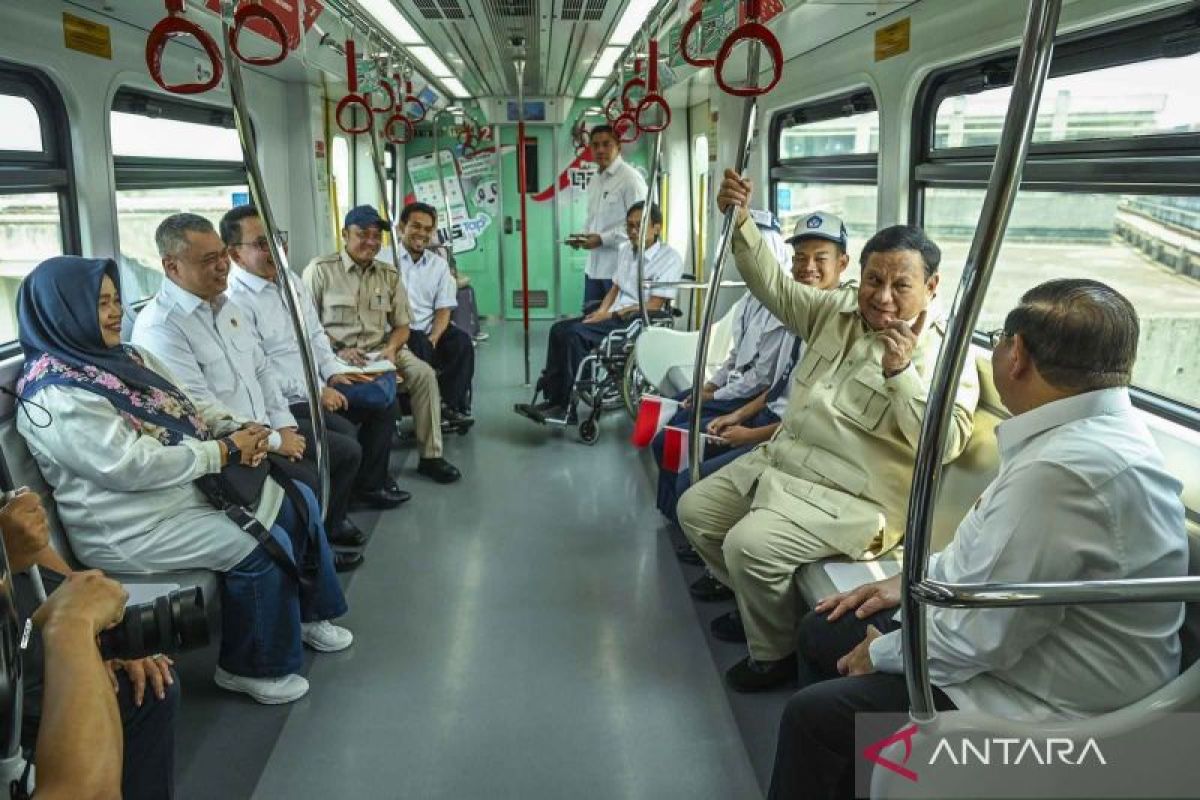
Hensa was responding to the viral video of Cabinet Secretary (Seskab) Teddy Indra Wijaya during the inauguration of the Jakarta LRT Kelapa Gading-Manggarai route.
In the circulating video clips, Teddy was seen asking several parties, including members of the board of directors and relevant officials, to move locations. The manner in which Teddy gave these directions subsequently drew the attention of some members of the public.
“It is widely reported that he asked the Director of LRT to move, but his manner may appear unpleasant to some members of the public when viewing the video,” said Hensa.
According to the explanation provided by Teddy, the positioning within the carriage was arranged to provide space so that persons with disabilities could be closer to President Prabowo Subianto and the Governor of Jakarta, Pramono Anung. This was intended to give persons with disabilities the opportunity to communicate and engage in dialogue with the President and the Governor.
According to Hensa, this context is not visible if the public only watches the initial video clips that circulated.
“However, the clippers circulating among the public only show how Cabinet Secretary Teddy asked the LRT directors, the Director General of Railways, and others to move carriages without explaining the intention and purpose,” he said.
Hensa stated that such a phenomenon is not unique to Teddy’s case. According to him, various other events can also be understood incompletely if the public relies solely on video clips.
He noted that the public currently frequently encounters events through short videos. The problem is that these clips do not always include the full context.
The founder of the KedaiKOPI Survey Institute assessed that this phenomenon is inseparable from changes in public habits regarding social media content consumption.
According to him, long-duration stories or communications are rarely displayed because they are considered likely to bore social media users or consume excessive internet data. Consequently, content creators prefer to produce short video clips that are deemed more effective at capturing attention.
“Usually, long communication stories are rarely shown because of the fear that they will cause boredom or consume too much data. Therefore, people are more interested in or prefer to create clippers intended to attract attention, increase followers, and reach the ‘For You Page’ (FY/FYP),” said Hensa.
However, he added that there is a significant risk of losing vital information when an event is presented only in short snippets. Hensa warned that such conditions can lead the public to receive partial stories and ultimately misunderstand an occurrence if they do not seek the complete context.