
Observer on hoaxes against institutions: Public must verify truth
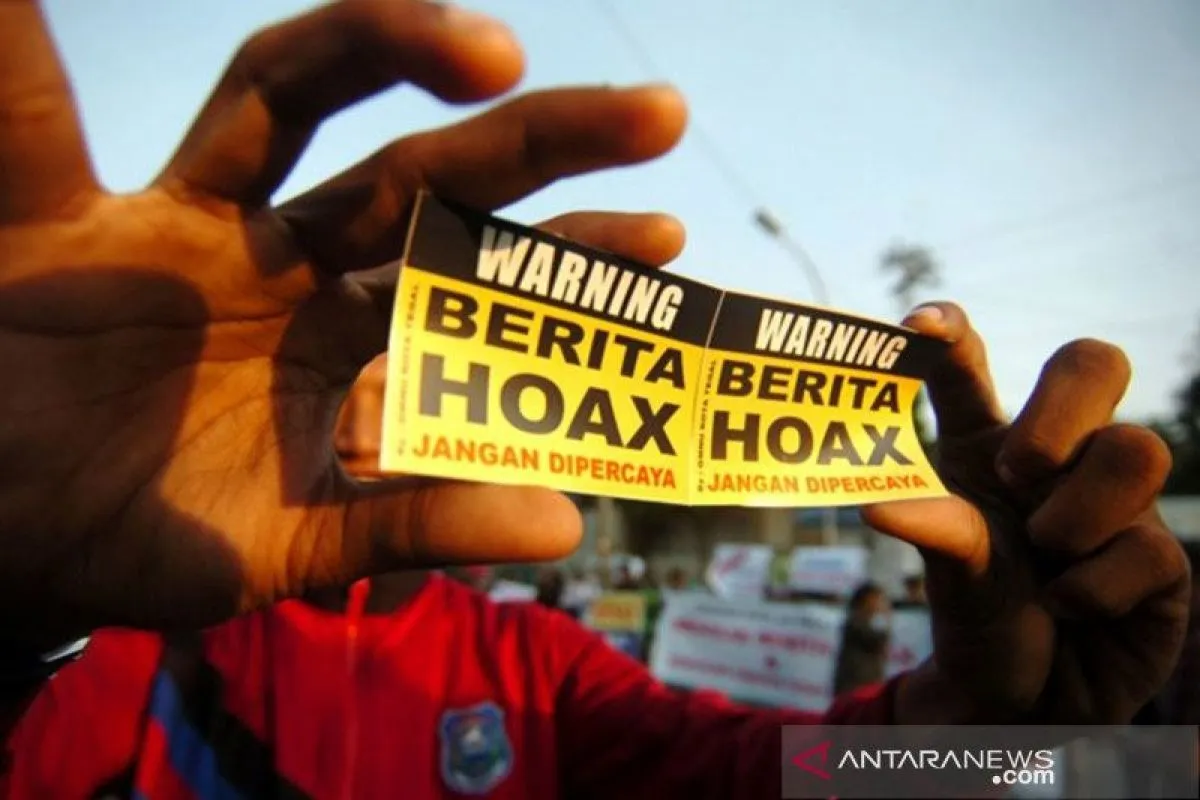
Jakarta (ANTARA) - Executive Director of the National Data Index, Ayip Tayana, has urged the public to be critical of circulating information by verifying it before believing it. Ayip was responding to the prevalence of hoaxes concerning state institutions that often spread on social media. Such information, aside from misleading the public, also has the potential to erode citizens’ trust in state institutions. “So, the public should not treat that narrative as a final narrative. Treat the narrative developing from the survey as material for questioning and evaluation. Not as a basis for judgement,” Ayip said in a statement in Jakarta on Sunday. In Indonesia, hoax content related to the government or state institutions is quite high. The Directorate General of Digital Space Supervision at the Ministry of Communication and Digital Affairs found 1,674 hoaxes over a one-year period from 22 October 2024 to 20 October 2025. The thousands of hoaxes were divided into several categories. The breakdown includes 589 fraud hoaxes, 341 government hoaxes, 249 miscellaneous hoaxes, 166 political hoaxes, 87 health hoaxes, 68 disaster hoaxes, 49 international hoaxes, 42 crime hoaxes, 41 defamation hoaxes, 25 trade hoaxes, 8 religious hoaxes, and 5 education hoaxes. Most recently, the public was presented with hoax content regarding the DPR rejecting the Asset Forfeiture Bill and the National Police being the most corrupt institution in ASEAN. Both issues can be identified as misleading information because they are not based on credible sources. Ayip criticised the conclusion of the international survey institution IndexMundi, which placed the National Police as the most corrupt institution in Southeast Asia. According to him, the claim is methodologically unaccountable because the research conducted by IndexMundi did not follow proper scientific principles. For instance, the number of samples taken was not proportional to the population. “They did not take random samples proportionally according to the country. I saw Indonesia’s sample was around 290, the Philippines 900, Thailand only 100-something,” he said. Moreover, Ayip stated that the research was conducted online and without rigorous respondent validity checks. This makes it prone to sampling bias because respondents were not selected through random sampling. Furthermore, the survey potentially suffers from self-selection bias because anyone can participate voluntarily, which could even lead to manipulation of the survey results. Ayip asserted that the IndexMundi survey results cannot be used as a scientific benchmark to assess the National Police. “From a data perspective, it is weak; the methodology is unaccountable. Then the results suddenly condemn an institution based on that data weakness. In my opinion, that is not trustworthy,” he said.